

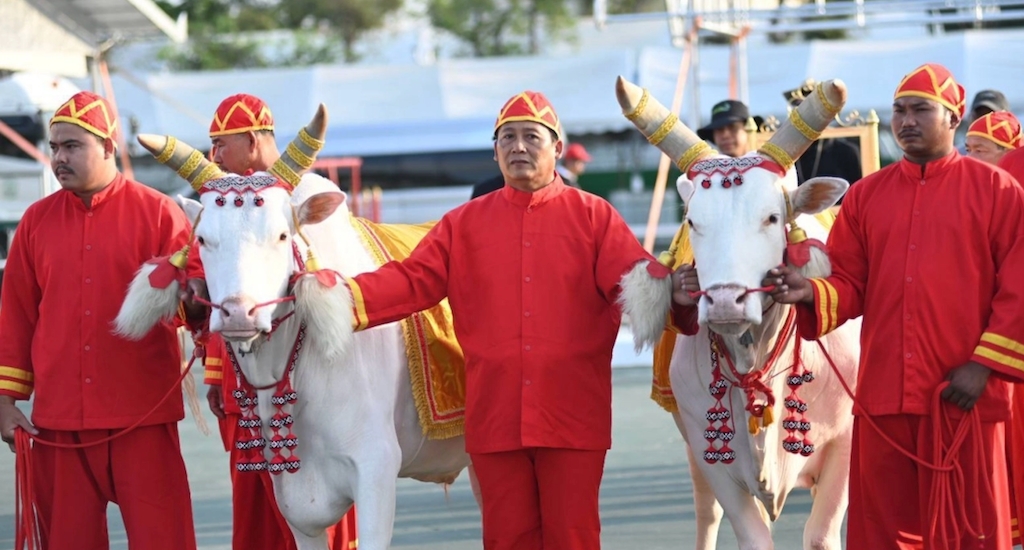
As May arrives, a common question among office workers and students is "When does the Royal Ploughing Ceremony fall this year?" and "Do we get a day off?" Today, we will explore all aspects of the Royal Ploughing Ceremony, including its schedule, significance, and clarify the confusion around public and private sector holiday policies.
For the year 2026, the Royal Ploughing Ceremony falls on Monday, 11 May 2026, considered an auspicious day marking the start of Thailand's planting season.
The answer is "Yes." Government agencies observe this as an official holiday according to the Prime Minister's Office announcement.
Banks and financial institutions typically close in accordance with announcements from the Bank of Thailand.
Most schools and universities suspend classes on this day.

Many may feel disappointed seeing government workers have the day off while they must keep working. The reason is not that companies are unkind, but due to labor law regulations as follows.
Under labor law, private companies must designate at least 13 traditional holidays per year.
Employers have the discretion to choose which holidays to observe. Since Thailand has more than 13 public holidays, most companies select important religious days, universal holidays, or long breaks (such as Songkran or New Year) to close.
The Royal Ploughing Ceremony is often excluded to preserve holiday quotas for other days, so most private firms treat it as a normal working day, except for some with special policies.

The Royal Ploughing Ceremony is not merely a public holiday but holds profound meaning in Thai agricultural society, consisting of two main royal rituals.
The Seed Blessing Ceremony involves blessing seeds to ensure abundant crops free from pests.
The Ploughing Ceremony is a Brahmin rite simulating plowing and includes predictions from the sacred ox regarding rainfall and crop yield for the year.