

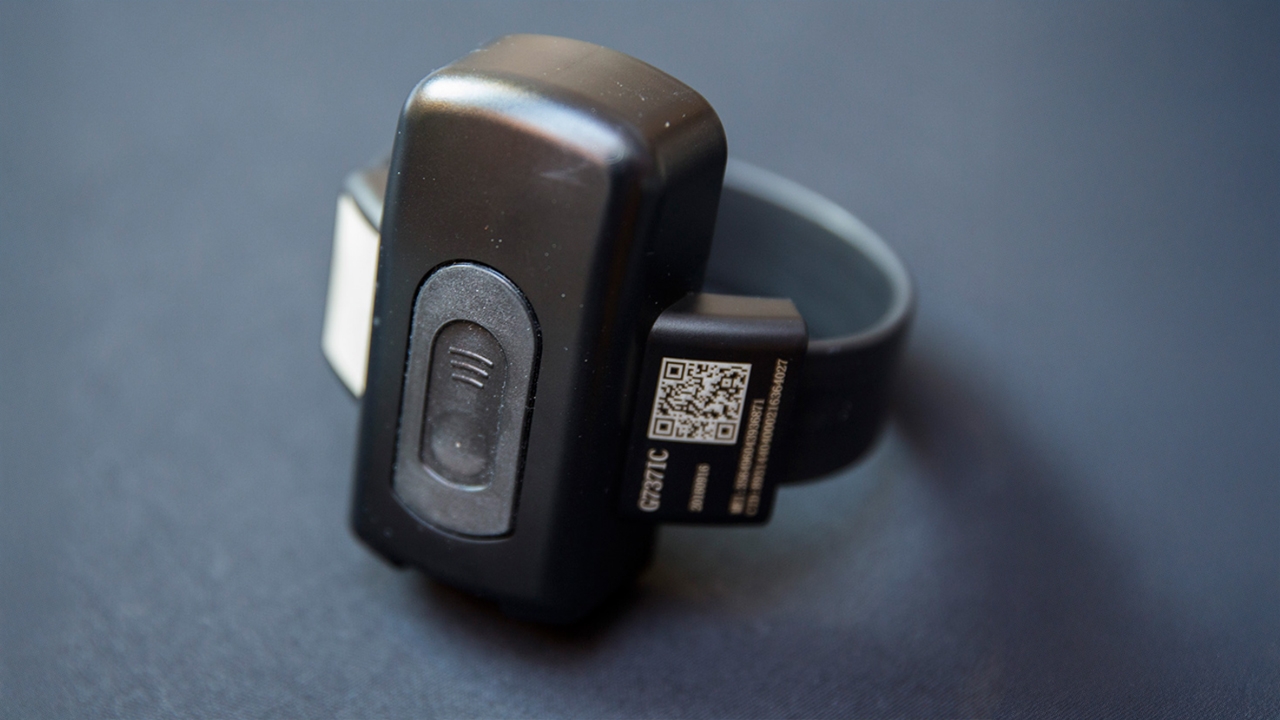
The EM bracelet imposes conditions on those granted parole and outlines restrictions on freedom. In an era where Thailand's justice system emphasizes behavioral reform over mere incarceration, the EM bracelet has become central to balancing "offering offenders a second chance" with "ensuring community safety." Today, we seek to understand how this device works and why it is more than just an electronic chain.
An EM bracelet is an electronic device used to monitor or limit a person's movements. It consists of a transmitter worn on the body—usually on the ankle—that is durable and difficult to remove. The device sends signals via a wireless network to a control center (EM Center) to track the wearer's location and behavior 24 hours a day.

The EM bracelet is not used for all offenders but focuses on those granted parole, prisoners with good behavior who have completed intensive rehabilitation programs and meet legal eligibility criteria.
It is also used for those awaiting sentencing or under probation as an alternative to imprisonment, helping reduce prison overcrowding and limiting exposure to criminal behavior within prisons.
Temporary release applies at the court stage to reduce inequality, allowing defendants who cannot afford bail to be released using this device instead of monetary guarantees.
Obtaining an EM bracelet is not easy; it requires a detailed and sensitive process.
Preparation involves the prisoner completing rehabilitation programs with positive behavior reports, and assessments of the "caretaker" and the "community" to which the person will return, ensuring readiness to jointly provide supervision.
Conditions are set by officials according to court orders or probation department requirements, such as:
Prohibition from leaving designated areas, with travel restricted within set boundaries (Geo-fencing).
No entry into forbidden zones, such as the victim's home or high-risk locations.
Time restrictions, like prohibiting leaving home during nighttime hours.
Speed limits to prevent fleeing by vehicle at high speeds.
Monitoring: If there is any attempt to cut the strap, damage the device, or breach restricted areas, an alarm immediately sounds at the EM center, prompting officials to intervene to stop the incident or return the individual to the justice system.

Data shows that the first year after release is the riskiest period for reoffending. Therefore, almost all parolees (except those seriously ill) must wear the EM bracelet for at least one year. If probation officers determine ongoing risks, this period can be extended to ensure the individual is fully ready to reintegrate into society.

Using the EM bracelet is not about releasing offenders unmonitored but rather "confining them within society" through an invisible technological barrier. This approach benefits society in multiple ways.
It reduces prison overcrowding, addressing the problem of excessive inmate populations.
It lessens inequality by providing poor individuals the chance for temporary release without financial bail.
It enhances safety by enabling better behavioral monitoring than releasing without any tools.
It supports a fresh start, allowing offenders to work, support their families, and avoid becoming a state burden through incarceration.
Because "justice" does not mean only punishment behind bars but creating opportunities for rehabilitation, alongside protective measures that reassure society that every step taken by those given a chance is watched by the eyes of justice through the EM bracelet.