

The Cabinet has lifted restrictions on eight foreign business sectors, permitting foreigners to trade agricultural futures. Associate Professor Thanaporn condemned this, saying it opens the door for Chinese capital to crush the market and launder illicit funds, further burdening Thai farmers on the auspicious Day of the First Rice Planting Ceremony.
Today, 13 May 2026, is considered the Day of the First Rice Planting Ceremony and also the annual Farmers’ Day. These days commemorate the importance of agriculture and include a ceremony for the first rice planting to bring good fortune to farmers.
However, this year there has been government action questioned by many as potentially harming Thai farmers. Yesterday (12 May), the Cabinet approved in principle two draft subordinate laws under the Foreign Business Act. The first is the draft royal decree amending the list of business types under the Foreign Business Act B.E. 2542 (1999), which primarily amends domestic trade businesses related to native agricultural products not yet prohibited by law, allowing the trading of agricultural futures in futures exchange centers with delivery as scheduled.
Additionally, they approved the draft ministerial regulation specifying businesses that foreigners may conduct without permission under the Foreign Business Act. This deregulates eight service business types, including
1. Telecommunications services without their own network, 2. Financial management services, 3. Internal network management, 4. Domestic debt guarantee services, 5. Petroleum drilling services, 6. Various secured lending services under securities law and futures trading, 7. Agents, traders, consultants, or fund managers for futures contracts not covered by the Futures Trading Act, and 8. Rental services for installing electronic devices and vending machines.
The government insists this aims to facilitate investment, reduce regulatory overlap, and enhance Thailand's competitiveness, while monitoring impacts and protecting Thai operators, thus elevating the Thai economy.

Regarding this situation, Associate Professor Thanaporn Sriyakul, a political analyst, commented that the Day of the First Rice Planting Ceremony is important for Thai farmers, but surprisingly, just before this auspicious day, the Blue government during the Cabinet meeting on Tuesday, 12 May, trampled on Thai farmers by 'unlocking' foreign (Chinese) capital to freely trade agricultural futures without any permission.
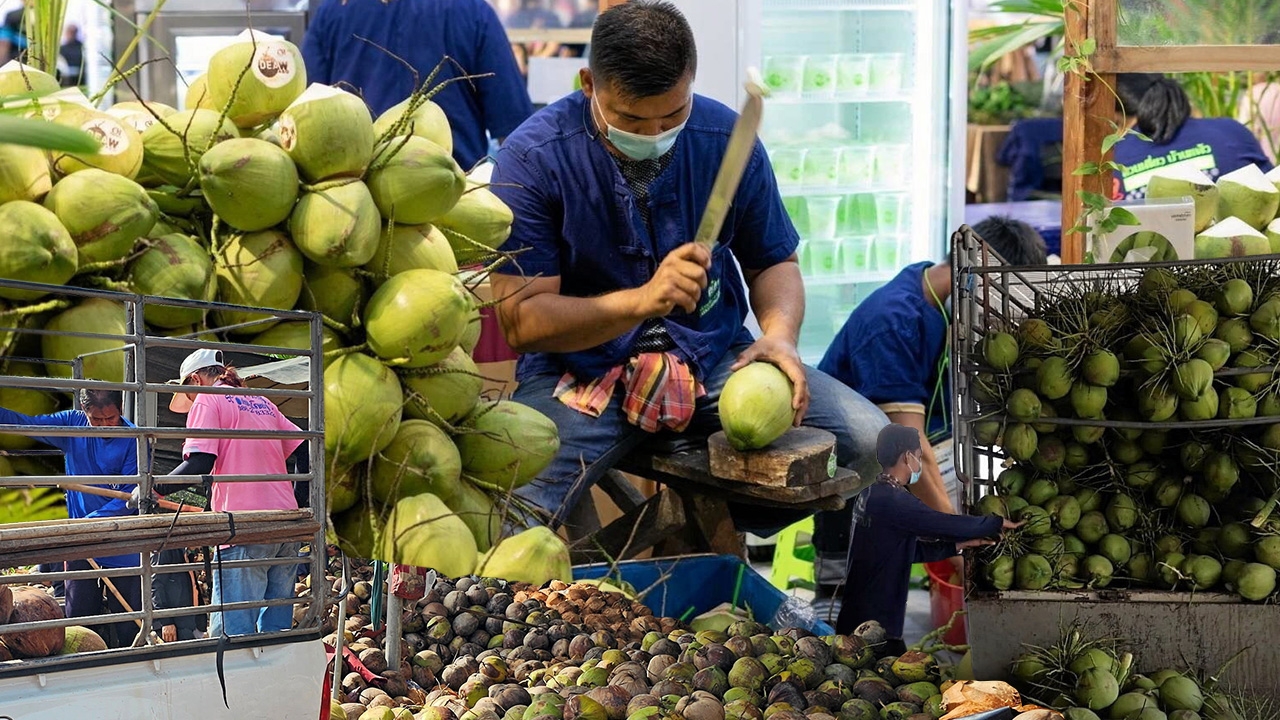
“Even though the government still cannot solve the problem of Chinese warehouses, whether durian or coconut, opening the door for Chinese warehouses to set agricultural futures prices—is this capital going to act in the interest of Thai farmers?”

Not to mention the 'gray Chinese capital' that thrives in Thailand, exploiting state channels to launder dirty money into clean money. Now, money laundering is happening through the agricultural futures market.
The Securities and Exchange Commission (SEC) currently has scandals and fails to keep up with crimes in the stock market daily, such as cases involving More and Stark shares, among others. What hope is there that they will manage the agricultural futures market properly?
“Moreover, the Ministry of Commerce is allowing the 'gray Chinese capital' to become legitimate by trading agricultural futures without Thai permission. This will sweetly lead to market domination and laundering of gray money into clean money through the agricultural futures market. How far will this harm Thai farmers?”