

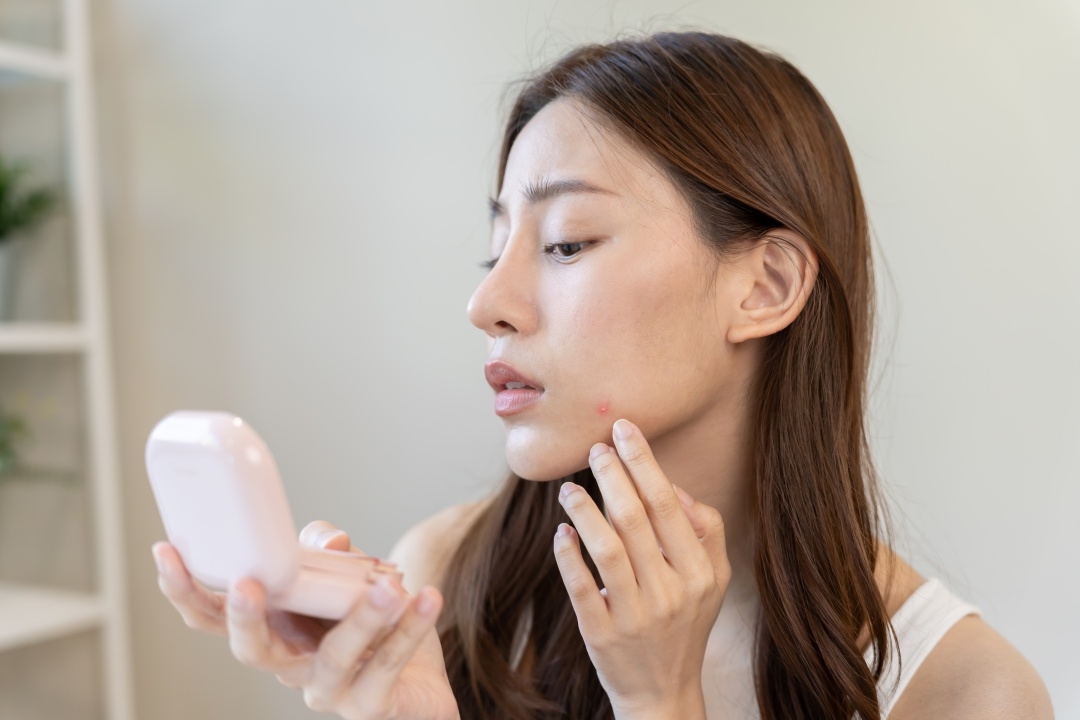
Acne scars vary in type and require precise treatment. The Institute of Dermatology, Department of Medical Services, revealed that "acne scars" are common skin problems that affect confidence, especially following severe inflammatory acne and cystic acne. They also provided guidance on treating the three main types of acne scars using medical innovations to safely restore smooth skin.

Dr. Akkaratan Jitnuiyanont, Deputy Director-General of the Department of Medical Services, stated that acne scars can develop after any type of acne, especially those with severe inflammation. Proper acne treatment from the start is crucial to prevent new scars. Treating acne scars usually requires multiple sessions and may involve several methods under specialist care to achieve the best results and reduce side effects.

Dr. Weerawat Ukuranan, Director of the Institute of Dermatology, explained that acne scars can be categorized into three types based on their shape:
Ice-pick scars are small with narrow openings but very deep, sometimes reaching the fat layer.
Rolling scars are wide, shallow depressions with fibrous bands pulling the skin underneath; when the skin is stretched, the scars appear shallower.
Boxcar scars have well-defined edges with vertical sides leading down to the base; when the skin is stretched, the scars remain clearly visible.

Dr. Janjira Sawadipong, a specialist physician, provided information that each treatment responds differently to various acne scar types, as follows:
1. High-concentration TCA acid spot treatment.
Applying trichloroacetic acid to specific points to stimulate new collagen production.
Best suited for Ice-pick scars (shows the most effective results).
2. Fractional laser.
Using laser to create many small spots that stimulate skin repair and collagen production.
Suitable for Rolling and Boxcar scars (less effective for Ice-pick scars).
3. High-frequency radiofrequency (Fractional Microneedle RF).
Using tiny needles to deliver heat beneath the skin to promote collagen formation.
Appropriate for Rolling and Boxcar scars.

4. Subcision (cutting fibrous bands).
Using a needle to cut fibrous bands under the scar to immediately raise the depressed scar.
Most effective for Rolling scars.
5. Filler injections.
Filling acne scars and stimulating collagen; can be combined with Subcision for enhanced results.
6. Acne scar surgery.
Doctors will choose surgical methods based on the size and characteristics of each individual's scars.
Additional advice: Besides the treatments above, there are other methods such as dermabrasion, microdermabrasion, or skin needling. Consultation with a specialist is recommended to develop the most appropriate treatment plan.