

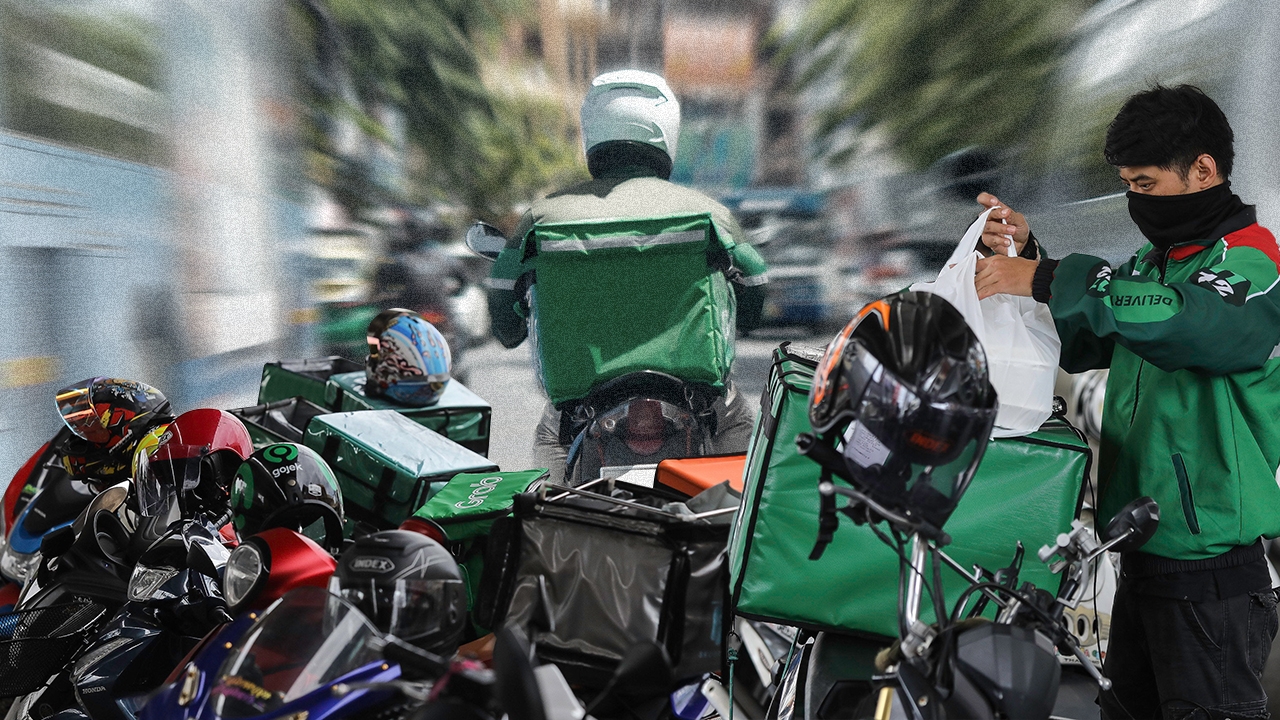
Efforts to include "riders" in social security: the Rider Union supports Section 33, aiming to solve issues of rider oversupply causing reduced delivery fees and lack of legal welfare benefits. They propose the government add flexible conditions so riders can choose to join or not.
On 22 May 2026, Lieutenant Colonel Phatdarasmi Thongsaluyakorn, Deputy Spokesperson of the Prime Minister's Office, revealed that the government has acknowledged the demands of the Federation of Platform Workers and the hardships faced by riders who deliver food and parcels, exposed daily to road risks but lacking sufficient labor law protection and basic welfare.
The Ministry of Labor has therefore established a special task force to study this issue and expedite investigation into how different types of platform workers can enter the social security system. If any group cannot access it, the law will be amended to unlock social security rights for those workers.
This matter has sparked extensive debate among riders, with some wanting and others opposing platform companies joining social security.
The special news team of Thairath Online discussed this issue with Mr. Anukul Rajakuna, coordinator of the Rider Union network. Regarding the issue,
Mr. Anukul revealed that initially, the Rider Union network supports platform companies joining social security because currently companies do not pay social security contributions, resulting in an oversupply of riders. There are more riders than available jobs, leading to competition, yet companies continue to hire new riders.
“When riders are unlimited, delivery fees can be reduced endlessly because if you refuse, someone else will accept the job. If social security contributions are paid, it becomes a company cost, helping control the number of riders and preventing indiscriminate hiring. Currently, when riders have accidents, they must pay all costs themselves; the mandatory motor insurance is insufficient.”

Some riders who have other regular jobs or work across multiple platforms worry that joining social security will require a minimum work hour commitment and possibly paying social security multiple times.
Mr. Anukul views that social security contributions are capped at 875 baht per month. If working at multiple companies or apps, when total payments exceed 875 baht, riders can claim a refund.
Regarding the possible requirement to work at least 8 hours, currently 60–70% of riders already work over 8 hours without any guarantees. Those working less than 8 hours should be protected flexibly—not as employees but with better welfare than currently offered, since group insurance coverage is minimal.
“Platforms already impose implicit requirements: although not explicitly stating an 8-hour workday, reducing delivery fees means income is insufficient, forcing riders to work more hours.”
Mr. Anukul added he agrees with Section 33 because it requires platform companies to share social security payments, which ensures compensation after retirement or unemployment.
Currently, platforms are pushing riders into social security under Section 40, designed for freelancers, so platforms do not share contributions. This reduces platform costs and increases business value but avoids responsibility for workers. Thus, the union wants to promote Section 33 but without forcing any rider, simply giving everyone a choice.

Regarding employment status, platforms try to avoid classifying riders as “employees,” instead labeling them as “partners.” However, their actions and rules contradict this, such as collecting rider data and mandating GPS tracking at all times—even when off work—since the app cannot be used without it.
“Employment status is determined by a few criteria: one, is there a command authority; two, can the company reward or punish the rider; and three, can the rider set their own delivery fees. If the platform lacks these three, the rider is truly independent, managing their own money without penalties. This is true freedom. Currently, this employment relationship is distorted.”
If riders are to be pushed into social security Section 33, the first year should begin with building understanding, as many misconceptions exist about an 8-hour workday and fake news. Next is defining clear welfare benefits, specifying what riders receive and how the state protects them.
Mr. Anukul concluded that riders currently do not understand how being employees is better than not. Flexible protection is important, allowing riders to choose. For example, if a rider works 8 hours but does not want benefits under Section 33, they can return the coverage to the company. The union’s goal is simply to ensure all riders have choice and workplace safety.”