

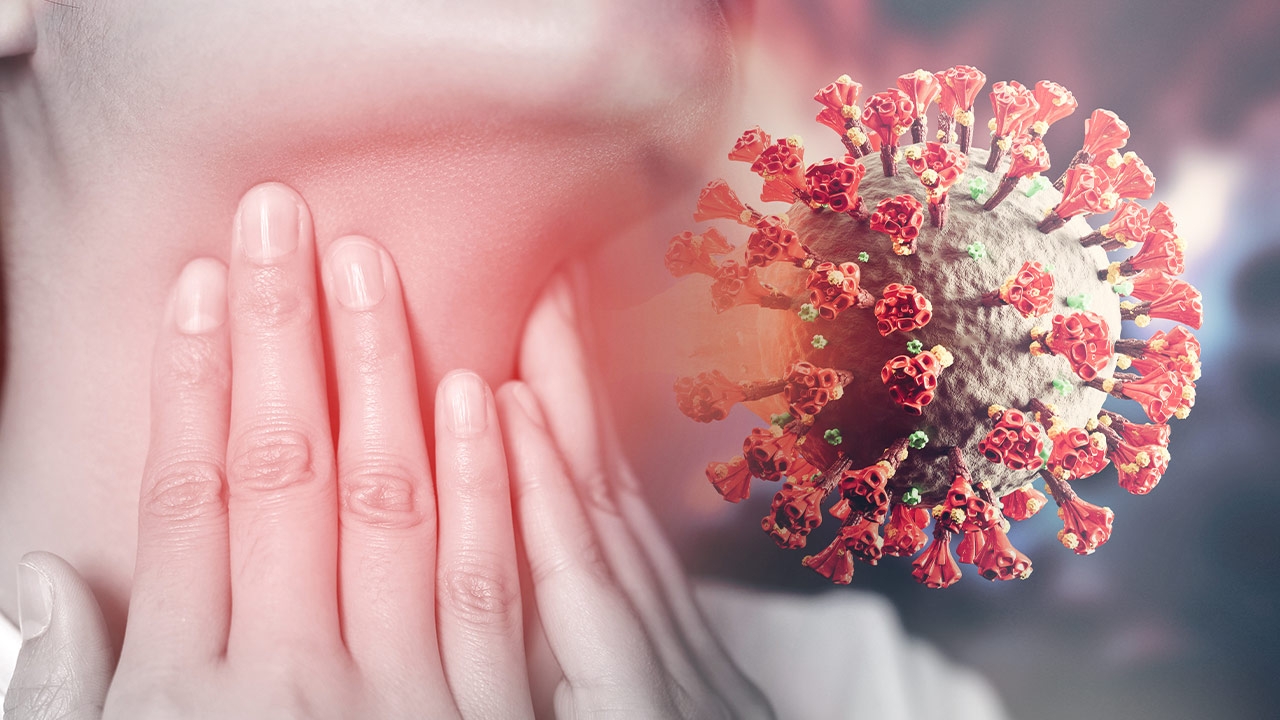
The latest COVID-19 situation in Thailand shows an upward trend in cases, with variant NB.1.8.1 accounting for over 50% of infections. The Department of Disease Control confirms no evidence of increased severity but stresses that high-risk groups 608 and young children require special vigilance.
The Department of Disease Control, Ministry of Public Health, revealed that over the past year, the main COVID-19 variant has been NB.1.8.1, but there is still no evidence that it causes faster spread or more severe illness. Thailand’s COVID-19 situation shows an increasing trend compared to the previous week, with no reported deaths or cluster outbreaks. The department emphasized that the public should closely monitor their symptoms and strictly follow preventive measures to avoid spreading the virus, especially among high-risk groups such as young children and the 608 group. When entering crowded or confined spaces, wearing masks at all times and frequent handwashing are advised. Anyone feeling unwell should promptly seek medical attention.
Today (24 May 2026), Dr. Montien Kanasawat, Director-General of the Department of Disease Control, cited data from Singapore’s Communicable Diseases Agency as of 21 May 2026 regarding COVID-19 infections. From 10 to 16 May 2026, 12,700 cases were reported, up from about 8,000 the previous week. Average daily hospitalizations rose from 56 to 73, with about one ICU patient per day. The dominant circulating variant was NB.1.8.1, found in more than half of detected cases. In Thailand, 2026 data from the Disease Surveillance System (DDS) as of 23 May showed a total of 3,642 COVID-19 cases and one death. Most cases were aged 30–35, followed by those 60 and older, then 20–29 years. Although reported cases have increased over the past month, levels remain below the five-year median.
Regarding SARS-CoV-2 variants in Thailand, data from the Health Science Research Institute, Department of Medical Sciences, between 1 January 2025 and 23 April 2026 show that NB.1.8.1 is the dominant variant circulating in Thailand, accounting for 50.95% of samples tested, followed by JN.1 at 24.97%, and XEC at 9.14%.
“In 2025, case numbers and cluster outbreaks rose between April and June. Surveillance of SARS-CoV-2 variants in Thailand found NB.1.8.1 to be the primary variant spreading during this period. NB.1.8.1 has multiple spike protein mutations beyond those in JN.1, enhancing its transmissibility and immune evasion capabilities, though there is still no evidence it causes more severe illness.”

Dr. Direk Khamphan, Deputy Director-General of the Department of Disease Control, added that COVID-19 in Thailand has become endemic or seasonal. Although disease severity and transmission trends have declined, key preventive measures must be maintained, balancing social measures with the new normal. Strict adherence to COVID-19 prevention is emphasized, focusing on personal hygiene: 1. Frequent handwashing with soap and water or alcohol-based gel before eating, after using the restroom, or after touching commonly shared surfaces like doorknobs and stair rails. 2. Covering mouth and nose with a cloth or tissue when coughing or sneezing every time.
3. Avoiding crowded or congested areas; if unavoidable, wear a mask at all times. 4. Avoid close contact with anyone showing respiratory symptoms to reduce infection risk, especially for high-risk groups 608, including the elderly and those with chronic diseases, who face higher risk of death if infected. 5. If symptoms such as fever, cough, or runny nose occur, perform a preliminary test with an antigen test kit (ATK) and avoid close contact with others, especially young children, elderly, and those with underlying conditions, to prevent bringing the virus home to vulnerable groups. If positive, seek medical care immediately. The public can call the Department of Disease Control hotline at 1422 for more information.

Based on surveillance by the Department of Disease Control and international epidemiological data, variant NB.1.8.1 (nicknamed "Nimbus" in some countries) has symptoms similar to the original Omicron variant but with distinctive features worth noting.
1. Prominent symptom: “Severe sore throat like a cut”
Although symptoms resemble those of a common cold, most patients report a more distinct characteristic symptom compared to previous variants:
Severe sore throat, often sharp or feeling like a sharp object is cutting the throat, especially when swallowing or folding the neck (reported in over 70% of infected individuals).
Upper respiratory symptoms such as runny nose, nasal congestion, and primarily dry cough.
Fatigue, with tiredness and muscle aches, though generally less severe than with the Delta variant.
2. Differences from previous variants (Delta/early Omicron)
Characteristics | Previous variants (Delta/early Omicron) | Current variant NB.1.8.1 |
Loss of taste/smell | Commonly causes clear loss of taste or smell | Very rare (below 1%) |
Transmission speed | Spreads quickly | 1.5 to 2.5 times faster spread due to spike protein mutations |
Immune evasion | Vaccine-induced immunity still effective | Better immune evasion from both vaccine and prior infection immunity |
Lung severity | Often causes pneumonia (Delta) | Low severity, mostly limited to upper respiratory tract |
3. Why is monitoring necessary?
Although severity has not increased, concerns remain about the variant's enhanced transmissibility and shorter incubation period, which can cause rapid widespread outbreaks potentially impacting:
High-risk groups 608 and young children: While the virus may be mild for most, its easy spread could cause complications requiring hospitalization in vulnerable individuals.
Long COVID symptoms: Although initial symptoms may be mild, repeated infections carry a risk of developing Long COVID conditions.