

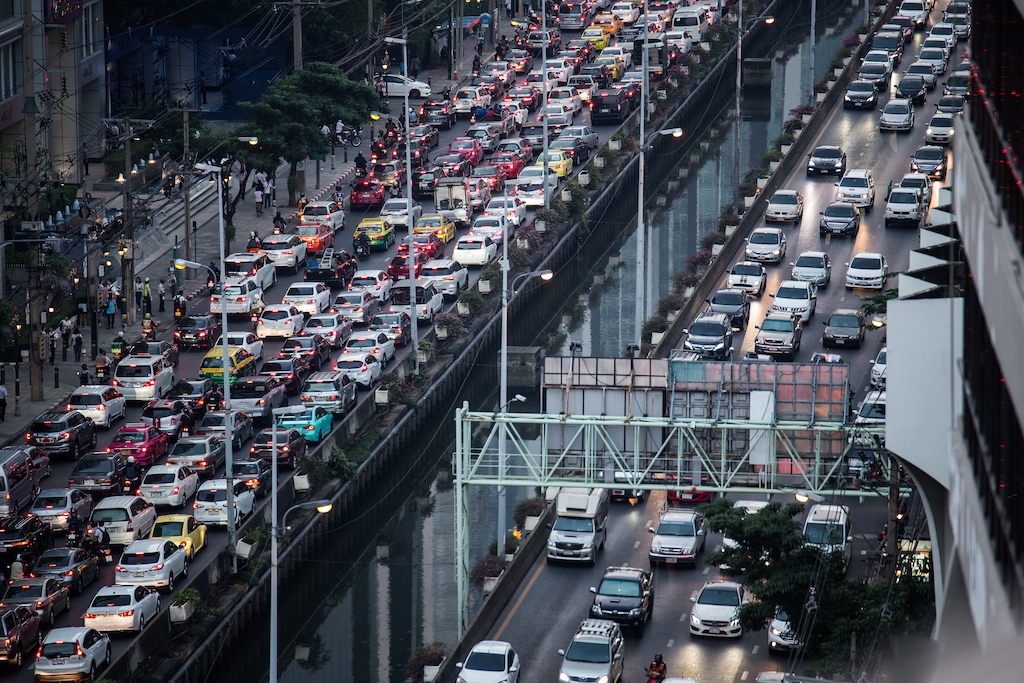
"Bangkok," the capital where life is stuck in traffic, faces chronic congestion that has accompanied its residents for decades. The governor’s seat is often called the "trial chair," with every candidate bringing a manual to solve this problem. However, each era’s concepts and changes in handling the traffic crisis have looked completely different.
The approaches of Bangkok governors to solving traffic have evolved according to technology and urban development concepts as follows.
Pioneering Era and Basic Mass Transit (Lieutenant General Chamlong Srimuang) At a time when Bangkok first faced severe traffic jams, the focus was on organizing buses, expanding road surfaces, and initiating large-scale mass transit projects (which later became the BTS Skytrain) to encourage people to leave private vehicles.
The "Mega Project" and Expressway Era (Dr. Pichit Rattakul – Mr. Samak Sundaravej) This era believed "traffic jams must be solved by building more roads." There was construction of overpasses, elevated expressways, and many underpasses, as well as launching the first BTS line in 1999. Yet, the more roads built, the more cars appeared alongside.

Era of Connecting Rail, Road, and Boat Systems (Mr. Apirak Kosayothin – Mom Rajawongse Sukhumbhand Paribatra) The idea shifted from building roads to "integrating public transport systems." There was promotion of Bus Rapid Transit (BRT), extension of rail lines, and restoration of passenger boat routes in various canals to offer more travel options.
Era of Record-Breaking Rail Expansion and Smart Technology (Police General Aswin Kwanmuang – Mr. Chadchart Sittipunt) Bangkok became surrounded by multi-colored rail construction sites. Immediate solutions involved restoring road surfaces and introducing technology such as Intelligent Traffic Management Systems (ITMS), traffic control with police via Command Centers, and micro-level policies like improving sidewalks and covered walkways to ease access to transit stations.
