

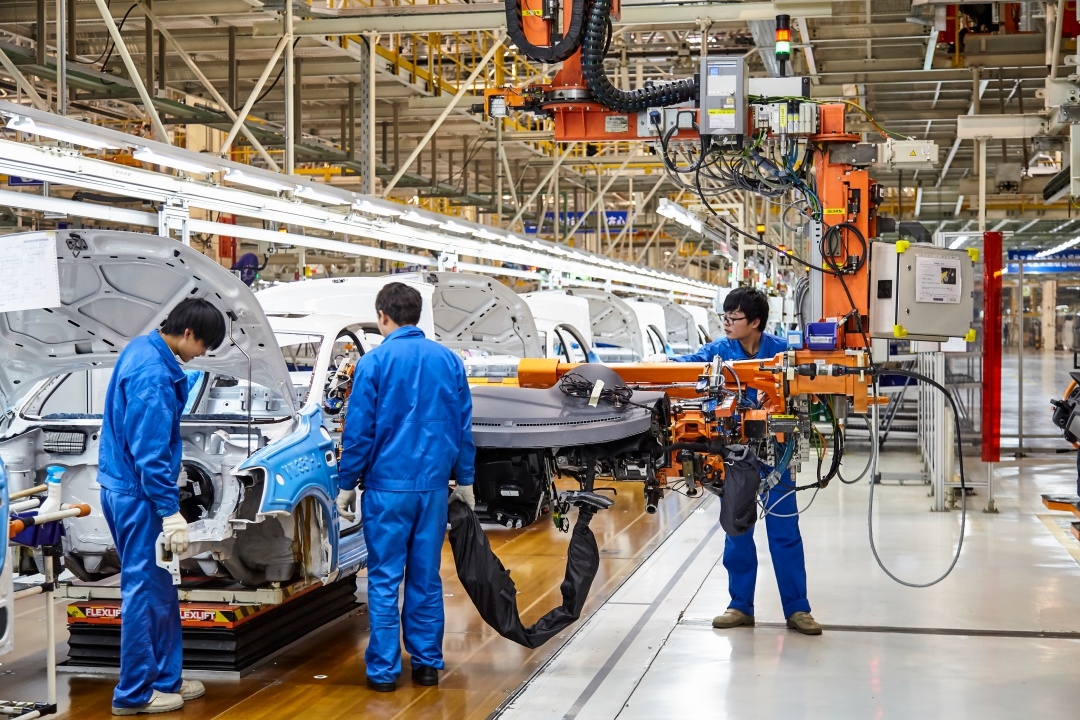
In recent years, Chinese factories have clearly made Thailand one of their top investment targets. In 2025, Chinese investment capital surged continuously, with 984 approved projects totaling over 198.158 billion baht, a 13.6% increase, expected to create more than 220,000 new jobs for Thai workers.
"Why Thailand?" and "Are these factories generating wealth or causing suffering for Thai workers?"
The migration of Chinese capital is not accidental but driven by three main pressures and strategic opportunities.
Trade War and Tech War: China faces heavy tariffs and restrictions from the U.S. and Western countries. Moving production to Thailand is a strategy to "revive" by changing product origin to Made in Thailand, allowing exports to global markets without harsh tariffs.
Chinese factories benefit from Thailand's attractive incentives and prime locations. The Board of Investment (BOI) offers enticing tax benefits, and the Eastern Economic Corridor (EEC) has infrastructure like roads and ports ready to support large industries.
Chinese capital also values Thailand's strong existing industrial ecosystem, especially in automotive and electronics sectors.

The current Chinese investors are not focusing on textiles or cheap toys as before but are moving into "industries of the future" with higher technology, including:
Electric vehicles (EV) and parts: Major Chinese automakers choose Thailand as a hub to produce right-hand drive cars for ASEAN and global markets.
Smart electronics and printed circuit boards (PCB): Many factories producing components, semiconductor devices, and PCBs have established bases here.
Machinery, metal, and basic materials: These factories support ongoing construction and industrial expansion.
Renewable energy: Especially solar cell manufacturing and green technologies.
Regarding working conditions and welfare in Chinese factories, the image in Thai society today is quite a "double-edged sword" with stark contrasts.
For large Chinese organizations or leading electric vehicle groups, salary structures and benefits are attractive to compete for skilled Thai labor.
Starting salaries are comparable to or higher than general industry standards.
Support benefits include transportation services, free dormitories or housing allowances, and free meals two to three times a day. Monthly or annual performance bonuses are also relatively high to boost productivity.
On the other hand, medium-sized Chinese factories, suppliers, or subcontractors are often portrayed negatively in media and through Thai workers' complaints.

Chinese capital enforces a "996" work culture focusing on maximum efficiency. Many Thai workers report high pressure environments with strict rules like no talking, no idling even if tasks are finished, and irregular working hours.
Issues of "double standards" and harsh wage deductions have been reported, for example, in industrial estates in Rayong and Prachinburi. Welfare systems favor Chinese employees over Thai workers, and disciplinary penalties can be excessively severe, such as cutting bonuses for legally permitted leaves.
Problems with delayed wage payments and illegal labor use have emerged, especially in factory construction and some suppliers. Delays in international money transfers have led to strikes, alongside attempts to smuggle undocumented Chinese workers, threatening Thai employment opportunities.