

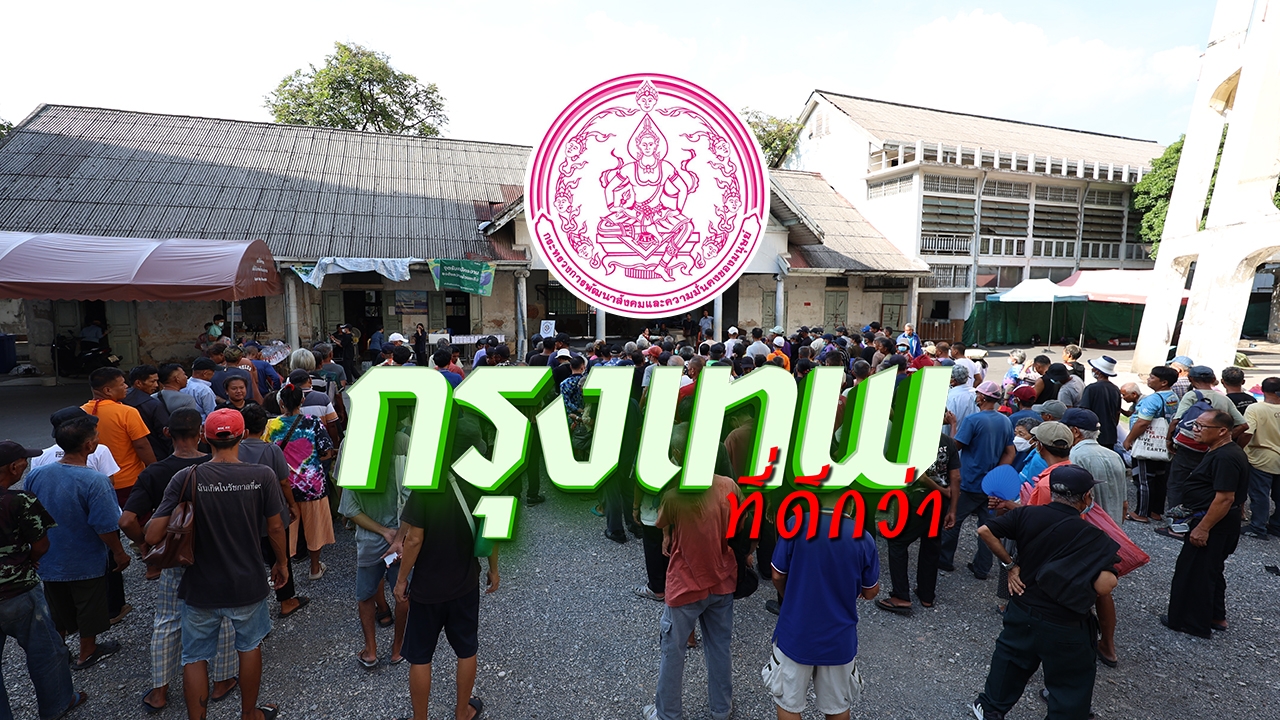
The Ministry of Social Development and Human Security points to the homelessness crisis in Bangkok as stemming from skyrocketing rental costs, wages that have not kept pace with expenses, and growing household debt leading to property seizures. Meanwhile, some groups lack access to job-related technologies, missing chances to sustain their livelihoods.
Data from the Ministry of Social Development and Human Security outlines the situation of homeless people in Bangkok. A survey conducted three times between 2019 and 2025 counted the number of homeless nationwide. In 2019, there were 2,721 homeless individuals nationally, with 1,029 of them (37.81%) in Bangkok.
In 2020, the homeless population increased from 2,721 to 3,534 individuals.
By 2023, the number of homeless people decreased to 2,499 nationwide, with Bangkok having the highest count at 1,271 individuals (50.86%).

Regarding statistics on those in need at the Bangkok Protection and Quality of Life Center, which provides internal services, registrations and requests for assistance over the past five years are as follows:
/Year | Number of service users (people) |
2021 | 424 |
2022 | 385 |
2023 | 412 |
2024 | 658 |
2025 | 517 |
2026 (Oct 2025 – Apr 2026) | 259 |
Data as of 6 May 2026 GMT+7
Statistics over the past five years reveal that the homelessness situation in Bangkok reflects clear shifts in the economic and social structure. The homeless population fluctuates according to circumstances, especially after the COVID-19 crisis, which impacted employment and income. Although nationwide numbers sometimes decline, Bangkok remains the area with the highest concentration of homeless individuals, posing a major long-term urban management challenge.
Among state shelters nationwide, there are 11 facilities with a capacity of 3,980 people. Currently, 5,049 individuals are housed in these shelters, exceeding capacity by 1,069 people.
Statistics from these 11 shelters from 2021 to present show a consistent annual increase in numbers. Of these target groups, 80% have mental health conditions and are referred from various agencies, including psychiatric hospitals and prisons, often due to drug addiction and behavioral issues.
Most of these individuals have histories of troubled family relationships, violence, and substance abuse, leading families and communities to reject their care. Coupled with economic and social pressures, this drives these individuals to rely increasingly on state support.
Examining causes reveals this issue arises from multiple overlapping factors, especially economic ones such as unemployment, insufficient income relative to living costs, and housing insecurity. Family problems and limited access to government welfare, particularly for vulnerable groups, further compound the problem. This shows homeless individuals are not just "disadvantaged" but have "fallen out of multiple social systems" simultaneously.

According to 2023 statistics from the Ministry of Social Development and Human Security and Chulalongkorn University on reasons for homelessness, the primary causes are:
1. Unemployment, job loss, or dismissal, accounting for 44.72%.
2. Family problems, which contribute 35.18% to homelessness risk.
This highlights that economic factors and family relationships are key drivers pushing individuals into social vulnerability.
Another significant factor is social context. Thai society is characterized by compassion and a culture of sharing. When people encounter those in hardship, they often respond with sympathy and assistance such as food, necessities, or money, leading to many homeless individuals gathering in public spaces, particularly in Bangkok.

Some homeless or displaced people believe that even without regular work or income, they can survive in public areas due to the generosity and kindness of compassionate individuals. This factor enables them to sustain life in public spaces continuously.
Survey findings also reveal a "new homeless" group—people who have been homeless for less than two years. This is a significant current challenge, reflecting gaps in the economic and social welfare systems that cause formerly employed and housed individuals to become homeless suddenly. Key causes include:
1. The rental crisis, with urban housing rents rising rapidly while minimum wages lag behind, meaning that losing income for just one or two months can result in immediate eviction.
2. Household debt, including asset or home foreclosures due to guarantees or informal loans.
3. The digital divide, where some cannot access technology for job searching or registering for government welfare, missing opportunities to sustain their livelihoods.