

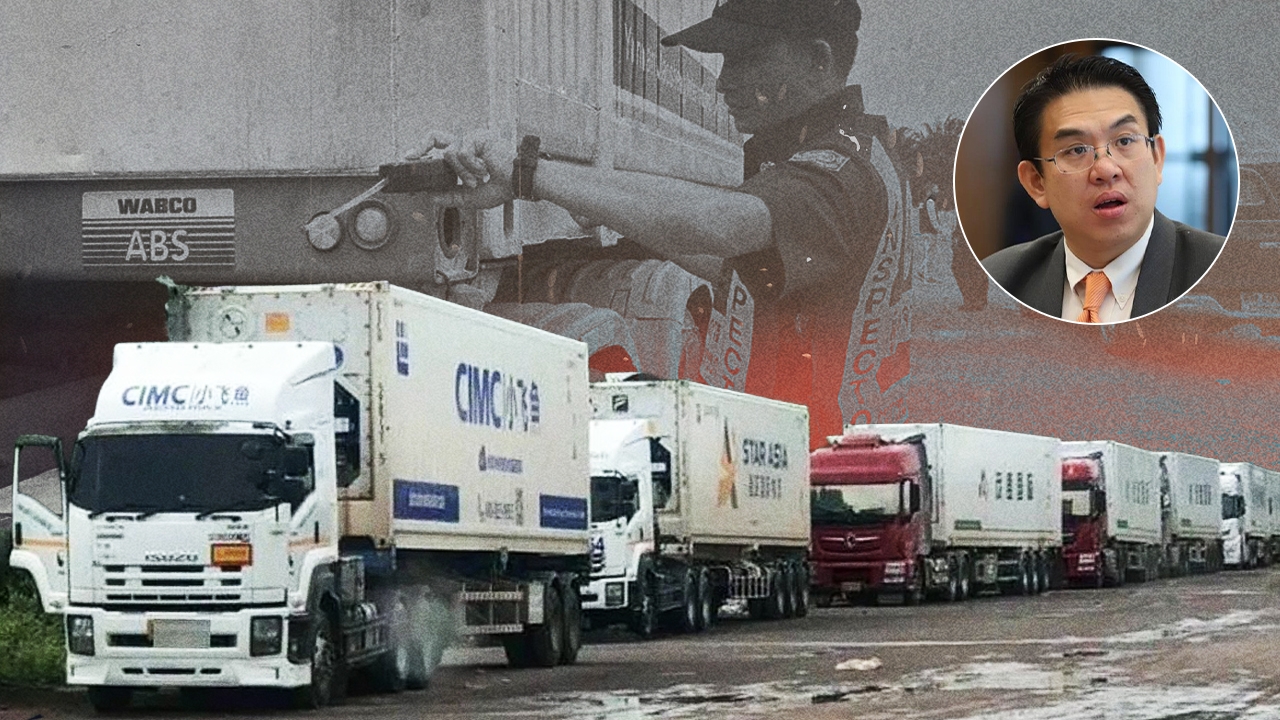
Chinese-plate trucks are running off authorized routes all the way to the south. Viroj condemns this as a loss of Thai transport sovereignty and questions whether this signals a 'Sticker Bribery 2.0' scheme. He also suggests possible links to foreign nominee fruit warehouses and advises the government to communicate the enforcement of laws and push for border cargo transfer centers to restore opportunities for Thai operators.
Earlier in July 2026, reports emerged that officials inspected and intercepted "Chinese-registered trucks" at a fruit market in Lang Suan District, Chumphon Province. These trucks were found collecting fruit from warehouses to sell in China, which constituted running outside the permitted routes under the Greater Mekong Subregion (GMS) economic cooperation framework, limited to northern, central, northeastern, and eastern regions only (read more:).Transport authorities intercepted Chinese trucks illegally traveling south, seizing five vehicles in Chumphon for violating GMS regulations.)
Authorities also found multiple violations of Thai laws, including bypassing weigh stations and lacking GPS devices, raising questions about how these trucks managed to travel all the way south to Chumphon.

Thairath Online's special news team discussed this issue with Mr. Viroj Lakkhanaadisorn, Deputy Leader of the People's Party (Special Affairs), who has closely followed the 'Sticker Bribery' issue. He explained that the arrests in Chumphon highlight several problems. The first issue is
vehicles traveling outside the designated routes under the Greater Mekong Subregion (GMS) economic cooperation framework and the Cross Border Transport Agreement (CBTA). These agreements aim to ensure continuous regional transport without needing to change vehicles if the destination is nearby. For longer or complex routes, they allow Thai operators to handle cargo transfers and continue transportation.
The second issue is
non-compliance with Thai laws, such as GPS installation, weigh station stops, and compulsory insurance, among others. This has led many to suspect that the Chinese characters on these trucks act like a "sticker" that causes relevant officials, from weigh station officers to police, to overlook violations in exchange for benefits. "Foreign trucks are easy to spot simply because their lettering isn’t Thai. Thai police and officials are skilled at noticing and inspecting such vehicles. The fact that these trucks slipped through raises questions about possible neglect or deliberate tolerance, which usually isn’t free of charge."
He noted that Thai trucks operating abroad must comply with foreign laws, and if they violate routes, they would be caught. Conversely, when foreign trucks operate in Thailand without following laws yet avoid penalties, it creates unfairness in the transport sector and disrespects Thai road users and operators.
Additionally,
there are concerns about safety and security risks, including the illegal import of goods, electronic waste, or even serious issues like drug trafficking and human trafficking. "What’s happening is a loss of sovereignty over national transport. Allowing foreign trucks that disregard Thai laws to operate and earn income on Thai soil—passing police without arrest and bypassing weigh stations—undermines the system."
Why Lang Suan, Chumphon?

Mr. Thongyu Kongkhan, President of the Land Transport Federation of Thailand, explained to the news team that the area is a major wholesale fruit trading hub, with diverse fruit cultivation providing year-round produce. Regarding "durian," which is harvested from July to October—immediately following the durian season in the eastern region—making it a target for operators to buy fruit after the eastern harvest. Meanwhile, Viroj believes another issue requiring investigation is whether the fruit warehouses selling to these Chinese trucks are owned by foreign nominees or have a majority of foreign shareholders.
"It must be acknowledged that many fruit warehouses have foreign nominees involved in their operations. Otherwise, how would foreign trucks know to come here to pick up goods unless they had previously arranged purchases in the area?"
He advises the government to communicate and enforce laws strictly and promote transfer centers.

There is a possibility that some foreign operators misunderstand regulations or
"are mistaken," thinking that because others have done it, it is correct. Meanwhile, some intentionally pay bribes or consider paying small fines acceptable. "Some think that filling a truck with durians and paying bribes is worthwhile, or that being caught and fined a few thousand baht is just a manageable cost, allowing them to pick up durians all the way to Chumphon."
He also suggests forming cooperative alliances in the transport business using
large border cargo transfer and distribution centers operated by the Department of Land Transport. Currently, there are two main centers for Thai-Laos-China trade: the Chiang Khong cargo transfer center in Chiang Rai Province and the border transport center in Nakhon Phanom Province (At Samat Subdistrict, Mueang District). "If we align interests and designate transfer centers where Thai operators can participate fairly, but foreign trucks still violate laws, police should arrest and prosecute them. This would prevent escalation into disputes between Thailand and other countries, as it shows mutual understanding has been reached."