

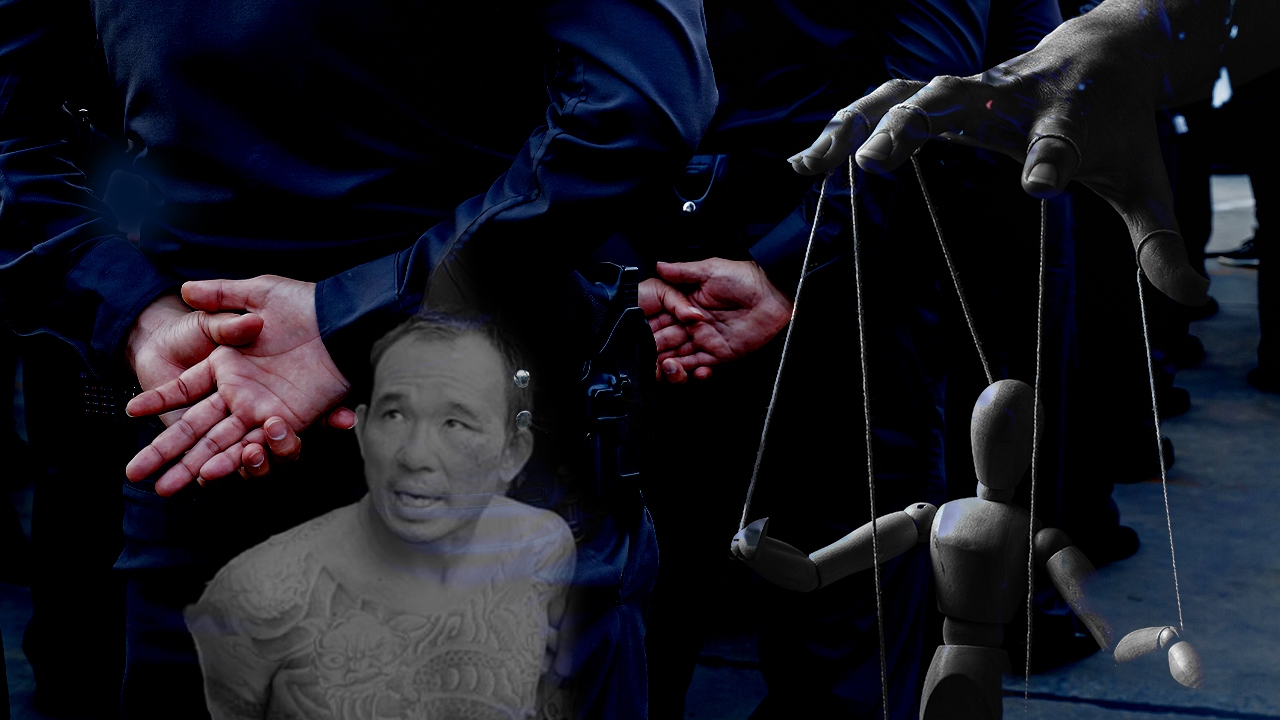
An exposé on the hidden workings of the "police informants" system—a dark practice within the Thai police force involving criminals used to catch criminals—and the controversy over who will take responsibility if "Ai Pong," the suspect in five murders, is truly connected to officials.
The shocking double murder case of two Russian siblings led to the arrest of a suspect known as "Ai Pong." It was then discovered there were other victims, totaling five deaths, sparking public alarm and questions about the justice system and prevention of repeat offenses.
At the same time, a mystery arose that "Ai Pong" might be linked to Huay Yai Police Station in Chonburi Province, serving as a "police informant" or spy working for the police. The Thairath Online special news team interviewed
Pol. Maj. Gen. Suphisarn Phakdinarunat, former commander of the Crime Suppression Division, to explain what a "police informant" is, why police keep informants, their purpose, and who should be held responsible when informants become a social danger. What is a "police informant"? Pol. Maj. Gen. Suphisarn explained that police work divides into two main branches: prevention and suppression (patrol) and investigation (detective). Most methods still rely on

where junior officers imitate their seniors or chiefs as examples. "Police informants" have long existed in the Thai police world because the investigative system has not evolved to modern standards. Internationally, good investigations require "undercover agents,"
either by training officers to go undercover or by systematically hiring outsiders in exchange for benefits. However, in Thailand, finding reliable individuals willing to take risks is difficult, leading to a "using criminals to catch criminals" approach, where local offenders or youths are employed, giving rise to the term "police informant," meaning someone who must obey orders pointed out by their handler. The value of informants lies in their use. In police station detective rooms, young runners volunteer to work in exchange for food. But with drug issues, some users began exchanging seized evidence to consume, so detectives kept some evidence as leverage. Over time, these regular informants grew close to police, calling them "boss."
If they behaved well, some might be promoted to
"police volunteers," sent to watch crime scenes or conduct drug buys on behalf of officers. Selecting informants is informal and depends on the detective or patrol officer's preference and skill in managing relationships, as these individuals survive through exchanging benefits like food, money, drugs, or other privileges such as free meals at the station. One officer may use several informants depending on their management ability. How many types of "police informants" are there? Informants roughly divide into three types with different uses, including those working to help police protect citizens and those misused for illegal work or mutual profit:
Intelligence gatherers or buy-bust informants, are valuable, willing to take risks to gather information in communities or criminal gangs. They are very useful in conducting buy-bust operations for drugs, as they blend in better than police and arouse less suspicion. Drug couriers or extortion runners,

Personal informants or "product sellers", are the most dangerous type because officers use them personally to commit crimes together by diverting drugs seized from arrests to sell for profit.

Tracing communication technology, checking all confiscated phones to see whom Ai Pong contacted in the two months after release and from 2014 to 2018 before imprisonment—identifying who supervised him and enabled his criminal acts. Today, it's possible to track calls and CCTV footage to determine which police stations he visited and whom he met. Reviewing Huay Yai Police Station's crime statistics,
to assess the number of drug cases, whether there were arrests of small-time dealers. If no arrests occurred despite known dealers, it may indicate cover-ups or negligence by officers.
Confirming Ai Pong's behavior,
Handling officers involved, the Royal Thai Police must proceed based on evidence, starting with Ai Pong's wife identifying and describing behaviors. However, as she is a witness for the opposing party, her testimony alone is insufficient. Additional credible evidence, such as phone contact logs, is needed to confirm genuine connections and officer culpability.