

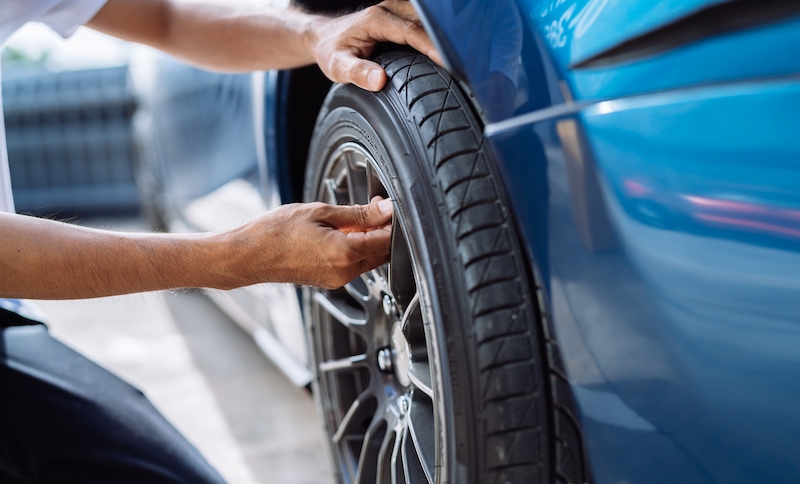
Car tires are the only part of a vehicle that directly contacts the road surface and are a key factor in determining safety on every trip. However, many drivers still have the common questions: "How do we know when it's time to change tires?" and "What happens if we stubbornly keep using them?"
Generally, there are two main criteria to consider when deciding when to replace tires.
Regarding time, it is recommended to start checking tire condition thoroughly after 2–3 years of use and to replace them after 4–5 years from the date of manufacture or first use, as the rubber compound begins to deteriorate and harden over time.
Regarding distance, tires should be replaced every 40,000–50,000 kilometers, depending on driving habits and road conditions.

You don't have to wait until the recommended years; if you notice these warning signs, it means your tires are signaling for help.
Tread Wear Indicator: Look inside the tread grooves for small rubber bars. If the tread is worn down flush with these bars, the tires are worn out.
Cracked or bulging sidewalls occur due to aging rubber or severe impact. If the sidewall is bulging, replace the tire immediately as it is at high risk of blowout.
Hardened rubber: Try pressing your nail into the tread. If it doesn't penetrate, the rubber is hardening, and abnormal squeaking sounds when turning corners may occur.
Longer braking distances or vehicle skidding: You may feel that braking no longer stops the car within the usual distance, or the vehicle skids when driving on wet roads.

Many people try to save money by using old tires longer, but that savings may come with huge risks:
Dangers from worn tires | Consequences |
Tire blowout while driving (Blowout) | Risk of losing control, vehicle rollover, or severe highway accidents. |
Hydroplaning (Aquaplaning) | Shallow tread cannot channel water, causing the vehicle to skid uncontrollably on wet roads. |
Increased braking distance | Poor road grip increases the risk of rear-end collisions. |
Increased fuel consumption | Worn tires and inconsistent air pressure force the engine to work harder, increasing fuel use. |