

"It's not just quitting drugs; it's like quitting the world I used to live in."
Arm (a pseudonym), 24, a former heroin user, is currently undergoing methadone treatment.
"Probably because I didn't grow up with my parents, my friends became like another world to me. I shared many things with them that I never told my parents. We were rebellious together, had fun together, laughed together, and went through a lot together. Being with them, I didn’t have to explain myself much; just being there made me feel like we belonged together."
As a child, I rarely lived with my parents. They worked in Bangkok, while I stayed mainly with my aunt. As I grew older, I returned to live more with my family, but I still wasn’t close to my parents in every way, especially my father. He’s a quiet man who doesn’t talk much.
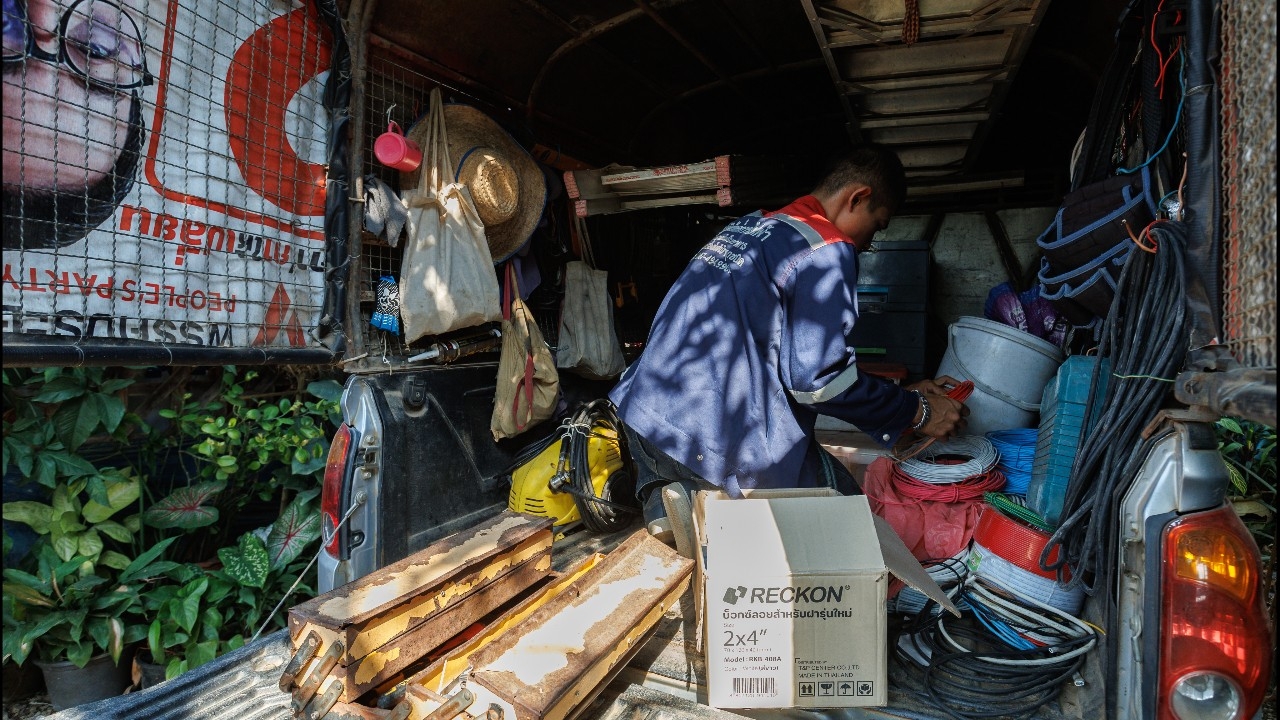
My father came back home when I was about 13 or 14. At first, he wasn’t fully working as an electrician; he collected scrap and sold rice crackers for a while before returning to electrical work. During that time, he started asking me to help with tasks like connecting light bulbs and circuits. That’s why I chose to study electrical work—it felt close to home. I’m not good at calculations, but when it comes to hands-on work, I can manage.
I’ve always been with a group of kids who sat at the back of the class. Anything people said was bad, we wanted to try. There was this feeling that if all my friends were using drugs and I wasn’t, I wouldn’t be part of the group. No one forced me, but the atmosphere just pulled me along.
I first tried cannabis at 15 because I wanted to know what it felt like to get high. At first, I didn’t think I’d get addicted; it was just fun and curiosity. Around age 20, I started using heroin. At first, I thought the same—just a little won’t get me hooked. But once addicted, it wasn’t like that. When I couldn’t use, I couldn’t do anything—my muscles ached, I had a runny nose, like being sick. Sometimes, even with my eyes closed, I saw things I craved and dreamed about them. I’d be hot under a blanket but cold without it, stuck in that state.
My personality changed. I went from listening to my parents to being aggressive and argumentative. When scolded, I’d run off to a friend’s house. Their voices became annoying to me, even though they truly cared.
I tried to quit dozens of times. When I wasn’t craving, I’d tell myself, "Enough, I’m done." But when the craving returned, I’d go back. Sometimes I’d be clean long enough to feel normal, but seeing friends or the drugs would draw me back. Each time I’d think a little won’t hurt, but it always ended up being daily again.
There was a period when my whole life was just waiting for a phone call from a friend, checking chats to see who replied or who had drugs. If no one did, I’d wonder how I’d live tomorrow or go to work without drugs.
I was arrested at 21. I thought I’d just be at the station and come home since I’d handled things before, but that time I couldn’t clear it and had to serve eight months in prison. I didn’t use drugs inside and managed. When I got out, I was determined to stop, but when I met friends again, I went back to it.
After prison, I was drafted into the military and got a red card, meaning two years of service. At first, it seemed like my life was cut off from the old cycle, but it wasn’t really. In the camp, some still used drugs, mostly methamphetamine. When going home, some brought drugs back or helped others sneak them in. They used secretly, stopping before urine tests and preparing in advance.
During military service was actually when I used the most. Without my parents around to warn me, I lived in my own world. At home, I used; in the camp, I used. There was nowhere that truly took me away from it. I felt that no matter if I changed location—from home to military camp—I still couldn’t escape.

People might think quitting is just about stopping the drugs, but for me, it also meant leaving the old friend group, the people I grew up with. If I didn’t see them, it was like starting a new life, finding new friends, or living alone.
Sometimes, that’s the hard part. It’s not just the body craving drugs; the heart is still tied to the old place, the same people, the same memories. Seeing friends and the old scene makes it easy to relapse.
The moment that really struck me was when my father said, "What will you do if one day I’m gone? Your younger brother is still very young." At that time, I felt like a burden on the family. I’m the oldest, but if I keep acting this way, I won’t be able to guide my brother. I was afraid he’d end up like me.
When I decided to go for treatment, I didn’t even tell my father in person. I just messaged him, "I want to quit. Can you take me?" He agreed and took me to Thanyarak Hospital in Chiang Mai.
After starting methadone, my life changed a lot. Before, if I didn’t use, I couldn’t eat. I had to use first to eat. Now, I wake up, take methadone, go work with my father, and on days off, I go fishing. I try not to leave myself idle. The money I used to save for drugs now buys things I want—fishing rods, bait. My health improved, and my weight returned.
"If you ask what pulled me out, I’d say it’s family. When I was at my worst, some friends left when I had nothing, and my girlfriend left too. But my parents never left. No matter how bad I was, they still saw me as their child."
Note: This story is based on a direct interview with an individual supported and connected to services through the Give Hope group in Tak Province. A pseudonym is used and some details are withheld to protect the privacy and safety of the subject.