

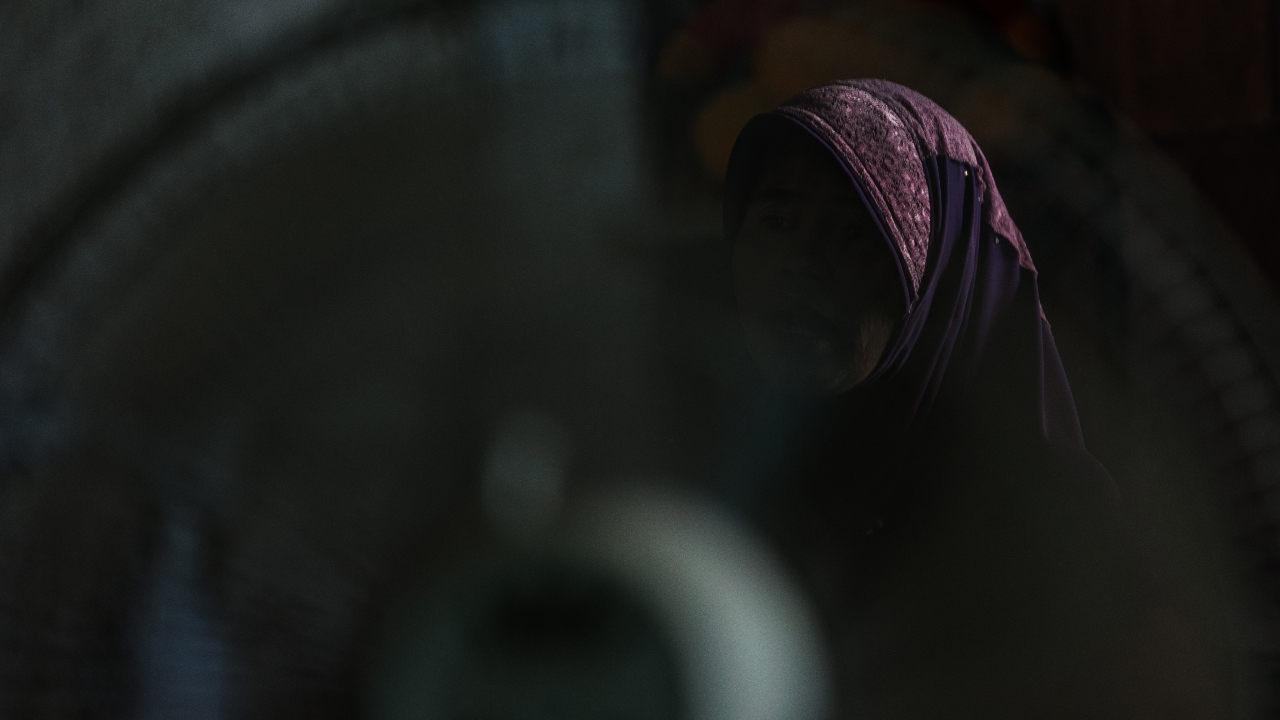
"When I was at my worst, there was no one to help me."
Dao (a pseudonym), 50 years old, a former human trafficking victim, is now a farmer and works to provide harm reduction education among substance users and women in sex work.
"I started going out when I was 12. Back then, I was very rebellious. My parents forbade me, but I didn’t listen. I ran away from home to attend various events, stayed with friends, sniffed glue, smoked marijuana, and hung out with boys. My parents searched for me often, but I refused to return."
A teacher once asked me what I wanted to be when I grew up. I answered right away, “I want to be a prostitute.” My friends looked at me like I was crazy. I was very young and didn’t really know what that meant. I just heard from friends that it paid well and you could dress nicely. I saw women in bars and shops—they looked beautiful and wealthy. I thought that kind of life must be good."
When I was 19, I went to Bangkok with a friend. A woman approached us, saying she would take us to work in Hat Yai. She bought us food and took good care of us, making us feel happy. Then she took us to a house and told us to wait there; someone would come to pick us up. She gave us something to eat—I don’t know what it was—and we all fell asleep. When we woke up, that woman was gone.
We woke up to a stranger who told us, "You have to stay here. I bought you, 1,500 baht each." That’s when I realized we couldn’t leave. He locked the door and guarded us constantly. He bought us whatever we wanted—clothes, cosmetics, drugs—but we had to work for him.
He made us dress up and sit with guests. We had to bring back money. If a guest chose us, we had to go with him. If we refused, we were beaten. If we tried to escape, we were tortured. He warned us, "Don’t run away. If you do... you’ll die."
At first, I thought this was the job I had wanted. But in reality, it wasn’t a choice—it was forced. Some days my body hurt so much, but I still had to dress up and work with no days off. I worked during the day and sat drinking at night. If I didn’t bring money, they cut my food allowance and beat me.
Sometimes I didn’t want to sleep with guests, but I had to. If I refused, they stood guard outside my room. I called it 'gritting my teeth.' They could do whatever they wanted; I just wanted it over and to avoid more beatings.
Drugs entered my life then. They forced me to take them, saying if I didn’t, I wouldn’t have the strength to work or to perform in front of guests. At first, I was forced to use. Later, I wanted to use because it made me forget everything for a while—forget that I didn’t want to be there, forget the pain, forget not wanting anyone to touch me.
But when the effect wore off, everything came back—stress, depression, pain—and I had to use again. It gave me temporary happiness but took a lot in return—my health, my mind, my memory, my life.

I tried to escape many times, countless in fact, but never succeeded. They said if I wanted to leave, I had to pay a 3–4 million baht fee. Where could I get that? The money I earned was all taken by them, and the rest was spent on drugs.
I stayed in that cycle for many years until someone helped me out. He was like a person who pulled me out from there. If he hadn’t helped me that day, I don’t know if I would still be alive or if I would have seen my parents again.
But even after I got out, it didn’t end. It stayed in my mind, body, and memory. I remember every scene. Some nights I wonder how I survived. I thought about ending my life many times, took pills, hurt myself. To this day, I still suffer from panic disorder. The doctor says the stress has been building since childhood.
I have four children. The most painful thing is that one of them uses drugs too. Sometimes he asks me for money, and I give it even though I know I shouldn’t. But I’m a mother, I feel sorry for him. When I see him, I see myself back then. Sometimes I want to call the police on him, but I can’t do it because it feels like I’m punishing him.
Today, I work to help my friends who use drugs, women in sex work, men who have sex with men, and those who lack access to healthcare. I take them for blood tests, distribute condoms and clean equipment, bring them to doctors, provide education about HIV, sexually transmitted infections, and treatment rights. If someone wants to quit, I help them. If they’re not ready, I don’t force them. I just want them to be safe first.
I can do this work because my friends trust me. I’ve been there before. When I visit them, they know I’m not going to have them arrested or tell anyone their names. Some are afraid to see doctors, to come out, or to admit they use drugs. I understand because I don’t open up to everyone either.
People ask why I help these groups. I think simply: when I was at my worst, no one helped me. If I can help anyone now, I will—taking them for tests, treatment, telling them to use condoms when they sleep with clients, to negotiate for protection if possible. Some can refuse clients, and I’m proud of them. Sometimes I even tell them, "You’re better than me. When I was there, I couldn’t do that."
Outsiders see drug users as unemployed thieves or bad people. I don’t deny some are like that, but not all. Even if they use drugs, they’re still human. Some want to improve, but heavy stigma only makes things worse.
Especially for women—Muslim women who use drugs or have sold sex—they face harsher judgment than men. Men who use drugs are often overlooked by society, but women are insulted, seen as bad, unwanted, and shameful to their husbands.
I’m not saying I’m a good person. I know I’ve made many mistakes and caused my parents much pain. Sometimes I argue with my mother at night and apologize the next morning saying, "I’m sorry, I was wrong." I love my mother, but sometimes her way of showing love is oppressive. She complains, scolds, and brings up old issues every day, which triggers me and makes me lose control.
I once said that if my stress doesn’t end, the drugs won’t go away either. That’s really how it is. Every day I have many worries—finding money, taking care of my mother, dealing with my children, working, going out in the field, helping friends, taking care of myself. Sometimes when people see me laughing, they think I’m happy, but inside, some days I feel like dying.
If you ask who can become addicted, I think anyone can—poor people, rich people, religious people, people with high positions, even those who dress well. Rich people just hide it better; poor people get caught, blamed, and arrested first.
I think people shouldn’t see drug users as demons. They’re human beings. Some don’t want to live that way, but if no one listens, helps, or gives them a place to return to, they’ll stay trapped in that cycle.
As for me, I’m still living like this—still using drugs, still working, still taking care of my mother, still helping friends who use drugs, still stressed, still crying easily, then quickly recovering. Some days, just being alive is an achievement."
Note: This story was created from an interview with a direct-experience individual, supported and connected to services through the Drug Harm Reduction Center by the Thai Drug Users Network (TDN Trang). A pseudonym and some details have been used to protect privacy, safety, and dignity of the storyteller.