

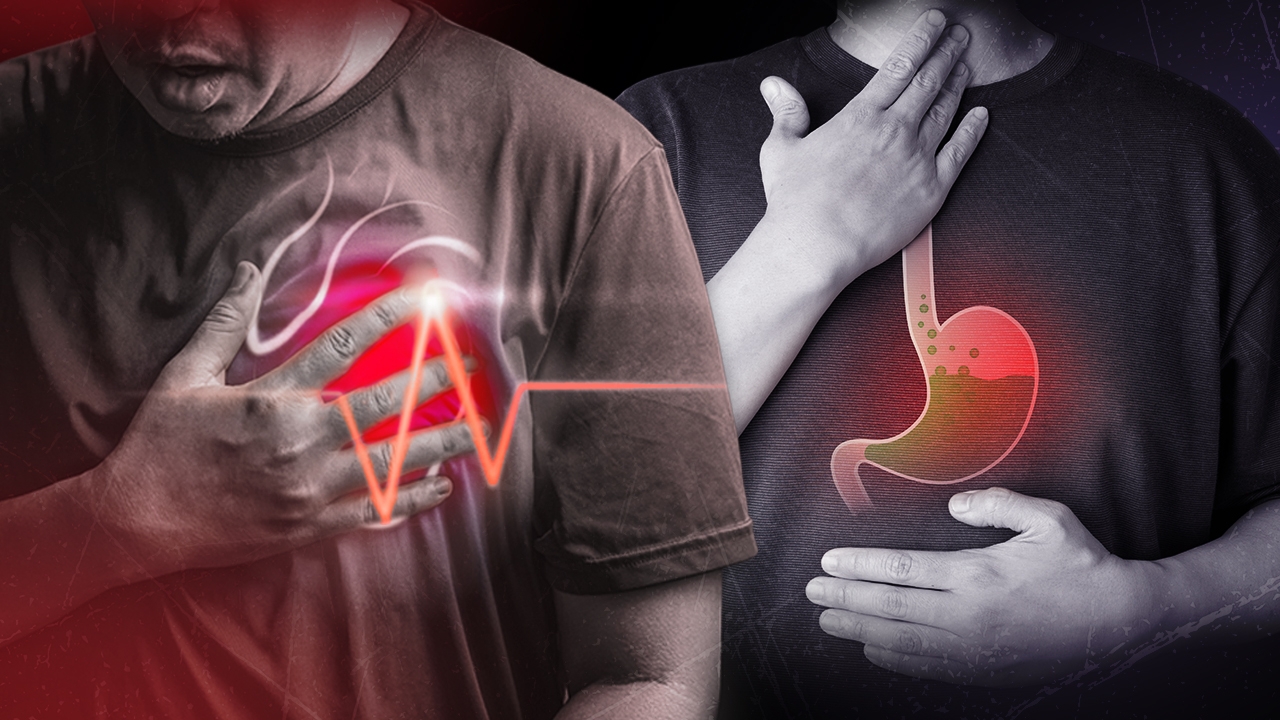
This summary compares the symptom differences between "acid reflux" and "coronary artery disease," conditions often misunderstood by patients who delay treatment, sometimes resulting in severe complications, loss of consciousness, and death. Therefore, if severe abnormal symptoms occur, one should seek medical attention promptly.
Information from Vejthani Hospital states that many people confuse the symptoms of "acid reflux" and "coronary artery disease" since both can cause chest pain. However, the causes differ significantly. Understanding these differences helps in proper health care and prevention of potential complications.

Acid reflux occurs when stomach acid flows back into the esophagus, causing a burning sensation in the chest, a bitter taste in the mouth, or sour belching. Symptoms usually appear after eating or when lying down.

Burning chest pain
Bitter or sour taste in the mouth
Belching or nausea
Difficulty swallowing
Coronary artery disease results from fat buildup in the blood vessel walls, reducing blood flow to the heart and causing chest pain, which may worsen with exertion or stress.
Chest tightness or pressure
Shortness of breath or rapid breathing
Easy fatigue
Excessive sweating and palpitations

Acid reflux usually occurs after eating or when lying down, with a clear burning sensation in the chest.
Coronary artery disease chest pain typically occurs during physical exertion or stress and feels like the chest is being squeezed.
At Vejthani Hospital, many coronary artery disease patients initially thought their chest pain was due to acid reflux.
Two patient cases shared with Vejthani Hospital involved individuals with symptoms resembling acid reflux who were later diagnosed with coronary artery disease and received timely treatment.
If you experience unexplained chest pain, consult a specialist immediately. Vejthani Hospital has an experienced cardiology team and advanced equipment to provide comprehensive diagnosis and treatment of heart diseases.