

Chinese napa cabbage is sprayed or soaked in formalin solution to extend shelf life during transport, raising serious concerns among Thai consumers, especially for cabbage imported from China via border checkpoints.
It is possible, particularly among cheap imported vegetables that travel long distances overland for several days. Formalin inhibits bacterial and fungal growth, keeping vegetables from spoiling and maintaining an unnaturally long-lasting freshness and crispness. However, government agencies such as the Food and Drug Administration and the Department of Medical Sciences regularly conduct random inspections for chemical residues and contaminants at customs checkpoints. Still, consumers should remain cautious and make smart purchasing choices.

Unnaturally fresh and crisp: leaves and stems appear fresh and firm even after being sold at room temperature for several days, or some wilted spots exist but the texture remains hard and stiff.
Strong pungent odor: when sniffed closely, the cabbage emits a sharp, nasal chemical smell resembling disinfectant rather than the vegetable’s natural scent.
No insect damage: the napa cabbage leaves are perfectly intact with no signs of insect bites or holes at all.
Outer leaves do not rot: typically, napa cabbage kept for a long time will show bruising, yellowing, or dampness on outer leaves. If left out all day and still dry and hard, it may have been sprayed with chemicals.
Still firm after cooking: when boiled or stir-fried, the cabbage takes longer to soften than usual or remains tough and rigid.

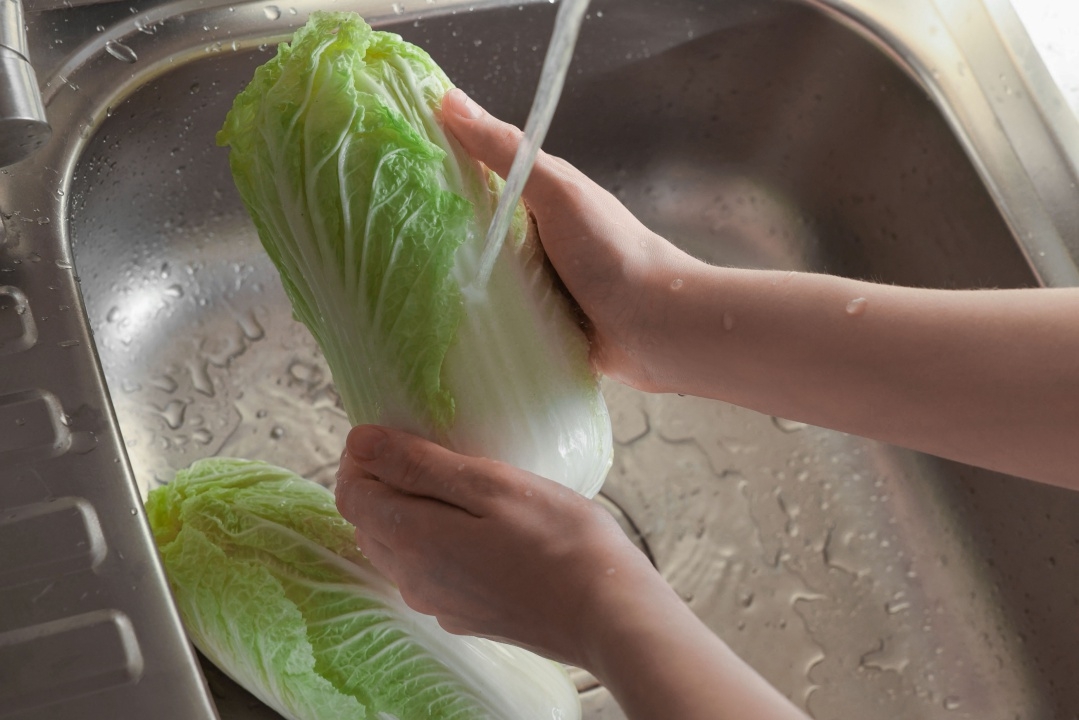
Peel and rinse under running water: separate the napa cabbage leaves and rinse each leaf under running water for at least 2–3 minutes, gently rubbing the surface.
Soak in baking soda solution: mix 1 tablespoon of baking soda in 10 liters of warm water, soak the cabbage for 15 minutes, then rinse with clean water to help reduce chemical residues.
Buy from trusted sources: support stores, fresh markets, or supermarkets with certified standards for being chemical-free, or choose napa cabbage grown domestically.
If you find napa cabbage with a strong pungent smell or abnormal appearance, avoid consuming it immediately, as accumulated formalin in the body may cause long-term damage to the digestive system and liver.