

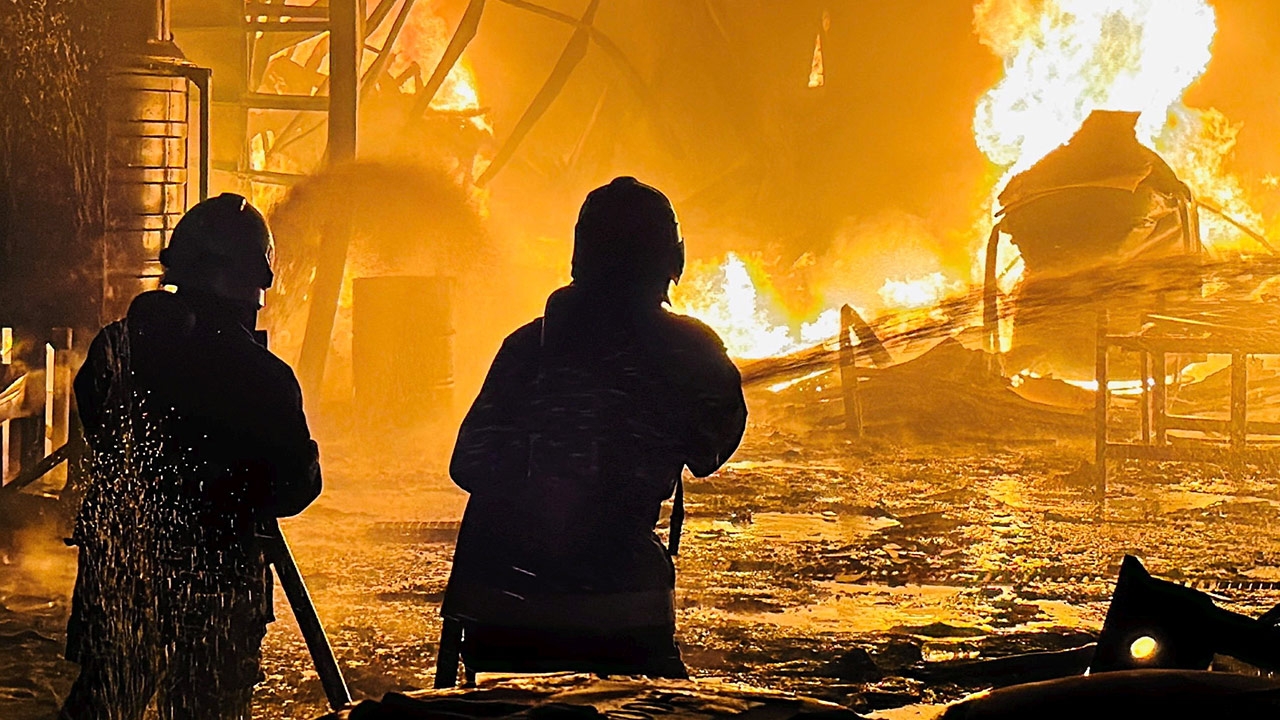
Fire statistics show an average of 7-8 fires daily caused by modern fuels such as lithium batteries found in electrical appliances and power banks, which spread rapidly and intensely, igniting within seconds—too fast for firefighting teams to contain.
Fire incidents in Bangkok have continued steadily since early 2026, with increasingly severe damage. Statistics show an average of 7–8 fires per day, causing alarm among residents in many areas of the city.
Thairath Online's special news team spoke with Jakrit Kongkam, head of the Phra Khanong Fire and Rescue Station in Bangkok, who explained that the recent increase in fire severity stems from changes in the causes and technology, especially fires originating from lithium batteries found in vehicles, electrical devices, and power banks, citing the following factors.

Fires spread within fractions of a second. Current fuels are not just wood, cloth, or paper as before, but also lithium batteries in electronics, power banks, and electric vehicles. If short circuits or heat buildup occur, combustion happens within seconds—unlike traditional fuels that take about 5 minutes to spread into a large fire.
Battery lifespan of 7–8 years. Many types of batteries used daily reach the end of their life cycle after 7–8 years. Repeated charging can cause degradation, swelling, internal heat buildup, and lead to explosions or violent energy discharge proportional to the densely packed batteries.
Using devices incompatible with electrical current, substandard or cheap electrical appliances, or devices used beyond their lifespan can cause electrical overloads, resulting in short circuits.
Negligence and forced use. For example, a fan whose blades stop slowly or get stuck may still be manually spun by the user, causing heat buildup in the motor, sparks, and fires while the motor continues running.

The environment of commercial buildings, large urban communities, or densely packed houses means that fires fueled by fast-burning materials can quickly spread to adjacent buildings.
Firefighters face response time limits of 8 minutes to reach incident sites, but with modern fuels igniting within seconds, fires have often become large by the time firefighters arrive, requiring more resources and complex suppression efforts.

If a small battery causes smoke or starts burning and the device is movable, immediately remove it from the building and submerge it in water or place it in a water container.
Fire suppression tools: Standard fire extinguishers may not directly extinguish lithium battery fires, but fire blankets or damp cloths can be used to cover devices, reducing fire spread and heat radiation to prevent ignition of other fuels.
The public should monitor and understand battery and electrical device lifespans at home and avoid using modified or substandard products.
Plan management for vulnerable groups such as the elderly, children, or disabled persons in the household to ensure safe evacuation procedures immediately if a fire occurs.