

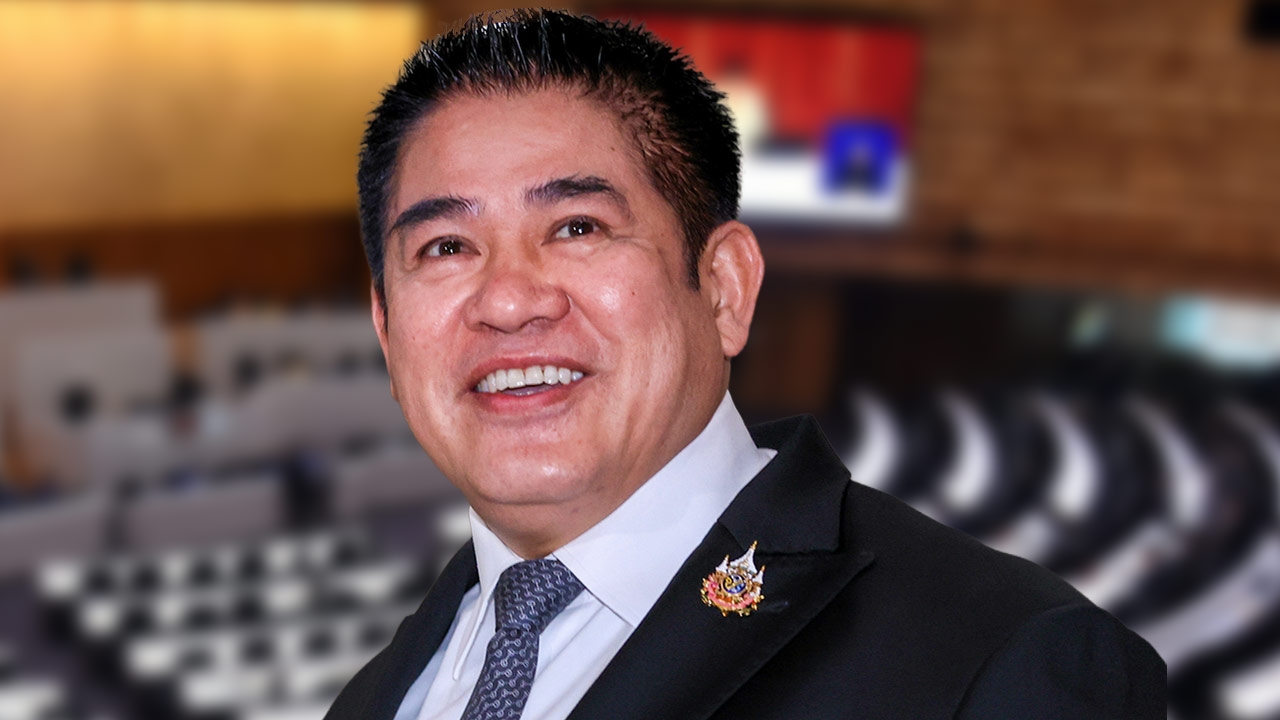
Kla Tham is poised to join the government. Experts anticipate a close contest with the Luk Thep faction over ministerial seats, enhancing stability to handle mounting challenges. They say this is an opportune moment to close off demands for higher bargaining before the no-confidence debate, aiming to block a "red-green" coalition and hoping to extend the government's full term.
On 21 Sept 2026, Mr. Parit Watcharasinthu, a People's Party MP and chairman of the opposition whip, posted a messageon Facebookannouncing that the Kla Tham Party had been removed from the opposition whip, stating that
on 10 Sept, the Kla Tham Party, an opposition coalition party with 58 MPs, voted in favor of the government's 2027 budget bill, contravening the opposition whip's directive. This raised questions about the party's status and intentions in holding the government accountable, as well as uncertainty about its stance on the upcoming no-confidence debate.
Mr. Parit further explained that following this incident, discussions were held with Kla Tham representatives, resulting in an agreement to remove the party from the opposition parties' coordination committee (the opposition whip) to ensure the parliamentary mechanisms designed for opposition scrutiny are employed by parties genuinely committed to opposition duties.
A new list of opposition whip members will be submitted to the opposition leader for consideration and then to the Speaker as per procedures. Consequently, the opposition coalition will comprise five parties: People's Party, Democrat Party, Thai Pakdee, Seri Ruam Thai, and Sai Ruam Phalang, which joined this session after aligning with the opposition on key votes such as the borrowing decree and the 2027 budget bill. These five parties plan to swiftly submit motions for the no-confidence debate against Anutin Charnvirakul's government.
This situation raises the question: if Kla Tham Party is preparing to join the government, how will this affect cabinet positions and Thailand's political direction?

Thairath's special online news team discussed this with Dr. Satithorn Thananitichot from the Faculty of Political Science, Chulalongkorn University. He believes the situation is not unexpected, as signals have long indicated that the door would eventually open for the "green party" to join the government to bolster stability amid various crises and prevent deals that could harm Bhumjaithai’s position. He explained that
previously, the current coalition seemed insufficient. After the election, Bhumjaithai, confident with 190 MPs and support from Pheu Thai and many small parties, might have given Kla Tham hope to join government to keep them from moving independently, effectively playing a waiting game for about a year.
However, as pressures mounted and the government struggled to manage them, with concerns about shifts such as factions within the party aligning with red groups or red aligning with green, Kla Tham, initially thought manageable, did not just wait quietly. Therefore, bringing them in now is positive, reinforcing government stability, especially ahead of the no-confidence debate.
Dr. Satithorn views this move as reducing the risk of Kla Tham exploiting the no-confidence debate to demand greater benefits. Although the timing and manner of cabinet reshuffles remain unclear, this is essentially a "pledge" to avoid additional demands later.
Regarding cabinet positions, Bhumjaithai may need to concede some ground. Kla Tham likely won't receive the Ministry of Agriculture as hoped, but if they do, seat allocations will have to satisfy Pheu Thai. Although Kla Tham's 58 MPs seem numerous, against a 350-MP coalition, their ministerial quota may be limited—possibly one minister and two deputy ministers.

Additionally, Bhumjaithai faces internal pressure, as current ministerial posts are held mainly by the party's core faction, known as "Luk Thep." Other factions have yet to receive ministerial positions proportional to their size.
Dr. Satithorn speculates there are prearranged agreements for mid-term reshuffles, redistributing positions from the core faction to others, making this an opportune moment to bring Kla Tham in.
"Some Luk Thep members will have to step aside, but having ministerial posts allows for rotation, letting others take roles. This is a suitable time for reallocation if Kla Tham is incorporated."
As for how Kla Tham's inclusion might affect other coalition parties, especially Pheu Thai, Dr. Satithorn believes assessments show Pheu Thai is unlikely to resist strongly and that negotiations remain possible.
Previously, rumors suggested Kla Tham might have considered a "shortcut" —if Bhumjaithai did not bring them in as a separate party, Kla Tham could merge with Pheu Thai by leaving their party and joining Pheu Thai.
Meanwhile, Pheu Thai aims to regain strength, but if this proves difficult, merging with Kla Tham would benefit both parties, combining their 70 or 50 MPs into over 100.

Currently, Bhumjaithai faces multiple challenges. Bringing Kla Tham in could ease pressures in many areas, and if problems do not escalate, the government's position should improve.
"Today, Anutin himself stated the government is very stable, with good relations with the bureaucracy and military. So, if Kla Tham joins, stability will be even stronger. The government could last longer, perhaps not a full term but at least three years, depending on whether it decides to dissolve parliament earlier."
However, close observation is needed, as so far only Kla Tham's moves are clear. Bhumjaithai shows no outright rejection but a balanced response. Anutin has signaled confidence by emphasizing strong stability, possibly hinting at plans to increase support to match the number voting for the 2027 budget.
Regarding whether Kla Tham's exit weakens the opposition, Dr. Satithorn notes the opposition mainly operates through two parties, People’s Party and Democrat Party. Smaller parties lack significant numbers but share the goal of scrutinizing and challenging the government and appear to work diligently, knowing their role is to gain public support as the opposition.

At 15:30 today (22 Sept 2026), Ms. Nan Boonthida Somchai, Deputy Minister of Digital Economy and Society and Bhumjaithai spokesperson, said after the weekly Bhumjaithai MPs meeting that discussions focused on political situations such as parliamentary agendas. Regarding Kla Tham, she refrained from comment, citing only hearing news reports and not knowing the opposition whip's reasons for removing Kla Tham and adding other parties. She said this is a matter for the opposition whip to address.
When asked whether MPs were asked about rumors that Kla Tham might join the government, Ms. Nan said there was no such discussion, only talk about where the rumors originated. She viewed it as an opposition coalition issue.
When further asked if Kla Tham has yet been brought into the government, she replied that the coalition remains as is. She reiterated that all parties continue to work together as before, though their parliamentary statuses differ, confirming the coalition remains as previously announced. When asked if the coalition mainly consists of Bhumjaithai and Pheu Thai, she affirmed this and noted the opposition whip has clearly stated its member parties, which is an opposition matter.