

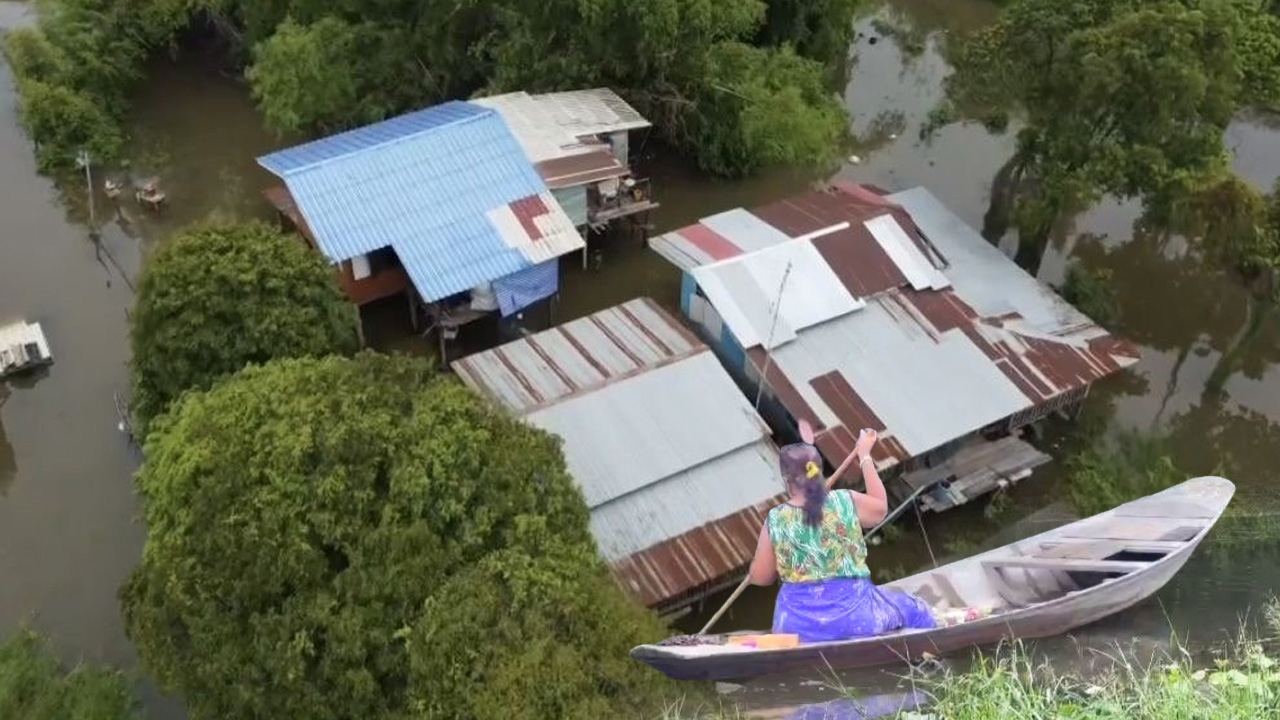
Warning issued for the Chao Phraya basin: heavy rain expected until 29 September, with low-lying areas outside flood barriers in Sena, Bang Ban, and Phak Hai districts heavily affected. Associate Professor Dr. Seri highlights preparation of seven emergency response plans to address the situation.
Associate Professor Dr. Seri Supharath, Director of the Climate Change and Disaster Center at Rangsit University and Vice Chairman of the National Disaster Warning Council Foundation, posted on his personal Facebook that the Climate and Disaster Center at Rangsit University and the National Disaster Warning Council Foundation have updated the risk situation concerning heavy rain, flash floods, and community flooding.

The areas at risk with severe rainfall from today until 29 September (shown in orange shading) are located in central and eastern regions, causing subsequent flooding in areas marked in blue, mostly within the Chao Phraya basin. However, this will not have the same impact as the great flood of 2011 because accumulated rainfall, water volume in main dams, and especially floodwater passing Nakhon Sawan remain below 50% of critical levels.
Nevertheless, water discharge through the Chao Phraya Dam, starting from 700 cubic meters per second, has begun to affect lowland areas outside flood barriers in Sena, Bang Ban, and Phak Hai districts. Currently, discharge is at 1,750 cubic meters per second and expected to rise in the short term, raising flood levels there. The emergency response plan should focus on seven key measures: 1) protecting critical public utilities such as hospitals, power plants, and water supply; 2) reducing water discharge from the upper main dams as upper rainfall forecasts lighten; 3) enhancing drainage capacity on east and west sides; 4) accelerating water drainage into natural retention areas; 5) conducting public communication and alerts about water discharge through the Chao Phraya Dam with careful management to mitigate downstream impact; 6) deploying and distributing water pumps to alleviate community flooding; 7) preparing appropriate assistance and relief efforts.

Rainfall forecasts from AI models show that rain will mainly persist intermittently across central Thailand throughout the day, with varying intensity, allowing drainage systems to continue functioning except in low-lying areas. Areas shaded yellow and orange require close monitoring and travel planning.