

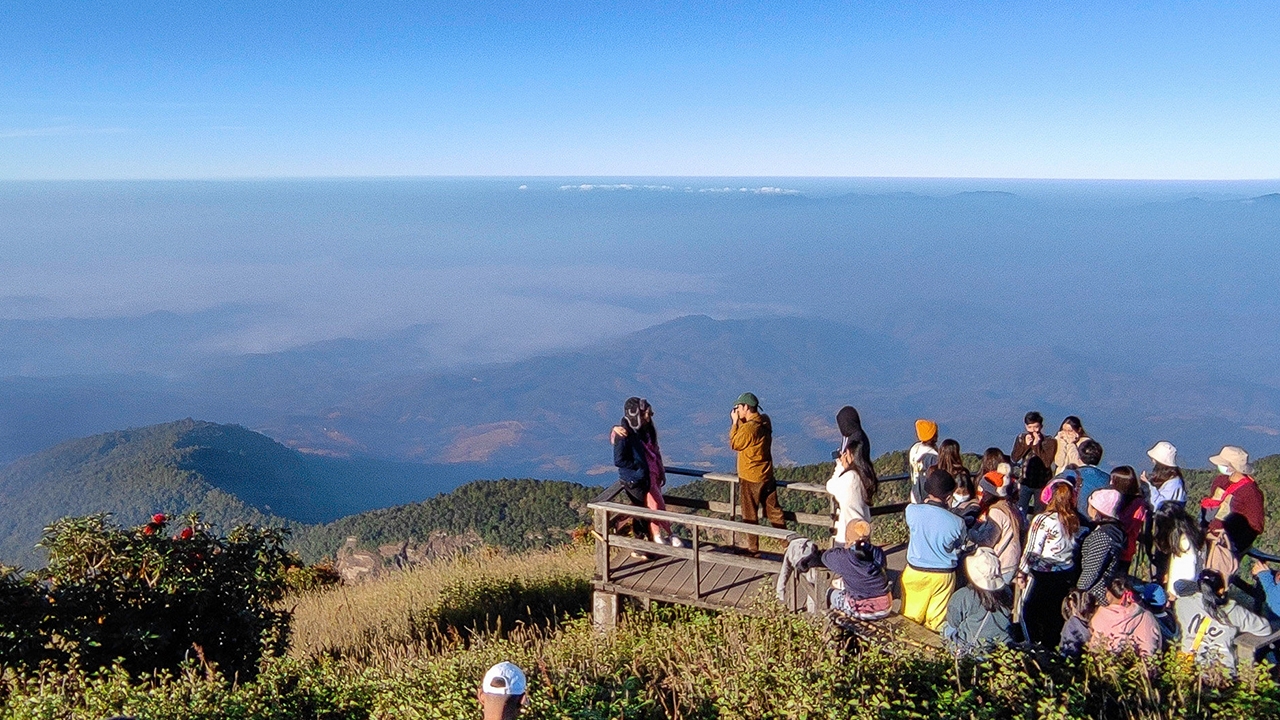
The 2026-27 winter season is milder and arrives later than every previous year. The Deputy Spokesperson of the Meteorological Department points to weather fluctuations and El Niño influence, expecting the North and Northeast to still experience cold weather, while Bangkok's lowest temperature is around 19-20 degrees Celsius.
Regarding the case on 14 Oct 2026, the Meteorological Department forecasts that Thailand's 2026 winter will start about one week later than average, around the third week of October 2026, and will end around mid-February 2027. The cold weather will also be milder than last year, with an average temperature around 19 degrees Celsius.
The lowest temperatures will be approximately 10–12 degrees Celsius, mostly in the upper parts of the North and Northeast regions. The lowest temperature in Bangkok is expected to be 19–21 degrees Celsius, and 18–20 degrees Celsius in the vicinity. The coldest period is projected from late December 2026 to early February 2027.
Meanwhile, the South will experience cool weather in some places and periods, mostly in the upper South, but heavy rain will persist, especially in the eastern part during November-December, with heavy rainfall in some areas. This may cause flash floods, landslides, and river overflows in multiple locations.

Thairath Online's special news team delves into this issue with Mr. Somkuan Tonjan, Director of the Aviation Meteorology Division and Deputy Spokesperson of the Meteorological Department. He revealed that this year's winter is later than usual. Normally, by mid-October, signs indicate Thailand is entering winter: temperatures drop below 23 degrees Celsius in many areas, northeast or east winds cover Thailand, and rainfall in upper Thailand gradually decreases.
However, recently, temperatures in Thailand have not dropped significantly, possibly falling below 23 degrees Celsius in some northern and upper northeastern provinces. The prevailing wind is unstable, not the northeast wind coming from China. It is expected that changes will become clearer around 25-26 October.
The average temperature this winter is expected to be 1-2 degrees Celsius above normal. There may be short periods of colder weather lasting about 1-3 days. The North and upper Northeast still have chances of experiencing cold to very cold weather, especially on mountain peaks, but in Bangkok, it may only feel cool, with temperatures not expected to fall below 20 degrees Celsius.
Winter is also expected to be relatively short, possibly ending by late January or early February. However, this will need monitoring, as a strong El Niño could shorten the winter. Long-term trends show Thailand's winters becoming warmer and shorter, but phenomena like the Indian Ocean Dipole (IOD), El Niño, or La Niña also affect seasonal temperature and rainfall changes.

Mr. Somkuan explained that one factor causing the late arrival of winter this year is the strong El Niño phenomenon, which causes unstable wind directions and multiple wind currents, bringing continuous moisture into Thailand and resulting in highly variable weather.
Other abnormal weather factors include Pacific Ocean storms that have not shown signs of moving toward Thailand or changing direction. Normally, during September-October, these storms approach the eastern coast via Vietnam and Laos, but this year there is no such trend. Also, local or seasonal winds that usually blow at the end of the rainy season have not arrived yet.
Mr. Somkuan noted that usually, when northeast winds blow, rainfall in upper Thailand decreases, ending by mid-October. But this year, the cold wind has not arrived, extending rainy conditions into the third week of October, around 23-24 October 2026, in the lower North, Northeast, Central, East, and South regions, with alternating thunderstorms and light to moderate rain.
Rain in the North and Northeast will mostly be light and not severe, but the West, western Central, and East regions may receive continued rain, risking flash floods. After 25 October, rain is expected to move southward.
Regarding rain in the South from now on, Mr. Somkuan advises caution but says there is no need for excessive alarm. From late October onwards, seasonal rains are expected, but strong cold winds could cause heavy to very heavy rain from Chumphon province southward, possibly leading to flash floods and landslides.

Mr. Somkuan emphasized that current weather conditions are highly unstable and change rapidly, making long-term forecasting difficult and requiring continuous updates.
“Data changes daily and is not as consistent as in previous years. This year's seasonal transition is more severe and unstable, resulting in unpredictable weather conditions. Even forecasting with 80-90% accuracy within 24 hours is challenging.”
Therefore, the public is urged to regularly update official weather information to prepare accordingly but avoid excessive panic that could disrupt daily life.