

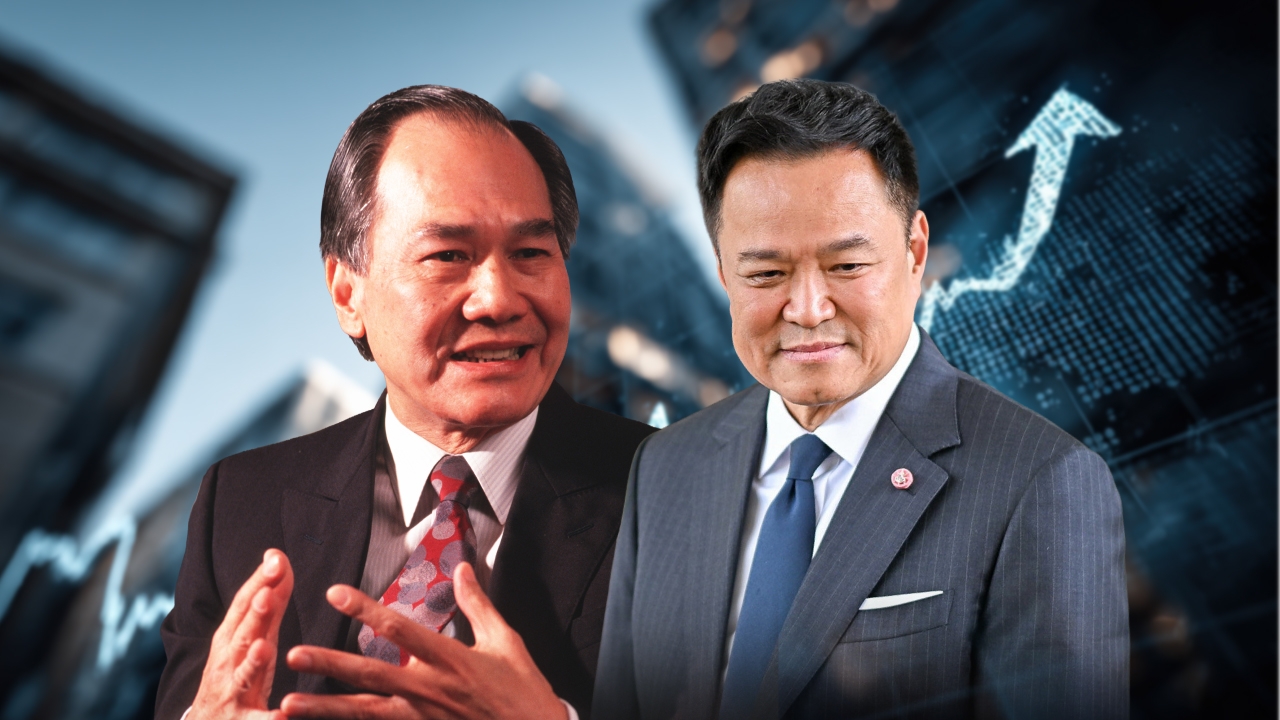
35 years from the “Fifth Tiger” to an aging society: Comparing Thailand’s economy at the IMF–World Bank forums across two hosting eras, reflecting economic perspectives and the rapid surge in household debt.
Thailand opened its doors to economic leaders and central bank governors from over 190 countries for the annual IMF and World Bank Group Governors’ Meeting. This scene last occurred 35 years ago, reflecting Thailand’s economy during the eras of Prime Minister Anan Panyarachun in 1991 and Deputy Prime Minister Anutin Charnvirakul in 2026. The differences are profound—in driving factors, global context, and structural challenges.
At the first IMF–World Bank meeting in Bangkok in 1991, Thailand’s economy was booming.
Growth rates soared to 8–10% per year, fueled by a flood of capital flows and foreign direct investment, especially from Japan.
Thailand’s economic structure was rapidly transitioning from an agricultural society to export-oriented industry and tourism.
Policy highlights included structural reforms by Anan’s government, such as introducing value-added tax, reducing customs duties, and privatizing state enterprises to liberalize finance.
Challenges at that time involved managing inflationary pressures, infrastructure development lagging behind urban growth, and widening inequality gaps.
Returning as host after 35 years, Thailand faces a far more complex global context and internal structure.
Growth is moderate and gradual, prioritizing stability over the rapid expansion of the past.
The economy has entered a fully aging society phase, driven by digital technology/AI and upgrading toward a green economy.
Policy priorities under Anutin’s government focus on attracting high-tech investment, restructuring logistics systems, and pushing for OECD membership to enhance governance and trade standards.
Current challenges include tackling accumulated household debt, overcoming the middle-income trap, geopolitical tensions, and adapting to climate change.
If 1991 was the door opening to global capitalism as “Asia’s Factory,” then the 2026 IMF–World Bank meeting under Anutin’s government is a testament to Thailand’s role as “a regional center for sustainable development and innovation.” This shows that while economic drivers have shifted from speed to sustainability, Thailand remains a strategic hub shaping the global economic direction.
