

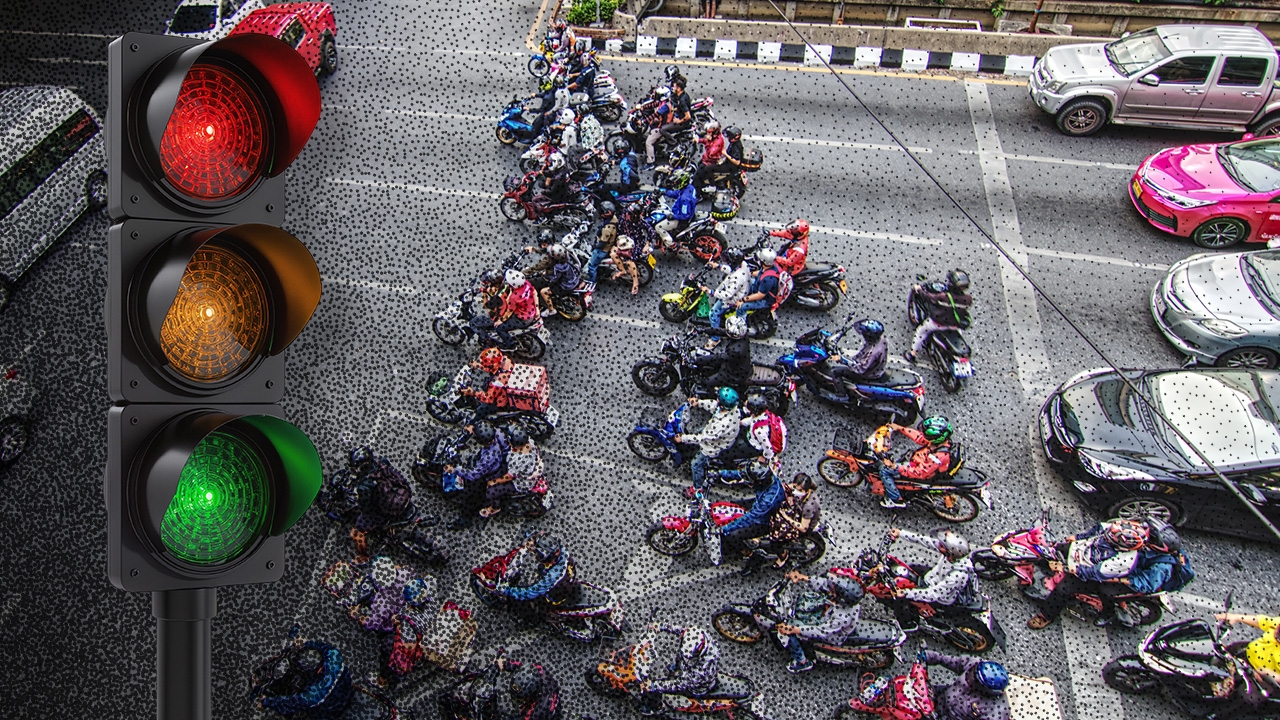
Seven traffic violations have surged comparing 2024 to 2025. The Provincial Traffic Accident Prevention Support Program found that using a phone while driving ranks first, with offenses rising sharply by 66.68%. Unsafe motorcycle riding, dangerous overtaking, and driving without a license are next most common offenses. Meanwhile, overall accidents have become more severe, causing greater harm to other road users than in the past.
Although total prosecutions for the ten main traffic offenses in 2025 appeared to drop by 13.28% from the previous year, falling from 10,673,230 to 9,255,765 cases, which might suggest increased respect for traffic laws among Thais, a closer look reveals some violations have alarmingly increased.
Statistics on arrests for seven offenses with rising figures show unsafe driving behaviors persist as chronic issues on the roads.
Using a phone while driving increased most sharply by 66.68%, rising from 14,182 cases to 23,638, reflecting a society absorbed by screens even behind the wheel, causing distractions and loss of focus.
Unsafe motorcycle use rose 59.07% to 420,389 cases, up from 264,277, indicating vehicle modifications or use of unfit vehicles.
Dangerous overtaking increased 55.55% to 22,872 cases, posing high risks of severe head-on collisions.
Driving without a license rose 16.63% to 1,534,924 cases, highlighting many road users lack certified knowledge and skills.
Not wearing helmets increased 15.30% to 713,270 cases, raising the risk of fatal and severe head injuries.
Running red lights rose 13.24% to 1,933,533 cases, representing the offense with the highest number among those increasing.
Driving against traffic increased 4.10% to 71,022 cases, showing careless behavior that endangers others.

Notably, speeding offenses decreased by about one-third (-32.25%) to 4.36 million cases, seatbelt violations dropped 23.75% to 90,800 cases, and drunk driving fell about one-quarter (-25.54%) to 78,600 cases.
However, these declines in arrests do not necessarily mean safer roads, as these statistics only reflect cases where authorities made arrests, which depend on checkpoint strictness, camera availability, and enforcement resources—not the total number of offenders on the road.
The fact that some offenses decreased while others sharply increased indicates that
risks are shifting forms: careless behaviors like phone use and neglect of basic rules such as helmet use and licensing remain widespread and growing.
Arrest numbers are not a true safety indicator. To assess road safety, one must consider accident counts, fatalities, and actual risky driver behavior changes.
The ultimate goal of traffic law enforcement is not merely to increase or decrease arrest numbers but to effectively reduce accidents and prevent loss of life on the roads.
Source: Summary report on road fatalities statistics for 2025.