

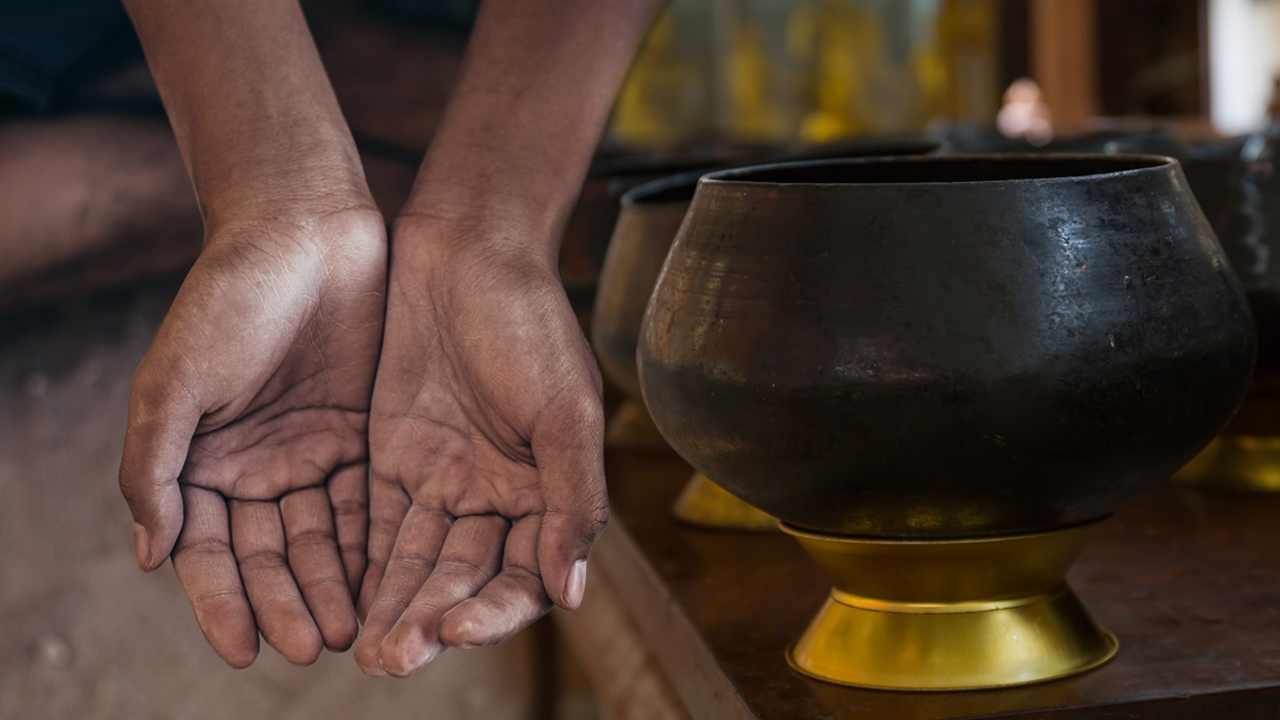
When crises like floods, hospital equipment shortages, or poverty arise, the first response in Thai society is often not to wait for government funding but to "open for donations." This phenomenon reflects that Thailand has become one of the countries with the strongest giving cultures in the world.
Culture and religious beliefs: The belief in "making merit to accumulate spiritual merit" and "accumulating charity merit" in Buddhism is deeply ingrained in Thai people's souls. Therefore, donating is seen as a natural act that brings peace of mind.
Gaps in the state welfare system: Budget allocations for aid distribution, public health, and education are often delayed or insufficient, creating a "vacuum" that civil society and charitable organizations must fill.
Influence of media and social media: The digital age spreads stories of hardship rapidly, generating "Viral Giving" power, with easy mobile banking transfers completed within seconds.
Power of celebrities and influencers: When celebrities or well-known individuals lead fundraising efforts, society gains trust and is ready to donate immediately.

Total donation value: Thais donate money and goods amounting to 50 to 70 billion baht annually.
Average household donations are approximately 3,000 to 6,000 baht per household per year, or about 200 to 500 baht per month.
Middle-to-high income earners donate more, benefiting from tax incentives, averaging between 10,000 to over 50,000 baht per year.
Global Giving Index (World Giving Index): Thailand ranks in the top 30-40 worldwide for generosity and is among the leading ASEAN countries in "charitable money donations."
The donation forms most accessible and funded by Thais, in order, are:
Religious sites and temples: The most widespread donations, including almsgiving, Kathin and Pha Pa ceremonies, and contributions for temple utilities.
Medical and public health: Donations for medical equipment, funding construction of state hospital buildings, or foundations supporting impoverished patients.
Disaster and rescue: Emergency fundraising during floods, fires, or natural disasters.
Education and needy children: Scholarships, school lunches, and supplies for schools in remote areas.
4. In-depth look at current donation methods

Donation formats | Key characteristics | Channels / examples |
1. Traditional Merit-Making (Traditional) | Conventional religious activities and foundations. | Donation boxes at temples, Kathin envelopes, and door-to-door collection. |
2. e-Donation & Mobile Banking | Donations via electronic systems with instant deduction through apps. | Scanning QR codes of foundations, automatic tax deduction through revenue systems. |
3. Crowdfunding | Mass fundraising through online platforms. | Taejai.com, Socialgiver, GoFundMe. |
4. Influencer-Led Fundraising | Celebrities/influencers open special fundraising accounts. | Projects like "Go Each Step" and livestream fundraising for floods. |
5. Cause Marketing | Purchasing products where part of the proceeds are donated. | Commemorative t-shirts, cloth bags, Forest Coffee (Ka Pa Daen). |