

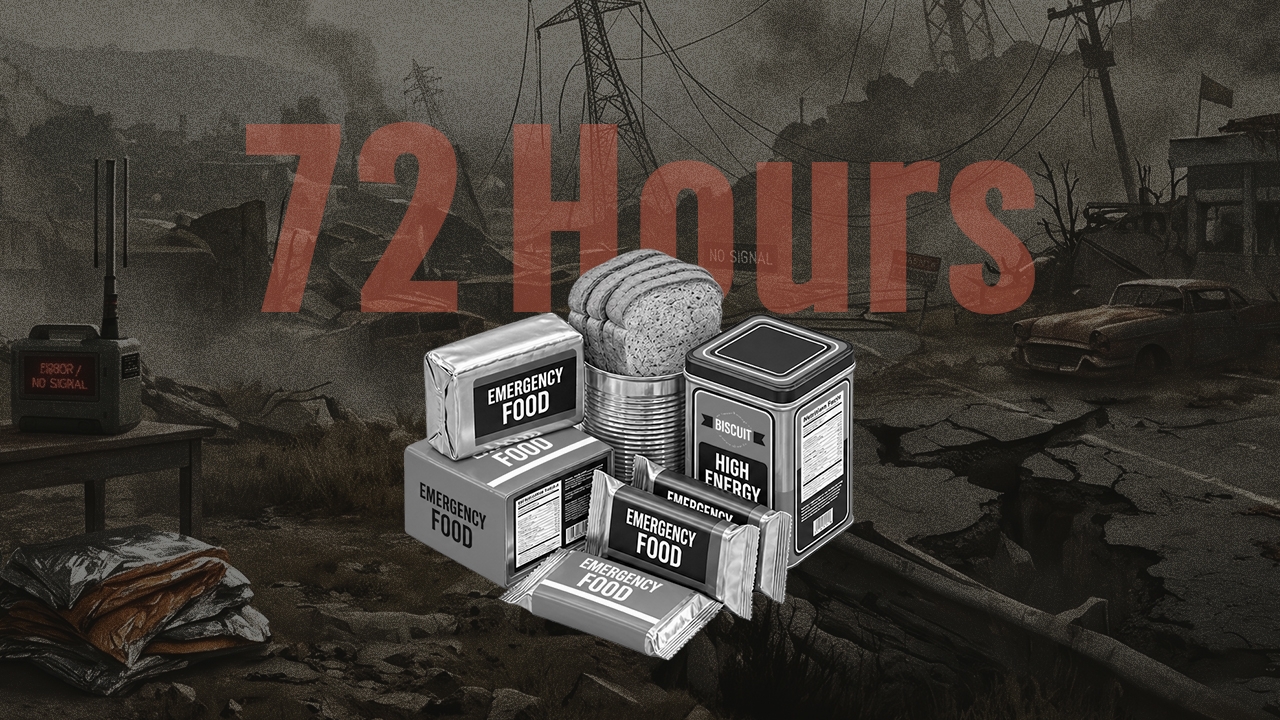
Decoding crisis response: Opening the "First 72 Hours" survival guide amid sudden communication system failures and disasters. The Disaster Response Association points out that households should keep water, foil blankets, and long-lasting bread. Earthquake risk is assessed as the highest.
Amid growing uncertainty from increasingly severe and unpredictable natural disasters, along with news of conflicts and crises worldwide, a key question arises: "If a major disaster or crisis truly occurs, how will we survive the days when the power is out and phone signals are cut off?"
Thairath Online's special news team consulted Asawin Romprasert, Honorary President of the Disaster Response Association of Thailand (DRAT), who said that when severe disasters like earthquakes or flash floods occur, communication systems typically fail on the "first day." However, telecom companies and related agencies have backup systems, deploying mobile units or satellite systems such as Starlink to restore connectivity by the second day.

The real problem is not the signal itself, but the victims' phone batteries running out. People need to prepare backup batteries or power banks specifically for charging phones, as well as small portable solar panels to generate emergency power. For agencies and local levels, satellite devices remain essential backup communication tools.
When unexpected events occur, humans can survive several days without food but "cannot go without water" during the first 72 hours. Therefore, preparing emergency supplies is crucial.
Especially drinking water: every home and establishment such as hotels and resorts should keep separate bottled water reserves of at least 1–2 packs per room, to be used only in emergencies.
Foil blankets are small but very important items that help retain body heat. They are lightweight, easy to carry, and take up little space.
Emergency food should focus on items that can be eaten immediately, such as long-lasting bread, canned snacks, or sweets high in sugar to provide instant energy without needing hot water or cooking equipment like instant noodles.

When asked about the scariest threats today, Asawin said "earthquakes" because they cannot be warned in advance, followed by "extreme weather conditions" such as sudden, relentless heavy rain.
Regarding the impacts of war or international conflicts, although Thailand is not directly in combat zones, it will certainly face "energy crises and rising commodity prices." Stockpiling energy and checking transportation readiness are matters that various sectors must plan for in advance.

Many view current social trends as "overly alarmist" about disaster news, but Asawin believes that "being alert is better than being unprepared," as losses will be reduced if society is more aware.
1. Adjust budget usage: currently, most funds are spent after disasters occur, but there is a lack of budget for prevention before disasters, such as creating 3D maps to assess flood risk areas and drainage.
2. Conduct serious emergency drills: government and local administrations, subdistrict administrative organizations, and municipalities should allocate budgets to support volunteers and rescue teams to regularly practice national-level emergency response plans.