

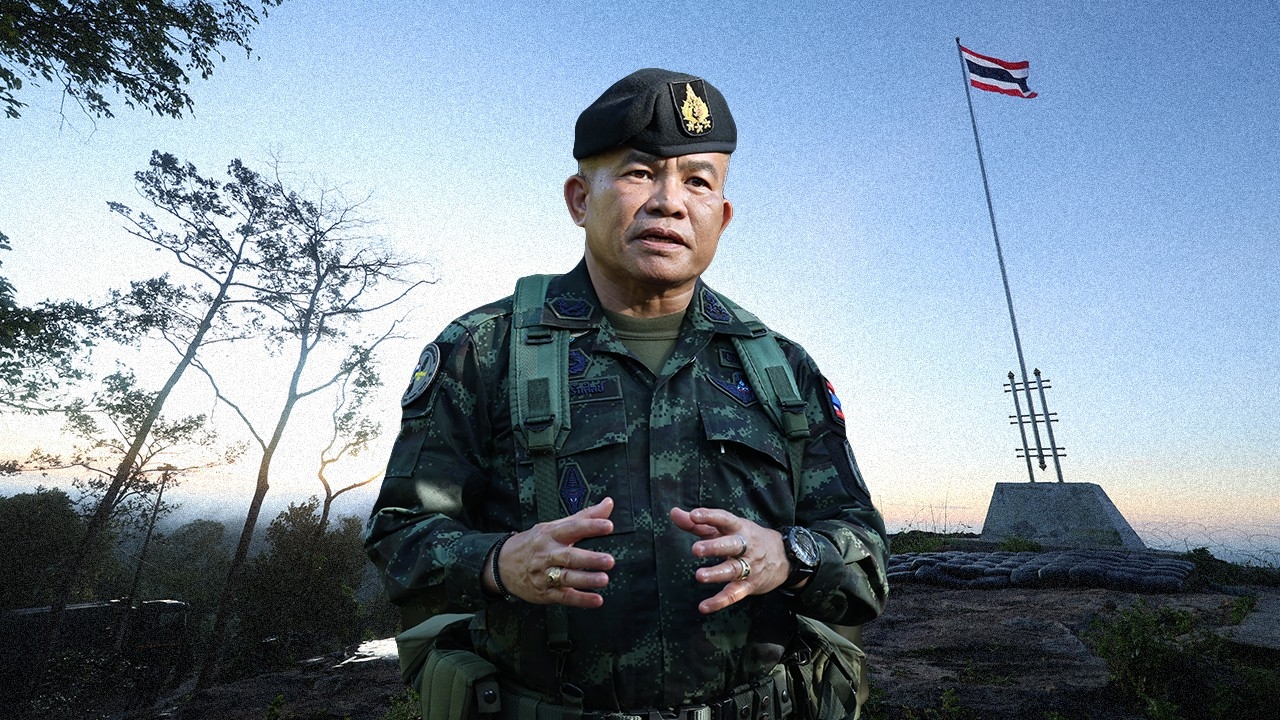
Four figures in world history serve as strategic power models for the Second Army Commander, who must overcome both positive and negative pressures while fostering morale among frontline soldiers.
Amid the highly sensitive Thai-Cambodian border situation recently, public attention has focused not only on military movements but also on the "army leadership"—how well they can control timing, emotions, and the overall situation. In an era when news and social media trends move faster than verified information, composure is more than mere silence.
The concept of “model generals” is used as a framework to understand leadership in crises—not to compare or praise individuals, but to draw lessons from world military leaders who faced intense pressure and complex decisions, relying on calm, reason, and prudence as core principles.

From a conceptual standpoint, many historical military leaders are studied more as "lessons" than direct "role models," such as Dwight D. Eisenhower, known for his calmness and careful management of alliances and major operations.
Field Marshal Douglas MacArthur exemplifies the understanding of the relationship between politics and strategy beyond the battlefield.
George S. Patton represents decisiveness and combat readiness, qualities that must be applied appropriately to context.

Also, Isoroku Yamamoto is often cited for his thoughtful long-term assessment of conflict costs. These figures are not glorified in every decision but serve as a mental framework emphasizing that good leadership requires controlling tempo, knowing limits, and not letting emotion or trends dictate the course.
Lieutenant General Weerayut Raksin, Second Army Commander, reflects leadership that values "practical operations" over image-building. His continuous visits to troops, avoidance of disclosing information that might jeopardize personnel safety, and refraining from emotional or trend-driven communication all demonstrate a deep understanding that the border is not a stage for personal display but a responsibility for lives and national stability.
In the Thai-Cambodian context, harsh communication or expressions may cause short-term impact but increase long-term conflict costs. Global lessons agree that true victory is not escalating tensions but controlling them within limits. Appropriate leadership means knowing how to "control the game" rather than "accelerate it."

The Second Army Commander's current stance is seen as strategically choosing "composure" over flashy communication, focusing on the work of troops on the ground. The public image is not that of a single standout leader but a system valuing readiness, safety, and responsibility above all.
In an era where information warfare accompanies security challenges, disciplined composure is not weakness but a form of communication signaling both domestic and international audiences that every decision is based on reason, not emotion, and grounded in truth rather than trends.
Ultimately, the current Thai-Cambodian border situation may not require the most vocal or visible leader but one who best balances protecting national sovereignty with safeguarding the lives of citizens and troops—guided by a simple yet firm principle: a stable country and safe people. At times, well-timed composure can be the strongest force in maintaining the country's peace.