

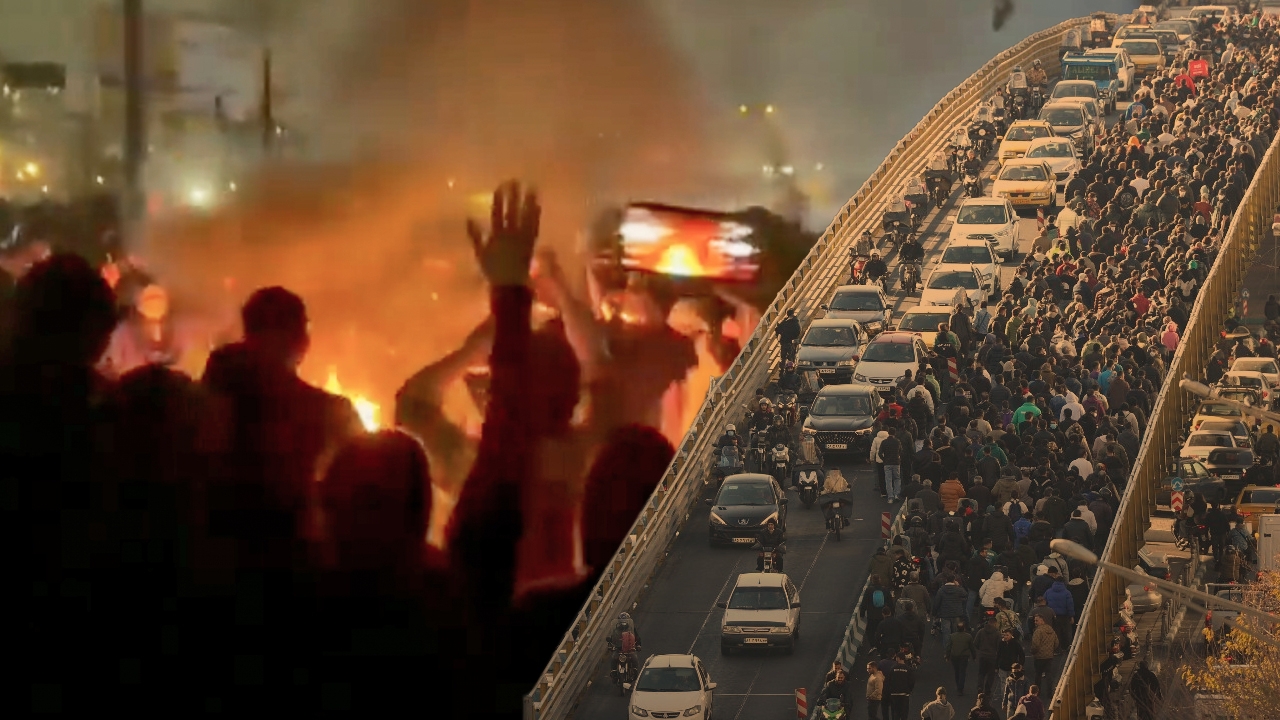
Iran protests mark a turning point with major powers eyeing intervention. The entrenched elite networks remain tightly united. Scholars assess the strength of the new generation of protesters who want to see change, noting that prolonged demonstrations have shaken global oil prices and impacted Thailand.
Currently, the death toll from protests in Iran has risen above 500, while US President Donald Trump is considering measures to counter the escalating unrest in Iran, including the possibility of military action.
Dr. Sarawut Aree, Director of the Muslim Studies Center at Chulalongkorn University, analyzed Iran's protest situation as a long-standing economic problem, recently exacerbated by severe inflation. Rising living costs and soaring prices of basic food have become unbearable for the people, making these factors key reasons for the public uprising.
He personally sees this as similar to the 2011 Arab Spring phenomenon, which involved economic issues, rising living costs, and increased food prices in the Arab world, spreading to various Middle Eastern countries.
This Iranian protest differs from previous ones. Earlier protests were often about politics or ideology—for example, in 2009, disputes over election fraud divided Iran's political society into two clear conflicting factions. The latest protests stem from ideological issues and the hijab mandate, with dissatisfaction escalating into demonstrations.
However, protests over economic issues are considered among the first in Iran. Historically, Iran’s problems relate to sanctions from the US and international community, which have impacted its economy. The Iranian government has tried to address these issues. During a visit last year, he observed government support for energy—such as very cheap oil and subsidized gas for households—but other consumer goods remain problematic.
Iran is an energy-rich country, so the government focuses on supporting this sector, hoping such assistance keeps daily living costs reasonable. However, inflation later overwhelmed these efforts, causing public dissatisfaction, which must be acknowledged.

Dr. Sarawut noted another issue: Iran’s large youth population, over half the total. This group has no experience of the 1979 Islamic Revolution and views the government’s management as flawed, especially its spending on external defense and supporting foreign networks.
Therefore, many young people are dissatisfied with government management. Some support changing the regime, while others want to restore the Shah’s monarchy.
However, the Shah’s regime lacks a strong base. The West promotes this idea because it sees no hope for reform within the current system. Thus, the West highlights movements aiming to restore the Shah’s regime, though this is a very small minority with little real power. Older generations who lived through the 1979 revolution tend to remain silent and are not heavily involved in current protests.
Based on the experiences of young protesters, the key turning point in Iran’s political context lies in the "unity of government and regime." Although many young people participate and protests occur in many areas, a crucial weakness is the lack of clear leadership and a shared direction for change. Despite ongoing demonstrations, there is no clear answer on Iran’s future or what system should replace the current one. This lack of shared vision and leadership structure means the protests, while pressuring the government, are insufficient to produce concrete regime change.
Regarding internal government unity, Dr. Sarawut acknowledged there is currently no clear sign of division within the regime. Though the security structure includes multiple groups such as the regular army and the Islamic Revolutionary Guard Corps (IRGC), both sides maintain unity and loyalty to the regime.
Looking back at the Arab Spring experience, before political conflict or regime change spread, a key sign was when the military or some security forces defected to support the people, becoming a turning point for structural change. In Iran today, no such sign has appeared; no security figures or agencies have openly declared support for protesters or citizens. This means the regime remains tightly linked and unified. Therefore, the chance that Iran’s youth protests will lead to regime change like in the Arab Spring is slim under current political conditions.
Regarding US attempts to intervene in Iran’s situation, Dr. Sarawut views the US and Israel as two countries with long-standing efforts to promote regime change in Iran.
During the Shah’s era, Israel had close ties with Iran and benefited strategically, with large Middle Eastern countries providing security guarantees. Both Iran and Turkey were key Israeli allies. However, after the 1979 Islamic Revolution, Iran completely reversed its policy, shifting from supporting Israel to opposing it clearly.
This change made Israel see Iran as the greatest security threat in the Middle East. Since then, Israel has consistently pushed the idea of regime change in Iran. However, given Israel’s smaller size and capabilities compared to Iran, which is a large country with a strong regime and popular base, Israel cannot act against Iran alone.
Thus, Israel must rely on the US, seeking to persuade Washington to participate in efforts to overthrow Iran’s regime—a strategy Israel has openly pursued.
Meanwhile, Dr. Sarawut noted that the US also views Iran as opposing its strategic interests in the Middle East. The US’s regime change agenda in Iran dates back to after the 2003 Iraq War, when after toppling Iraq’s regime, the next targets were Syria and ultimately Iran.
However, the situation in Iraq did not go as planned. Violent resistance and ongoing unrest forced the US to allocate significant resources there, preventing expansion of operations into Syria or other regional countries as planned.
Currently, Dr. Sarawut says the situation remains concerning as both the US and Israel see Iran weakening due to internal economic problems and diminished regional influence. Viewed as less capable of self-defense, Israel wants to capitalize on this moment to push the US into military action against Iran, aiming to force regime change.
Whether the US will decide to follow this path depends on many factors. Although Iran is weaker than before, past conflicts show it retains significant retaliatory capability.
Iran’s "last card" is the Strait of Hormuz. If Iran chooses to close this vital passage, it would directly disrupt oil shipments from the Middle East to global markets, impacting not only the world economy but also US and allied interests in the region inevitably.
On the widely debated question of whether Iran’s situation will unfold like Venezuela’s, Dr. Sarawut explained that the contexts differ significantly. In Venezuela, the US assessed it could intervene successfully with internal cooperation from domestic networks.
Later, Venezuela’s internal situation changed as some citizens began opposing and violently targeting those seen as linked to the US within the country.
In contrast, Iran still has a large population supporting the religiously based regime. Additionally, the unity of Iran’s military, security agencies, and religious institutions remains very strong. Under these conditions, intervention like Venezuela’s is nearly impossible.
Even if such efforts occurred, consequences would extend beyond Iran, sparking regional outrage in the Middle East. This is because any attempt to detain or overthrow a religiously led national leader would anger hundreds of millions of believers connected to this structure. Thus, a Venezuela-like scenario is highly unlikely in Iran.
Regarding how escalating violence in Iran might affect Thailand, Dr. Sarawut said Thailand has economic and trade ties with Persian Gulf countries. If Iran’s unrest spreads to those countries, Thailand will inevitably face increased risks in investment and trade with the Middle East. Close monitoring and caution are necessary if the conflict threatens to escalate further.