

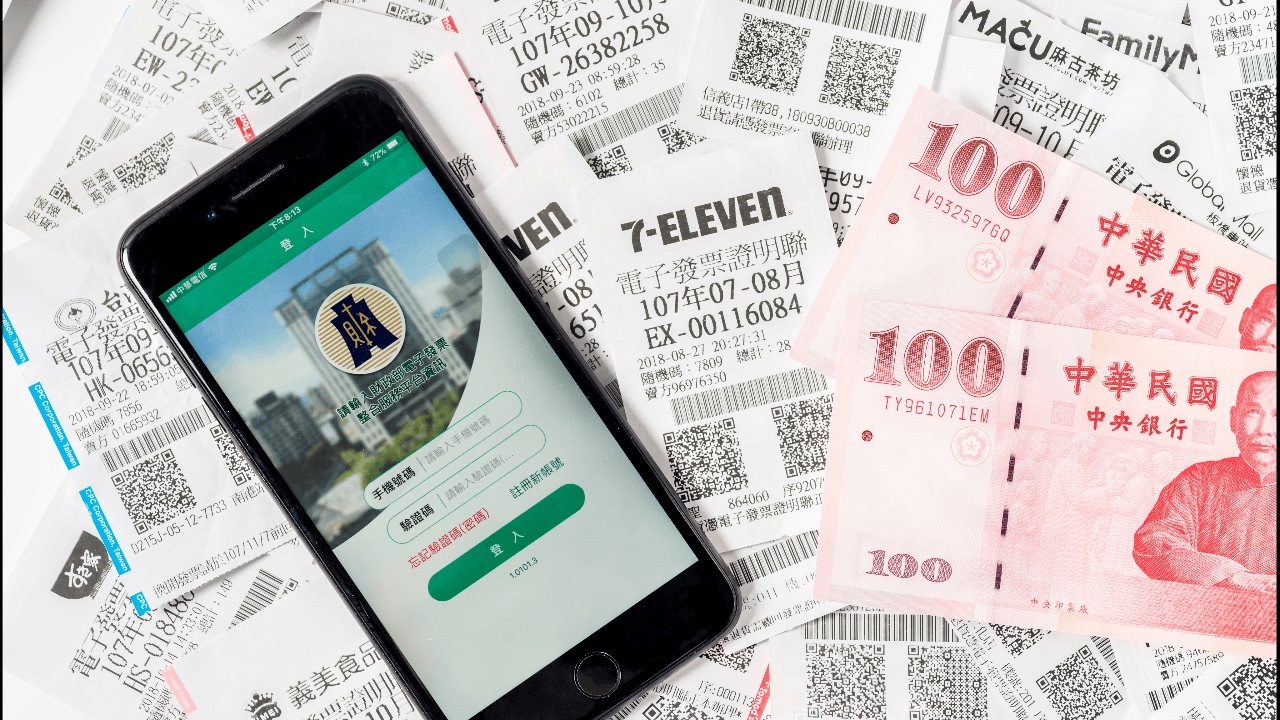
Examining Taiwan’s receipt lottery model with grand prizes over 10 million baht that stimulate the economy and draw people into the tax system, serving as policy templates for the Palang Pracharat and Pheu Thai parties—how are they similar and different?
“Receipt Lottery” or “Receipt Lottery” from Taiwan has become a project adapted by several Thai political parties into economic policies presented to the public, such as the Palang Pracharat Party. Through their receipt lottery policy, introduced since the 2019 election and continued in the 2026 election, and most recently by the Pheu Thai Party, as part of their "Creating Millionaires Daily" policy, awarding nine people per day.
Thairath Online’s special news team has investigated Taiwan’s original “receipt lottery” to understand its details, background, and success.
The “Taiwan Receipt Lottery” or “Uniform Invoice” (統一發票) began on 1 January 1951, nearly 75 years ago, from the idea of Mr. Chen Xianchun, the government’s finance director. The goal was to bring stores into proper registration, reduce tax evasion, increase tax revenue, and stimulate consumer spending.
That year, the government collected 51 million New Taiwan dollars in tax (about 50 million baht), up from 29 million NT dollars the previous year—an increase of over 75%.

Stores or businesses with monthly income exceeding 200,000 New Taiwan dollars (about 200,000 baht) must register for value-added tax (VAT) and issue a uniform invoice receipt with every sale.
Receipts clearly show the issue date and contain a “lottery number” in the format of two English letters followed by eight Arabic digits, e.g., AB-12345678. The 8-digit number is used for the lottery draw, which is randomized; buyers cannot select the numbers.
Currently, there are both paper receipts and electronic receipts (Cloud Invoice). Stores can scan and save receipts via applications. Electronic receipts include special prizes each round. There is no limit on how many receipts one person can use to enter the lottery, but a system detects and prevents intentional splitting of receipts. Those uninterested in prizes can donate their receipts to various agencies’ donation boxes.
Prizes and Draws
Draws are held on the 25th of odd-numbered months (January, March, May, July, September, November), covering receipts issued in the previous two months. Winners must claim prizes between the 6th of the following month and three months thereafter, or forfeit their right.
For example, the draw on 25 January 2026 covered receipts from November to December 2025; winners must claim from 6 February to 5 May 2026.
There are eight prize tiers:
1. Special Prize (matching all 8 digits of the special prize number) awards 10 million New Taiwan dollars (about 10 million baht).
2. Grand Prize (matching all 8 digits of the grand prize number) awards 2 million New Taiwan dollars (about 2 million baht).
3. First Prize (matching all 8 digits of the first prize number) awards 200,000 New Taiwan dollars (about 200,000 baht).
4. Second Prize (matching last 7 digits of the first prize number) awards 40,000 New Taiwan dollars (about 40,000 baht).
5. Third Prize (matching last 6 digits of the first prize number) awards 10,000 New Taiwan dollars (about 10,000 baht).
6. Fourth Prize (matching last 5 digits of the first prize number) awards 4,000 New Taiwan dollars (about 4,000 baht).
7. Fifth Prize (matching last 4 digits of the first prize number) awards 1,000 New Taiwan dollars (about 1,000 baht).
8. Sixth Prize (matching last 3 digits of the first prize number) awards 200 New Taiwan dollars (about 200 baht).
The Taiwanese government does not cap prize money each round and pays out according to actual winners, reflecting that increased tax revenue from the program justifies the prize payouts. However, winners of prizes above 5,000 New Taiwan dollars are subject to 20% tax and a 0.4% stamp duty. For example, a special prize of 10 million New Taiwan dollars nets about 7.96 million after tax. Smaller prizes under 1,000 New Taiwan dollars can be redeemed directly at convenience stores, or if stored electronically with a linked bank account, prizes are transferred directly.
.

Regarding the “receipt lottery” adapted for Thailand’s context, it is part of the policies presented by the Palang Pracharat Party and the Pheu Thai Party for the 2026 election, with notable differences between the two and some distinctions from Taiwan’s original model.
Palang Pracharat Party’s Receipt Lottery
Goals
Consumers
Merchants
Budget and Prizes

“Creating Millionaires Daily” by Pheu Thai Party
Chance to become a millionaire every day with nine 1-million-baht prizes daily. Five prizes are randomly drawn from receipt numbers, four from citizen ID numbers divided into four groups: 1. farmers, 2. volunteers (e.g., health volunteers, rescue workers, veterans, community defense), 3. seniors 60+, and 4. taxpayers.
Goals
Consumers
Merchants
Budget and Prizes
