

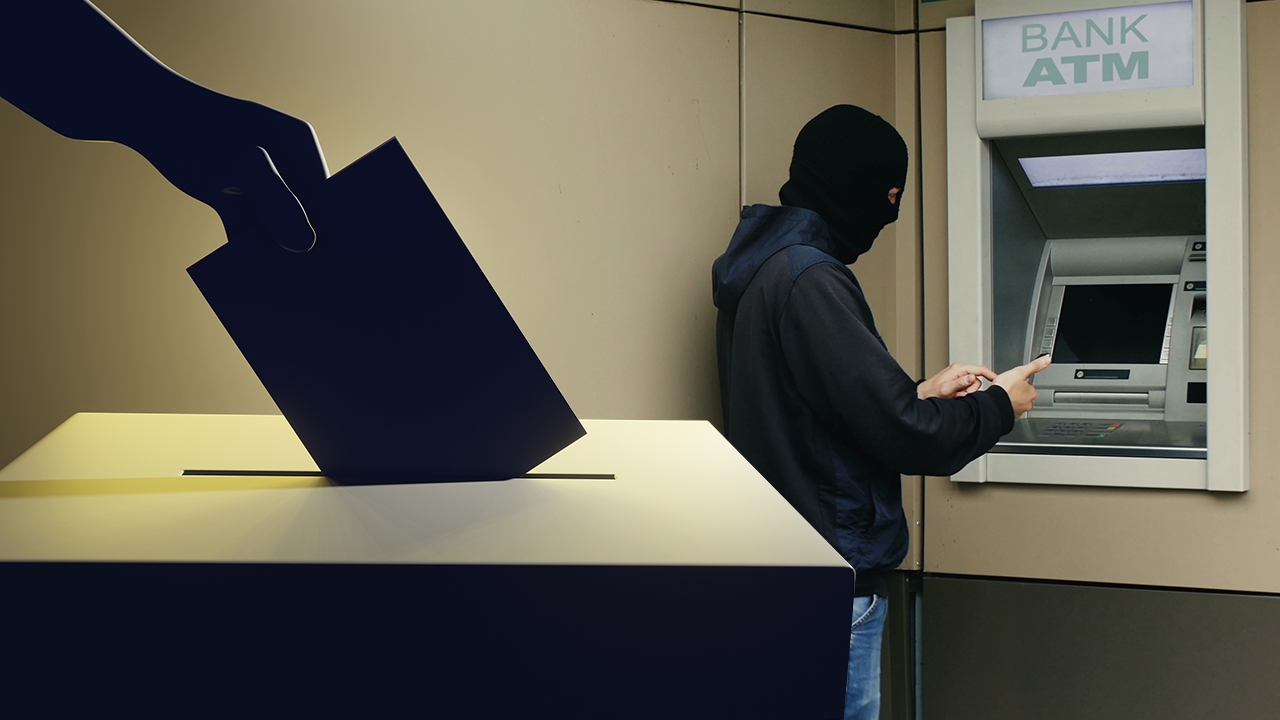
More than 250 million baht was withdrawn and exchanged for 100- and 500-baht banknotes, revealing suspicious cash circulation. An academic notes that Thailand’s economy does not have enough liquidity to require such large amounts of cash, while also exposing a vote-buying scheme costing an average of 20–30 million baht per district.
Within 10 days, the Bank of Thailand detected irregular transactions involving withdrawals ranging from 100 million baht up to 250 million baht. Those withdrawing exchanged the money into 100- and 500-baht notes, a suspicious activity the Bank of Thailand plans to investigate. Initial findings suggest abnormalities in two money channels. If these are linked to the upcoming 2026 general election scheduled for 8 Feb 2026 GMT+7, the matter will be referred to the Election Commission.
Public suspicion has linked these funds to election campaigning, or worse, vote-buying. This remains under investigation to establish the facts.

To clarify these doubts, Thairath Online’s special team interviewed Associate Professor Dr. At Phisanwanich, an economic expert, who analyzed that the withdrawn funds are likely used for election purposes. This includes campaign expenses such as fuel for campaign drivers or assistants, who mostly require 100- and 500-baht notes. Conversely, the money could also be used directly for vote-buying.
Regarding the 250 million baht withdrawn, from a vote-buying perspective, it is not a large amount. For example, to buy votes in one province with about 20,000 voters at 1,000 baht per person requires about 20 million baht. Therefore, 250 million baht could cover vote-buying in one province for a single candidate. However, if used across multiple constituencies, it would be insufficient. For instance, if a party aims to buy votes for 10 seats, it would need about 2.5 billion baht.
Looking at the business sector, it is highly unlikely that operators would withdraw 250 million baht in cash and exchange it into 100- and 500-baht notes, as Thailand’s economy does not have that level of liquidity, nor is business activity so fluid.
Analyzing reasons for large cash withdrawals, possible explanations include:
1. For campaigning expenses, such as paying workers to fuel vehicles or transport campaign materials.
2. Distributing money for vote-buying.
Previous monitoring of financial flows in Thailand has exposed many loopholes, though scrutiny has increased recently due to an unusually strong baht. Financial transaction audits should be thorough, not limited only to gold trading.

From an investigative perspective, Thairath Online consulted Somchai Srisuthiyakorn, a scholar and former Election Commissioner, who said that withdrawing 250 million baht and exchanging it for smaller denominations suggests preparation for vote-buying. This is a reasonable assumption since no one would exchange such large amounts into small notes without intent.
The Election Commission should collaborate with banks to identify individuals making suspicious withdrawals and the branches handling large transactions in each province. Once identified, they should work with the Anti-Money Laundering Office to trace the funds. If linked to any political party, intervention should occur in the affected areas.
When asked why the money was exchanged into 100- and 500-baht notes, Somchai explained that the typical vote-buying price ranges from 300 to 500 baht per vote, with additional management fees of about 100 baht per vote given to vote brokers. The claim of paying 1,000 baht per vote applies mainly in highly competitive areas.

Vote-buying mechanisms typically do not pay for every vote in an area. Political parties assess their existing voter base and calculate how many additional votes they need to win. For example, if a party has 20,000 solid votes but needs 30,000 to win, they must buy about 15,000 votes. Money is thus targeted precisely, ensuring names are checked and ballots marked accordingly.
Usually, an electoral district has about 160,000 eligible voters, with roughly 70% turnout, equal to 112,000 votes. If there are three candidates, the winner needs around 35,000 to 40,000 votes. The key is to estimate the existing votes that don’t require buying.
The figure of 20 million baht per district is commonly cited by politicians, based on an average of 500 baht per vote to buy approximately 20,000 votes, totaling about 10 million baht in direct vote-buying expenses.