

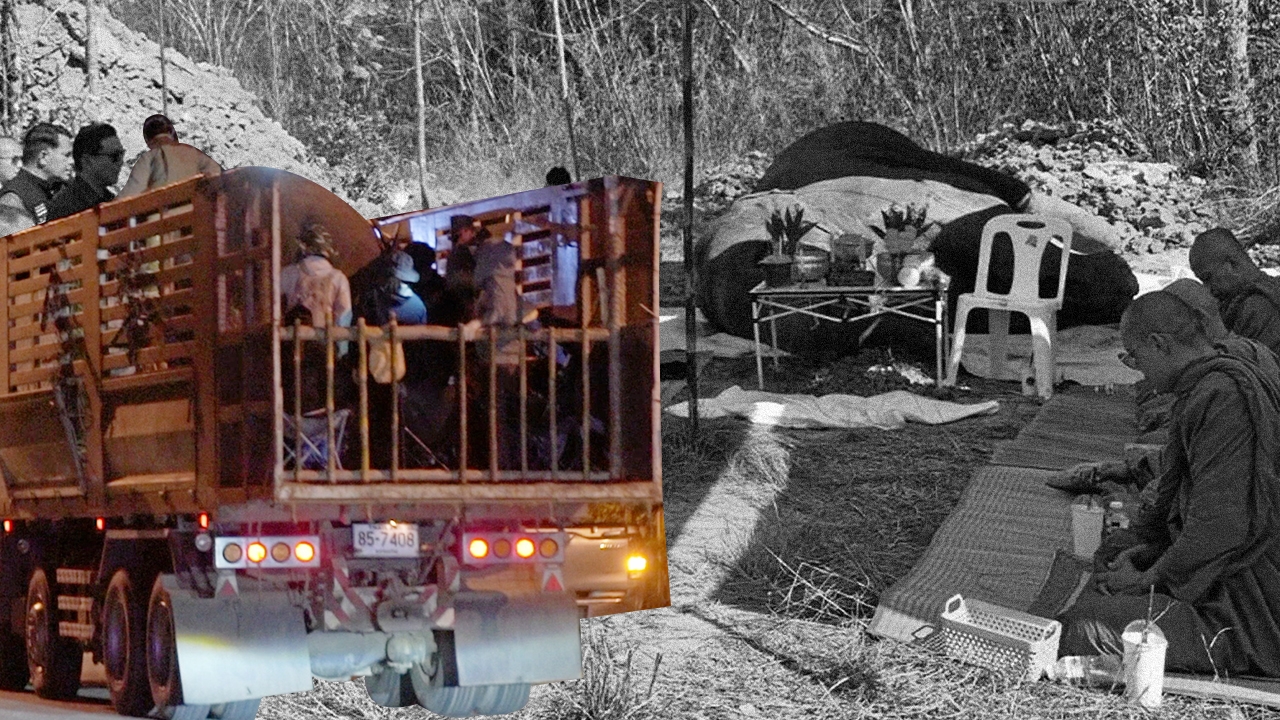
The collapse of Sidor Elephant: "force majeure" or "accident"? The Society for the Prevention of Cruelty to Animals explains which behaviors fall under each category, stressing the need for clear investigation and that negligent officials must face penalties if found responsible.
On 12 Feb 2026, elephant lovers gathered at the Department of National Parks to demand justice for the wild elephant 'Sidor,' urging the Director-General of the Department of National Parks, Wildlife and Plant Conservation to resign, taking responsibility for the elephant's collapse during relocation. The department expressed regret over Sidor's fall, describing it as an unavoidable accident despite careful planning and close monitoring by veterinarians and animal handlers, including repeated sedation as the elephant remained active.

Dr. Sathit Prachya-ariya-kul, Secretary-General and Director of the Thai Society for the Prevention of Cruelty to Animals (TSPCA), shared his personal views on the matter. He noted that some aspects had been addressed earlier, but regarding the new issue of explaining Sidor's collapse as a "force majeure and accident" as previously stated, and the question of potential cruelty to the wild elephant under the Prevention of Cruelty and Animal Welfare Act B.E. 2557 (2014), he offered further comments.
He personally believes that claims of "force majeure" and "accident" must be examined against the facts. "Force majeure" must be an event that cannot be prevented, according to Civil and Commercial Code Section 8, which defines "force majeure" as any event—causing damage or not—that could not be prevented even if the affected or nearby person took reasonable precautions expected under their circumstances and status.
A Supreme Court ruling No. 10285/2557 (2014) clarified that to qualify as "force majeure," the event must not be the fault of the person involved and must be unavoidable even when that person exercised appropriate caution.
Therefore, in Sidor's capture case, it is necessary to consider the intent and proportionality of the actions of the officials involved and others, assessing whether they exercised reasonable care, and whether the elephant's death was an unavoidable outcome despite such care.

Regarding the claim that Sidor's fall was an "accident," it must be examined whether the elephant's collapse was an unexpected, unintentional event occurring during capture and relocation, happening without prior warning, and whether its cause and impact can be objectively measured.
As for alleged cruelty under the Prevention of Cruelty and Animal Welfare Act B.E. 2557 (2014), since Sidor was a wild elephant, the Act applies only to domestic and certain wild animals as designated by ministerial announcement, currently covering only five species, which do not include wild elephants.
However, if it is proven that Sidor died due to acts causing suffering—for example, choking from drug effects or improper capture and transport practices violating veterinary welfare standards and ethics—and that such acts contributed to the elephant's suffering and death, this could violate Penal Code Section 381, which punishes those who "inflict cruelty or kill animals causing unnecessary suffering" with imprisonment up to one month, fines up to 10,000 baht, or both. This is a criminal offense under animal protection laws.

If it is proven that Sidor's death resulted from gross negligence or failure to follow veterinary professional standards by officials, society may question their liability under the Tort Liability Act B.E. 2539 (1996).
Hence, actions toward Sidor must undergo transparent investigation of facts and intent, including the necessity and reasons for capture and relocation, ensuring that personnel exercised adequate caution and expertise according to animal welfare principles and veterinary ethics proportionate to the situation. This is an issue that many compassionate citizens are closely watching, awaiting a fair and just resolution from all involved parties.