

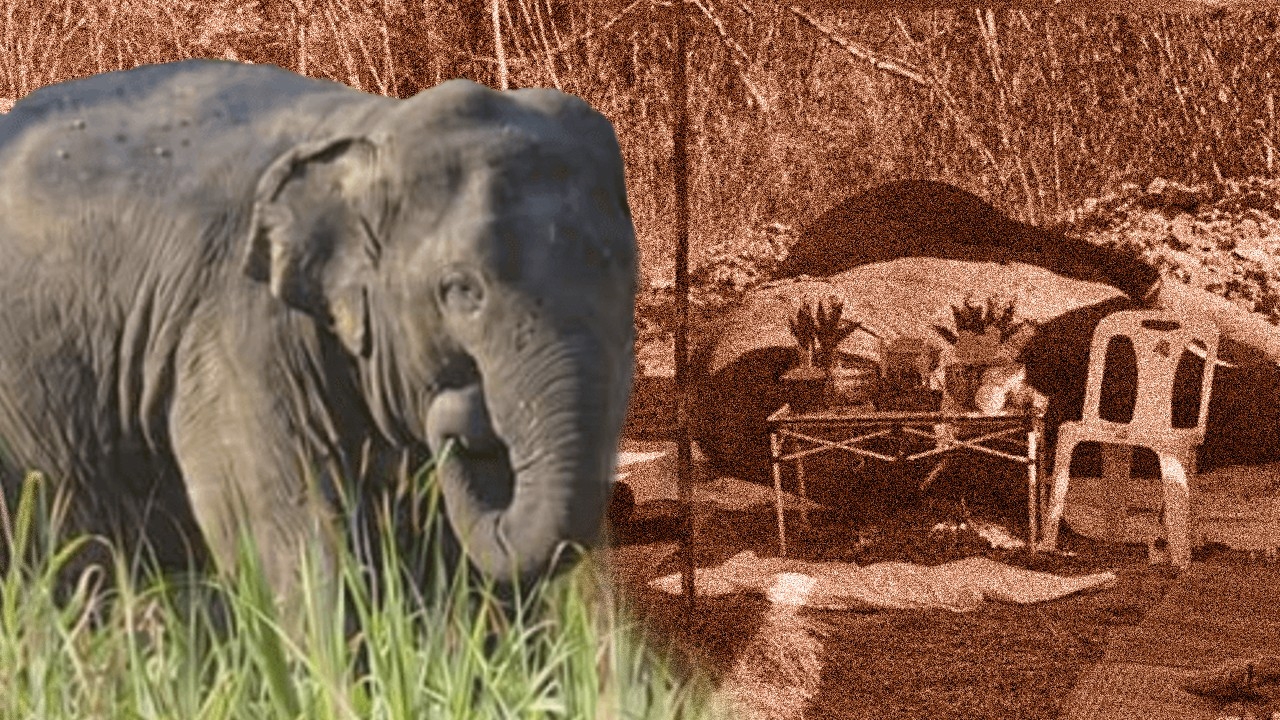
Veterinarians from the Watchdog Thailand Foundation raise concerns that the wild elephant "Hoo Phap" died due to unsanitary anesthesia practices, with the team ignoring the risk of a full stomach.
According to the death sequence, the elephant died from respiratory failure caused by food debris blocking the airway, not from a drug overdose.
The reason is that if it were truly an overdose, the animal would die suddenly as the drug suppresses the brain's respiratory center directly, causing immediate breathing cessation and subsequent heart failure. Under such severe nervous system depression, the body would not generate a gag reflex or inhale large amounts of food deeply into the airway.

In this case, a total of five injections of anesthesia amounting to 27 cc were administered, which does not constitute an overdose. Overdose suppresses the brain's respiratory center, causing immediate breathing stop and then heart failure. When breathing stops, no air is drawn in, so it is impossible for food debris to be sucked into and block the airway.
Therefore, the presence of food debris blocking the airway is clear evidence that the elephant did not die from drugs.
Instead, death resulted from "unsanitary anesthesia management" because the team neglected the risk of a full stomach and failed to position or protect the airway according to professional standards.

#TheRealCauseIsManagementError
This reveals a management failure and negligence by the team, as they did not prepare for emergency situations caused by food aspiration, despite this being a preventable risk.
Considering the legal perspective,

under the Wildlife Conservation and Protection Act B.E. 2562 (2019), wild elephants are classified as the highest level of protected animals. The law clearly states that causing serious injury or death to protected wildlife, even by negligence, is a criminal offense punishable by up to 15 years in prison and a fine of up to 1.5 million baht.
The core principle of this law is that wildlife are not resources but lives that the state has a duty to protect.