

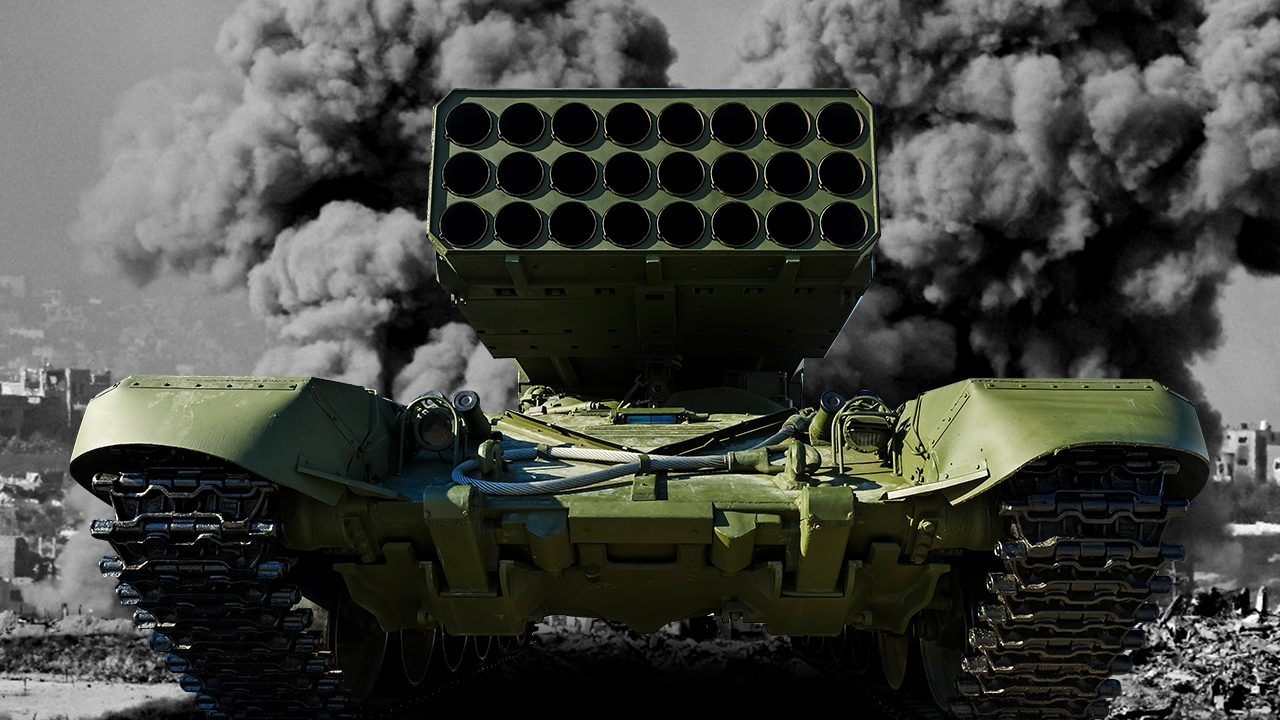
An investigation into the devastating power of the "vacuum bomb," which generates intense heat that vaporizes victims without a trace in an instant. This heavy weapon reaches temperatures of 3,500 degrees Celsius and has been used in attacks on Palestine, vaporizing thousands of people.
An investigative report by Al Jazeera states that Israel used a "vacuum bomb" producing heat as high as 3,500 degrees Celsius in attacks on Gaza, causing thousands of Palestinians to vaporize. This weapon has also been reportedly used in Ukraine during Russian attacks.
Al Jazeera’s "The Rest of the Story" investigation revealed information from Gaza’s civil defense team that since the war began in October 2023, at least 2,842 Palestinians have been recorded as "vaporized" at attack sites. Comparing the number of residents in buildings before bombing to recovered bodies showed discrepancies, leading officials to suspect the weapon causes unusually severe destruction.
Military experts and local witnesses suggest this phenomenon may be linked to the use of thermobaric weapons, also known as "vacuum bombs" or "aerosol bombs," which operate in two stages: dispersing fuel particles in the air, then detonating them to create a large fireball and a powerful pressure wave in enclosed areas.
Explosions of this type can generate temperatures above 3,000-3,500 degrees Celsius, far hotter than conventional bombs. Combined with sudden air compression, human tissue and structures within the blast radius are severely destroyed. Reports indicate that in some incident areas, intact bodies are scarcely found; only small forensic evidence confirms fatalities at those sites.

The "vacuum bomb," also called a thermobaric or aerosol weapon, operates in two explosion phases:
1. It disperses a cloud of fuel or fine particles into the air.
2. It then detonates, creating a large fireball and a vacuum-like suction that draws surrounding air into the explosion center.
Experts explain that such explosions can reach temperatures of up to 3,500 degrees Celsius, much hotter than typical explosives. They often include metals like aluminum, magnesium, and titanium to boost heat and pressure effects.
Military expert Vasily Fatigarov explained that thermobaric weapons differ from ordinary bombs by first dispersing fuel before detonation, producing both fireballs and vacuum-like suction that utterly destroys matter within the blast radius.
One compound mentioned is "tritonal," a mixture of TNT and aluminum powder used in U.S.-made bombs like the MK-84, capable of generating heat sufficient to completely destroy human tissue.
Dr. Munir Al-Bursh explained the biological effects: the human body is about 80% water, boiling at 100 degrees Celsius. Exposed to heat over 3,000 degrees combined with pressure and intense oxidation, bodily fluids boil instantly, causing tissue to vaporize and turn to ash chemically inevitably.

The report also mentions U.S.-manufactured weapons alleged to have been used in Gaza that generate high pressure and heat, including the MK-84 "Hammer."
This unguided bomb weighs around 900 kilograms, contains tritonal (TNT mixed with aluminum powder), and can reach temperatures of 3,500 degrees Celsius—enough heat to incinerate human tissue without leaving a trace.
BLU-109 bunker buster.
It has a thick steel casing and a delayed fuse, allowing the bomb to penetrate before detonating with PBXN-109 explosives, creating a large fireball inside buildings or enclosed spaces, destroying everything within.
The GBU-39 is a precision-guided glide bomb using AFX-757 explosives, designed to leave the external building structure intact while destroying interior contents through pressure waves that damage internal organs and heat waves that burn soft tissue.
Basal, spokesperson for Gaza’s civil defense, confirmed that parts of GBU-39 wings were found at sites where bodies vanished after attacks.
Although in January 2024 the International Court of Justice (ICJ) ordered Israel to take measures to prevent acts potentially constituting genocide, and the International Criminal Court (ICC) issued an arrest warrant for Prime Minister Benjamin Netanyahu, the situation in Gaza has worsened. Losses continue amid serious questions about the effectiveness of international justice mechanisms to halt this cycle of violence.
First appeared during World War II.
Thermobaric weapons trace back to late World War II when the German military began experimental use on battlefields. However, the technology was not systematically developed until the 1960s, when the U.S. deployed air-fuel bombs in the Vietnam War.
Later, the U.S. used these weapons in Afghanistan in 2001 against Al-Qaeda forces hiding in caves in the Tora Bora mountains, and again in 2017 during operations against the Islamic State (ISIS).
Russia reportedly used thermobaric weapons in the 1999 Chechen War, drawing severe criticism from human rights groups like Human Rights Watch.
Additionally, reports indicate Russian-made thermobaric weapons were used in Syria’s civil war by Bashar al-Assad’s government forces, amid international condemnation.