

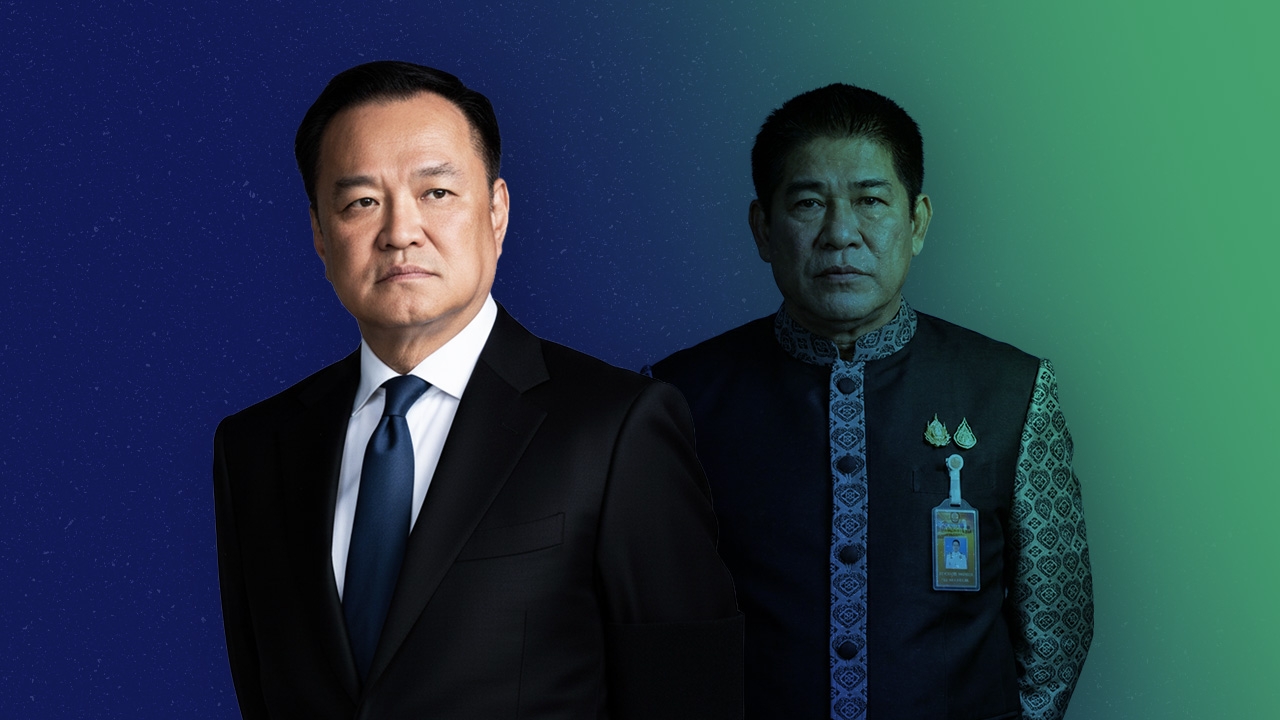
Rumors of a government formation deal excluding the "Kla Tham" party involve division of top-tier ministries. Experts evaluate that without Thammanat, Bhumjaithai faces long-term instability and risks betrayal from behind, while the opposition grows stronger.
Amidst government formation talks, parliamentary vote calculations have become a critical factor closely watched by all sides. Political party moves reflect not only power negotiation but also the long-term stability direction of the government. The seemingly stable 300 to 200 vote split may conceal sensitive conditions prone to sudden disruption.
Behind the strong government image lies a coalition structure made up of large, medium, and many small parties intricately combined. Meanwhile, the opposition has a more balanced structural proportion. The situation is not merely about ministerial seat allocation but a major challenge of maintaining power and political unity, in a context where every decision can shift the power balance at any time.
After Bhumjaithai's electoral victory, social expectations pointed to the Kla Tham party joining the coalition, given their previous cooperation. However, political dynamics flipped when Bhumjaithai chose to partner with Pheu Thai instead, pushing Kla Tham to the opposition despite holding 58 seats, leaving them out of the current power equation.

Thairath Online's special team consulted Associate Professor Dr. Yutthaporn Isarachai, Political Science, Sukhothai Thammathirat Open University, who analyzed that this government formation excludes Kla Tham. Initially, the 300-to-200 government-opposition split suggests high stability, but the coalition structure actually consists of one large party, Bhumjaithai, and one sizable medium party, Pheu Thai.
Additionally, there are 16 smaller parties forming the coalition. In contrast, the opposition structure is more balanced, including the large People’s Party, medium-sized Kla Tham, smaller Democrat Party, and Ruam Thai Sang Chart Party. This shows the opposition is structurally more balanced, but government stability may falter if Pheu Thai withdraws, leaving Bhumjaithai and others below half of the 500-seat house, risking problems in key legislative processes.
Dr. Yutthaporn suggests Bhumjaithai should add a third party to fill the gap. Currently, the options are Kla Tham or Democrat Party, with Kla Tham being more compatible with Pheu Thai. The Democrat Party holds only 22 seats, and if Pheu Thai withdraws, the government would hold about 250 seats, as smaller parties—mostly aligned with Pheu Thai, like Thai Ruam Palang and Prachachart—would remain.
If Bhumjaithai is deciding on this equation, Dr. Yutthaporn says several supporting factors must be settled: an agreement with Pheu Thai to prevent withdrawal or conditions binding Pheu Thai; monitoring Kla Tham's moves—whether its 'green snakes' defect to the government side or accept conditions excluding Thammanat from ministerial posts; and how the Election Commission will certify results, as Kla Tham might face disqualification or weakened influence if by-elections occur in multiple districts.

Dr. Yutthaporn revealed that the rift between Kla Tham and Bhumjaithai likely stems not from direct conflict but from disagreements over positions, especially concerning Thammanat's role as a minister. Bhumjaithai may consider the government's image and thus exclude Kla Tham from the coalition. Regarding the ongoing ministerial seat deals, he sees Bhumjaithai gaining the main advantage as the top-winning party, naturally securing more ministers and key ministries, while Pheu Thai and smaller partners have limited bargaining power at this stage.
Regarding the "traffic light" coalition formula of Red-Orange-Green, Dr. Yutthaporn said this is merely a threat from Kla Tham. Although Pheu Thai, People’s Party, and Kla Tham combined hold 250 seats, the key question is who leads the coalition and who becomes prime minister. The People’s Party, with the most seats, claims to be the best candidate, but whether Pheu Thai will support them is uncertain. If Pheu Thai insists on supporting their own candidate per prior agreements with Bhumjaithai, will the People’s Party accept this?
Thus, Dr. Yutthaporn views these claims as mere threats from Kla Tham, who has been pushed to opposition despite holding 250 seats. Even so, this is insufficient without alliance with other parties to stabilize government. Meanwhile, most small parties have likely aligned with Bhumjaithai already.

Regarding Bhumjaithai’s external appointees, Dr. Yutthaporn clarifies that figures like Ekniti, Sihasak, and Supachai are not outsiders but party members who helped with campaigns and some are candidates. Possible true outsiders might be appointed to ministries like Defense or Energy. The key ministries to watch are Interior, Defense, Finance, Commerce, Tourism and Sports, and Agriculture and Cooperatives, which are currently hot topics.