

Thairath Online
Thairath Online

Lawsuits Filed in Three Courts Against the Election Commission Over 2026 Ballot Barcode Issue, Possible Nullification and Imprisonment

Theissue24 Feb 2026 21:35 GMT+7

Share article

Lawsuits Filed in Three Courts Against the Election Commission Over 2026 Ballot Barcode Issue, Possible Nullification and Imprisonment

Political groups and civil society are advancing lawsuits against the Election Commission (EC) regarding the 2026 ballots containing barcodes and QR codes, which may violate the secrecy of voting, potentially leading to election nullification and imprisonment of EC officials.

Today (24 Feb) marks more than two weeks since the general election for members of the House of Representatives on 8 Feb 2026. During this period, a crisis of confidence in the Election Commission's performance has persisted unabated.

Issues include the EC website not displaying 100% of vote counts, suspicions of "unequal ballots" with different voter turnout numbers between constituency and party-list ballots despite voters receiving two ballots each, and discrepancies in unit-level vote counts.The number of marked ballots does not match the figures reported on the posted boards.Protests have surrounded ballot boxes, demanding a recount.

However, the most significant issue has been the appearance of "barcodes and QR codes" on ballots, which are suspected to allow tracing back to individual voters, possibly violating the constitutional requirement for secret ballots and risking the election being declared void.

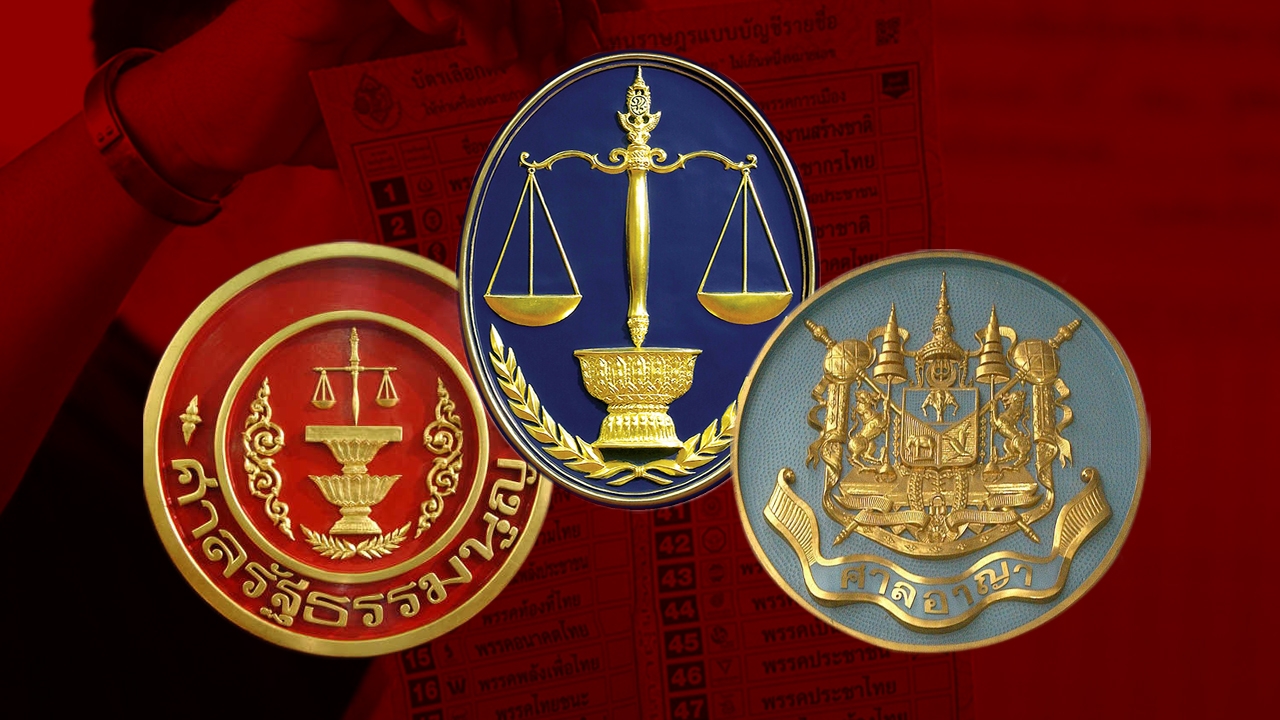
This situation has prompted political parties, academics, and civil society to file complaints and lawsuits with various authorities and courts—including the Constitutional Court, Administrative Court, and Criminal Court—seeking to hold the EC accountable. Currently, multiple cases related to the 2026 election have been filed in these courts, with varying binding effects depending on court rulings.

Constitutional Court

has jurisdiction to review cases potentially violating the constitution. Most cases brought before it concern the issue of ballots bearing barcodes which can be traced back to who marked them, potentially violating Section 85 of the 2017 Constitution, which mandates that elections be direct and secret. If the court rules that the vote secrecy was breached, the election would be declared null and void nationwide.

Historically, the Constitutional Court has nullified elections twice, in 2006 and 2014. The case most often compared to the 2026 election is the 2 April 2006 election, where voting booths faced outward, allowing observers to see voters' choices. Additionally, the election was held with only a 37-day campaign period, resulting in a high number of spoiled ballots and allegations of hiring small parties to run.

In Constitutional Court Ruling No. 9/2549 (2006), it was held that the outward-facing voting booths violated the principle of secret voting, and the short election timeframe compromised fairness and advantaged certain parties.

For the 2026 election, various political groups and civil society have petitioned the Ombudsman to forward the barcode issue to the Constitutional Court for review on whether it violates the secret ballot principle, including:

  • On 13 Feb, “Lawyer Aun Buriram” Mr. Patthapong Supaksorn filed a petition with the Ombudsman to submit the QR code and "unequal ballot" issues to the Constitutional Court. On 16 Feb, the Ombudsman replied that it had asked the EC to investigate the QR code matter. Lawyer Aun questioned why the "unequal ballot" issue was seemingly neglected, suggesting the two issues might be linked.
  • On 13 Feb, Mr. Chusak Sirinil, deputy leader of the Pheu Thai Party, said the party’s legal team is compiling facts and evidence on whether the barcodes on ballots violate the secret ballot principle, with plans to petition the Ombudsman to forward the case to the Constitutional Court.
  • On 16 Feb, Mr. Mongkolkitti Suksintharanon, prime ministerial candidate and party-list candidate of the New Alternative Party, petitioned the Ombudsman to ask the Constitutional Court to rule on whether the barcode issue violates Section 85 of the Constitution and if the election should be nullified.
  • On 17 Feb, Ms. Nantana Nantavaropas of the New Generation Senators Group received a letter from lawyer Aun Buriram requesting 20 senators to co-sign a petition to the Constitutional Court to determine whether the election is null due to barcodes on the ballots. As of 24 Feb, Ms. Nantana said the petition draft is in progress and expected to be completed by 26 Feb before collecting senators’ signatures.

Administrative Court

has authority to determine whether the EC’s actions are lawful or not, and may issue temporary injunctions to suspend the EC’s certification of election results. If the court rules the use of barcodes is unlawful, it may order a new election with ballots without barcodes or order destruction of problematic ballots to protect voter secrecy. Political groups and civil society have filed cases in the Administrative Court, such as:

  • On 14 Feb, “Lawyer Cha,” Mr. Thanu Rungrojruangchai, filed a petition with the Administrative Court demanding:
    1. A new election be held using ballots that cannot be traced back, and destruction of the previous ballots,
    2. Suspension of election result certification until the court issues a ruling.
    The Central Administrative Court accepted the case under docket number 304/2559.
  • On 15 Feb, Mr. Akarawat Phonthanachalitkul, a reserve senator, filed charges against the EC and its secretary, demanding:
    1. That ballots containing barcodes be invalidated and destroyed,
    2. That the EC be penalized under the 2018 Election Act with imprisonment and disqualification, and required to compensate costs for a new election.
  • On 16 Feb, representatives of students from nine universities and Mr. Nornset Nanongtoom, a human rights lawyer, filed a petition asking the Administrative Court to rule on whether the EC’s order to design and use 2026 ballots with barcodes traceable to voters violates the constitutional secret ballot principle and whether using such ballots renders the election unlawful.

    They requested the court to temporarily suspend certification of the election results until a final ruling.

Central Criminal Court for Corruption and Misconduct Cases

is handling criminal cases against the EC, which can result in fines and imprisonment. Most charges are under Section 157 for officials who perform or neglect duties unlawfully, punishable by 1–10 years imprisonment or fines from 20,000 to 200,000 baht, or both. These are non-compoundable offenses with a 15-year statute of limitations.

Following the 2006 nullified election, the EC was criminally prosecuted for dishonest and unfair election conduct. Three defendants—Pol. Gen. Wasana Pamlap, EC chairman; Mr. Prinya Nakchatree; and Mr. Weerachai Naoboonnian—were sentenced to two years imprisonment and ten years disenfranchisement. In the 2026 election, political groups and civil society have filed charges including:

  • On 23 Feb, lawyer Yongyut Saokaewsathit filed charges against Mr. Narong Kanwarin, EC chairman, and seven others, including the EC secretary, under Section 157 combined with Section 83, alleging unlawful or corrupt conduct; the 2026 EC Act Section 69; the 2018 House of Representatives Election Act Section 149; and the 2018 Anti-Corruption Act Section 172.

    The complaint alleges all eight conspired to print ballots with QR and barcodes designed to allow tracing, demonstrating dishonesty and lack of transparency, and unnecessarily increasing ballot printing costs, thereby violating voter secrecy nationwide. The court has accepted the complaint and scheduled a hearing on 17 Mar at 09:30.

  • The Prachachon Party is preparing a complaint and gathering evidence to charge under Section 157 for misconduct or neglect of duties in the election and barcode ballot case. On 22 Feb, during a re-election in some precincts, they collected evidence showing ballots had been altered to remove serial numbers from the stub, which will be included in the complaint.