

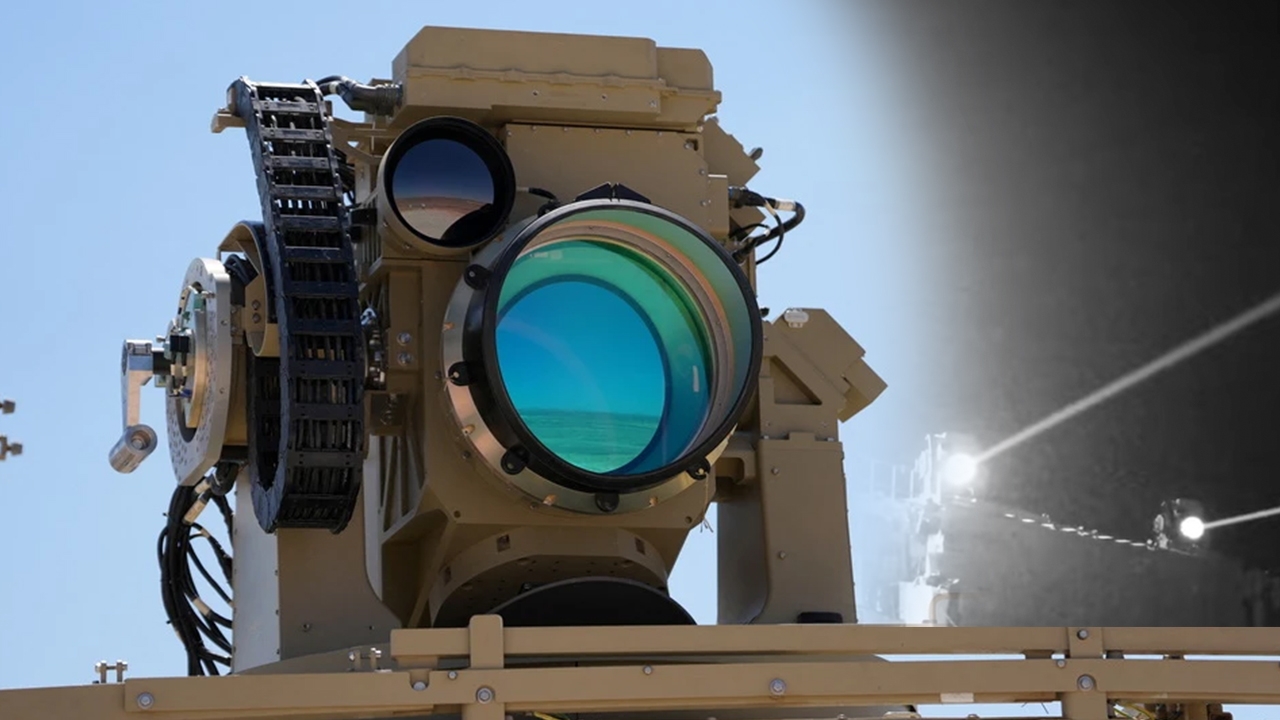
"Iron Beam" is a new Israeli laser defense weapon with high precision capabilities that merges multiple laser beams into a single beam, delivering powerful resistance against heavy weapons from aggressors. It is designed to intercept drones and rockets.
The first real-world footage of Israel’s "Iron Beam" laser air defense system has emerged. The clip shows a high-energy beam intercepting a drone at night near the northern border, coinciding with Hezbollah launching rockets from Lebanon amid tensions linked to Iran.
If officially confirmed, this would mark Israel’s first deployment of a laser system in active combat, following its delivery to the Air Force’s air defense units at the end of December.

"Iron Beam" is a high-energy laser weapon system with about 100 kilowatts of power, designed to intercept threats at close to medium range—from several hundred meters up to several kilometers.
Its key feature is operating at the speed of light, allowing near-instant response to targets. It also has very low interception costs compared to traditional missile interceptors. The system was developed jointly by Rafael Advanced Defense Systems and Elbit Systems in cooperation with Israel’s Ministry of Defense.
Iron Beam has an operational range of around 7 kilometers and is designed to handle small targets that the Iron Dome struggles with, such as artillery shells, mortar rounds, drones, and anti-tank missiles.
Using advanced algorithms, the system combines multiple laser beams into one high-powered beam roughly the diameter of a coin, which then focuses energy on the target until it is structurally damaged or explodes mid-air. This new system is intended as Israel’s fifth layer of its multi-tiered air defense shield.

While Iron Dome effectively reduces rocket damage, one battery costs about 100 million dollars (approximately 3 billion baht), and each interceptor missile costs at least 50,000 dollars (around 1.5 million baht).
Although the laser system’s initial cost runs into hundreds of millions of dollars, the cost per shot is only a few dollars since it mainly uses electrical power.

Iron Beam is expected to enhance close-range interception capabilities and could push Israel’s rocket defense success rate close to 100%. However, such systems heavily rely on advanced computer technology and power grid infrastructure.
Israeli defense officials stated, "In war, interceptor missiles may run out, but as long as there is electricity, the laser system can fire continuously."
If the control system or infrastructure is hit by cyberattacks or electromagnetic pulse (EMP) weapons, the defense performance could be immediately compromised.
