

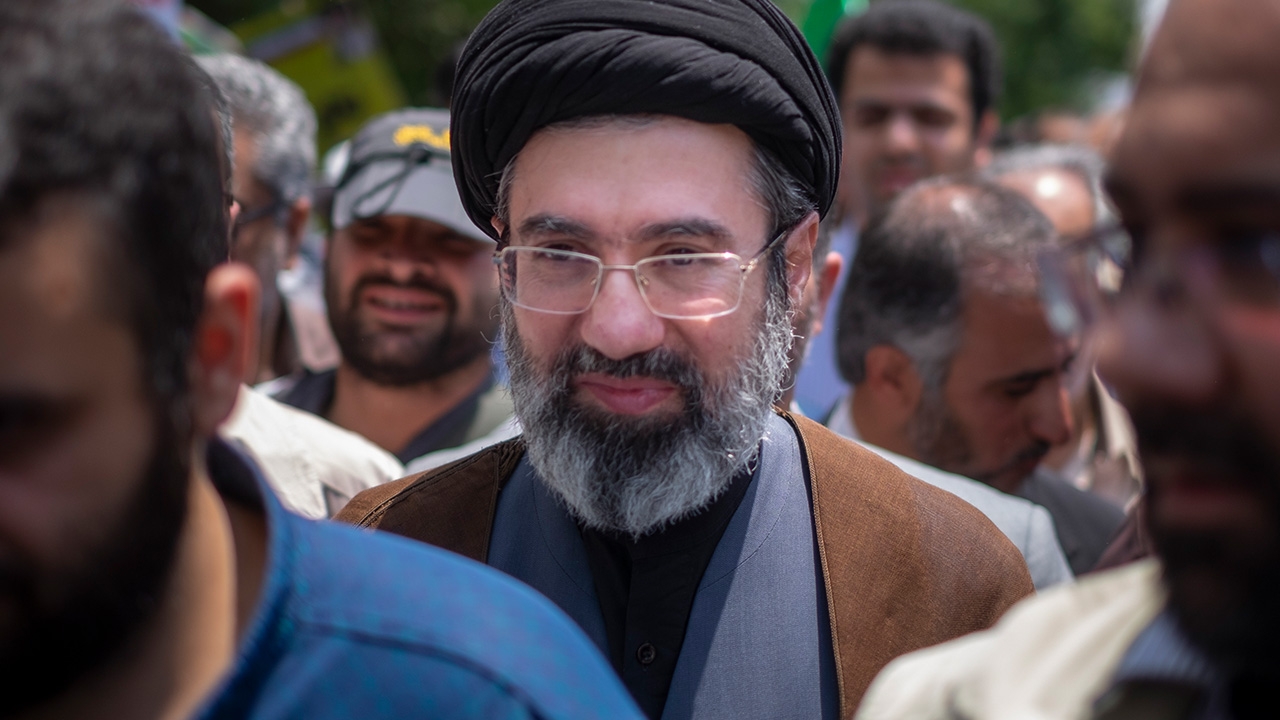
Mojtaba Khamenei is one of the most quietly influential individuals in Iran. He is the son of Ayatollah Ali Khamenei, the current Supreme Leader of Iran. Although he holds no official government position, he is viewed as a "power behind the scenes" and a leading candidate likely to succeed his father as Supreme Leader.
1. Personal Background and Education
Born: 1969 in Mashhad, Iran
Religious Education: He pursued advanced religious studies (Hawza) in Qom, the center of Shia scholarship. He currently holds the high-ranking clerical title of "Ayatollah," a key qualification for aspiring to the Supreme Leader position.
Family: Married to the daughter of Gholam-Ali Haddad-Adel, a former influential Speaker of Parliament.

2. Roles and Achievements in Power
Mojtaba does not have direct, public policy achievements like typical politicians, but he plays a crucial role within Iran's security framework:
Control of the Islamic Revolutionary Guard Corps (IRGC): He has close ties with the military, especially the Basij volunteer forces, and played a significant role in directing the suppression of the 2009 "Green Movement" protests.
Administration of the Supreme Leader's Office (Beit-e Rahbari): He oversees his father's vast security and economic network. It is said no major decision in Iran proceeds without his knowledge.
Political Influence: He has been criticized for significantly supporting Mahmoud Ahmadinejad’s presidential victories in 2005 and 2009, which sparked intense conflict with reformist factions.
3. Current Status: Leading Candidate for Supreme Leader
Following the death of President Ebrahim Raisi in a helicopter crash in 2024, Mojtaba's name has immediately gained more attention because:
Fewer rivals: Raisi was considered a major contender for succession.
Trust: He enjoys the highest trust from his father and the IRGC military.
Religious Acceptance: Being authorized to teach advanced religious studies in Qom signals his readiness in doctrinal leadership to become a spiritual leader.
Caution: Despite his strong influence, "father-to-son" succession remains a sensitive issue in Iran as it conflicts with the 1979 Islamic Revolution’s principle to overthrow monarchy.
Summary of Key Achievements
Area | Role/Achievement |
Security | Influential over intelligence units and Basij forces |
Politics | Primary coordinator between the Supreme Leader's office and the government |
Religion | Instructor of advanced theology (providing legitimacy for governance) |