

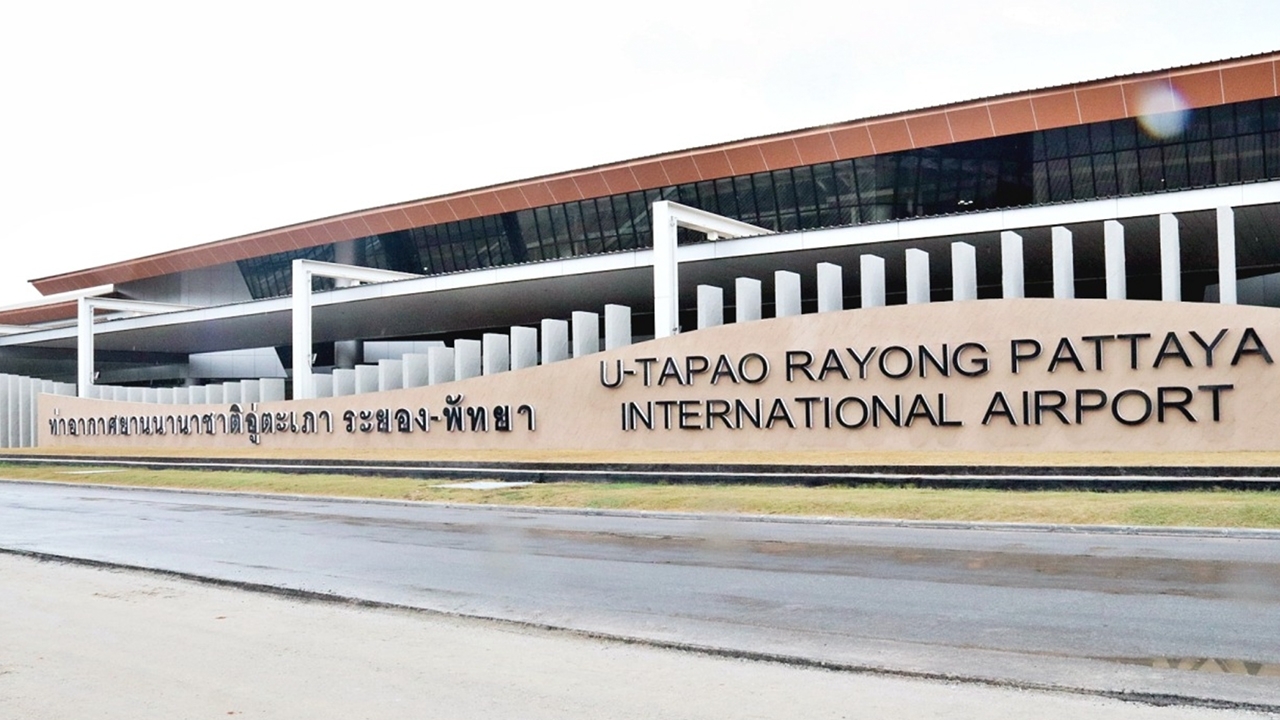
The issue of "U-Tapao Airport" has once again drawn attention due to rumors in early March 2026 about the United States potentially requesting to use it as a military operations base. The Thai government has issued a clear denial.
Here are the facts regarding the latest situation and the airport's usage history:
On 5 March 2026, Mr. Sihasak Puangketkaew, Minister of Foreign Affairs, publicly denied the rumors that the U.S. requested to use U-Tapao as a base for attacking Iran. Key points included:
No discussions held: He confirmed that talks with the U.S. ambassador only covered bilateral relations, trade, and taxation; no mention was made of military base use.
Thailand’s position: Thailand is not a party to any conflict and seeks peaceful solutions, prioritizing the evacuation and safety of Thai nationals in conflict zones.
Existing cooperation: Current foreign use of the airport involves only "normal cooperation" such as overflights or refueling stops, which are standard security practices Thailand maintains with many countries—not establishing bases for attacks.

U-Tapao Airport (U-Tapao Rayong–Pattaya International Airport) has a diverse operational history from past to present:
Era | Usage type |
Vietnam War period (1966 - 1976) | The U.S. used it as a main military base in Southeast Asia for B-52 bombers and refueling aircraft conducting operations in Vietnam, Laos, and Cambodia. |
Post-1976 | The U.S. withdrew all troops; U-Tapao was transferred under the Royal Thai Navy's control and developed into a secondary commercial airport. |
Humanitarian missions | Served as a hub for humanitarian aid (HADR) during key events such as the 2004 tsunami and various civilian evacuations during crises. |
Maintenance, Repair, and Overhaul (MRO) center | Hosts a large aircraft maintenance center for Thai Airways. |
Current status (EEC project) | Upgraded as the "Eastern Aviation City," becoming the third main commercial airport connected to Suvarnabhumi and Don Mueang airports by high-speed rail. |
Although U-Tapao was historically known as a U.S. military base, today it is fully under Thai sovereignty with three main roles:
Security: Serves as the Royal Thai Navy’s First Naval Area Command base.
Commercial: Supports tourism flights and cargo transport (Logistic Hub).
International cooperation: Used for joint military exercises (such as Cobra Gold) and humanitarian missions under case-by-case agreements.