

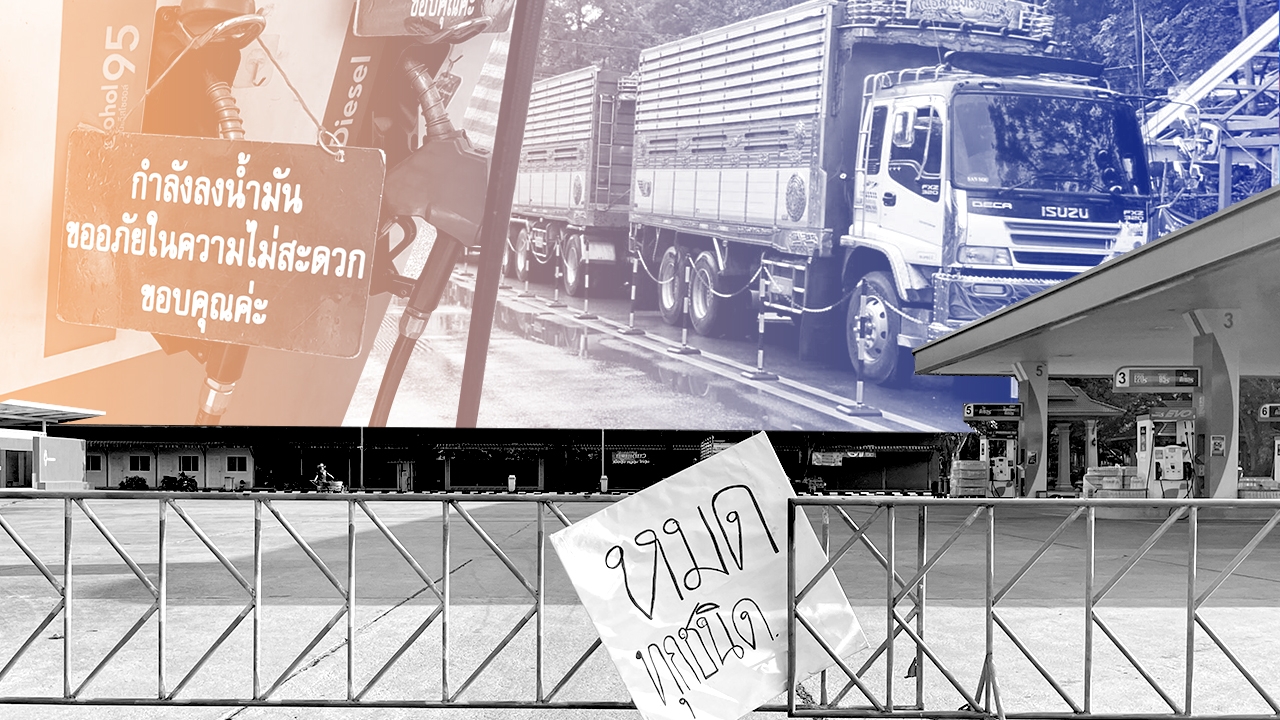
Rising oil prices from the Middle East conflict have driven up Thailand's transport costs by 12%. The Federation urges the government to extend the diesel price cap for 30 days, reduce taxes, and suspend all exports before operators can no longer bear the burden, which would lead to higher consumer prices in goods.
The conflict situation between the United States and Israel against Iran in the Middle East has caused global oil prices to rise, directly impacting Thailand's transport and logistics sectors since diesel fuel is a major business cost.
The Land Transport Federation of Thailand held discussions with a network of 13 member associations and, in a meeting on 6 Mar 2026, resolved to propose measures to the government to alleviate the impacts of the energy price crisis. The key proposals are:
1. Request that the government maintain the diesel price cap for at least 30 days from 4 Mar 2026, using the Oil Fuel Fund to keep the price at 29.94 baht per liter to reduce the cost burden on operators and the public.
2. Request a temporary suspension or cancellation of all refined oil exports to reserve domestic oil supplies for at least 60-90 days, ensuring energy security.
3. Urge the Ministry of Energy and related agencies, such as PTT, to urgently seek crude oil imports from other regions to reduce dependence on Middle Eastern oil.
4. Request the government to consider reducing excise tax on oil by at least 3 baht per liter during the war and energy crisis period.

Thairath Online's special news team discussed this issue with Dr. Thongyu Kongkan, Chairman of the Land Transport Federation of Thailand. He revealed that if the Middle East conflict extends beyond 3-4 weeks, global energy prices are likely to continue rising, impacting the economy and broadly increasing the cost of living.
Currently, the government is using funds from the Oil Fuel Fund to help cap diesel prices for 15 days (until 17 Mar), but the Federation views this as insufficient and proposes extending the price cap to at least 30 days to reassure businesses and the public.
Dr. Thongyu explained that Thailand's oil market currently has two price levels. Small operators refueling at government-controlled stations have not been greatly affected.
However, large operators with over 100 trucks—about 1,000 nationwide in industries like import-export, construction materials, and agricultural transport— usually purchase fuel directly from oil depots or wholesalers, paying higher prices now around 34-40 baht per liter, resulting in increased transport costs.

The Federation also expressed concern over government measures banning the use of jerrycans or liter tanks for refueling, seeing the policy as lacking comprehensive consideration since many in agriculture and industry rely on fuel for machinery such as tractors, water pumps, cranes, and backhoes that cannot drive to gas stations.
Dr. Thongyu stated that such measures may cause public alarm and should be reviewed to align with the real needs of the economic sectors.
Dr. Thongyu said that if the government does not intervene to manage diesel prices and allows prices to keep rising, transport costs will increase accordingly. On average, a 1 baht per liter increase in oil price raises transport fees by about 3%, so a 4 baht increase could push transport costs up by roughly 12%.
Though transport fees have not yet increased, if oil prices continue to rise without countermeasures, future transport rate hikes are likely, ultimately passing costs onto consumers.
He also noted that the rapid recent oil price rise may not fully reflect actual costs since some oil in the market is older stock imported before the conflict began.

"The government's refusal to cut excise tax and using the Oil Fund to subsidize large corporations is seen by the Federation as unfair to the public because existing oil stocks come from refineries before the war, yet prices rose immediately when the war started, raising questions if major energy operators are exploiting consumers. The government must clarify and build trust in society," Dr. Thongyu said.
The Land Transport Federation emphasized that transport fee increases should be a last resort after consulting and proposing solutions to the government.
"This issue has two sides: we are transport service providers but also consumers. When transport fees rise, prices of consumer goods and construction materials usually increase immediately," he said.
The Federation calls on the government to urgently implement measures to stabilize energy prices to maintain transport cost stability and prevent economic and consumer price impacts in the long term.