

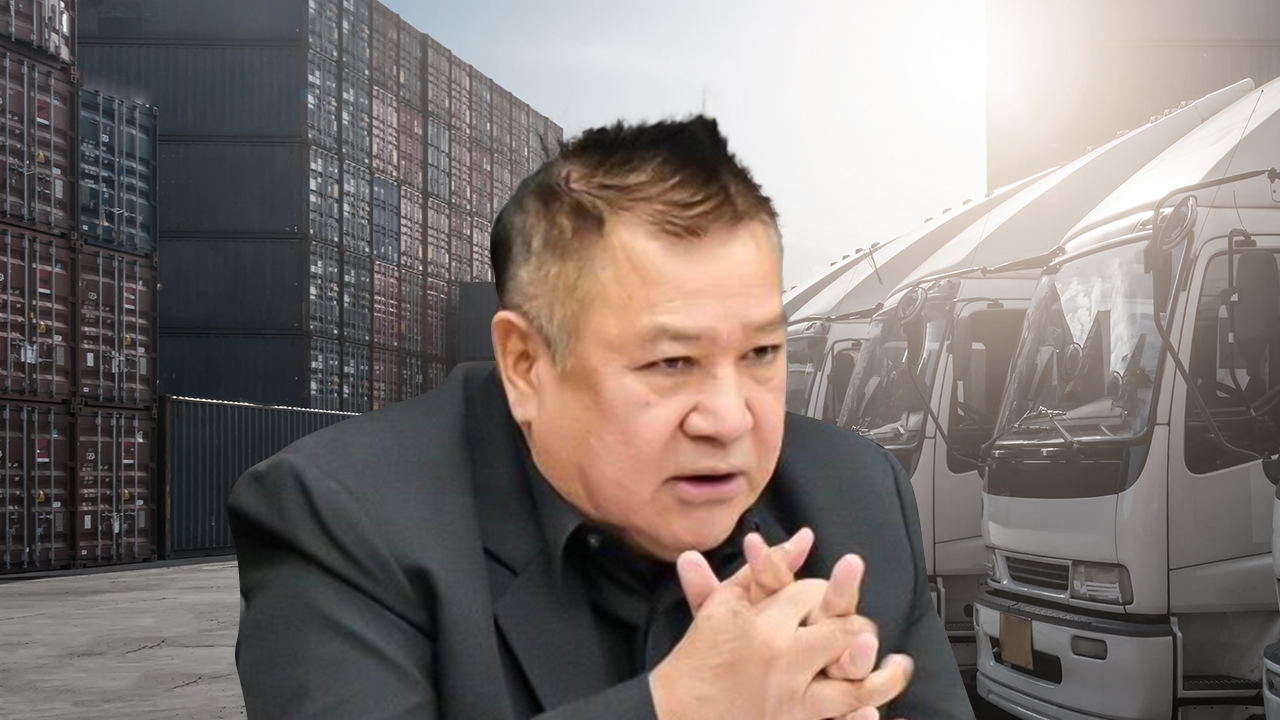
More than 300 trucks are preparing to assemble to protest high fuel prices tomorrow (18 Mar 2026), demanding the government reduce taxes to stabilize prices and lower transportation costs.
Today, 17 Mar 2026, the Facebook page of the Land Transport Federation of Thailand posted an invitation for operators to unite under 'TRUCK POWER' to urgently urge the government to resolve the transport operators' hardships caused by the fuel crisis and traffic congestion at Laem Chabang port. The rally is scheduled for Wednesday, 18 March 2026, at 9:00 a.m. in front of Big Food Market, next to the PTT gas station on Sukhumvit Road, Laem Chabang, Chonburi province.
Thairath Online's special report discussed this issue with Dr. Thongyoo Kongkan, chairman of the Land Transport Federation of Thailand, who revealed that over 300 trucks have confirmed participation. They will park along Sukhumvit Road in Laem Chabang, Chonburi, as operators are currently facing severe hardships and seek urgent assistance from government agencies.
Dr. Thongyoo explained that major operators owning over 100 trucks each—approximately 1,000 operators nationwide across various industries like import-export, construction materials, and agricultural product transport—often purchase fuel directly from oil depots or wholesalers, leading to higher fuel costs.

The federation also expressed concern about the government's policy banning the use of gallons or liter containers for refueling, viewing it as insufficiently considering all impacts. Many people in the agricultural and industrial sectors rely on fuel for machinery such as tractors, water pumps, cranes, and backhoes, which cannot be driven to gas stations for refueling.
Dr. Thongyoo stated that this policy might cause public alarm and should be reviewed to align with the practical needs of the economic sectors.

If the government does not manage diesel prices and allows them to keep rising, transportation costs will increase accordingly. On average, a 1-baht-per-liter fuel price increase raises transport fees by about 3%, so a 4-baht rise could push transport costs up by around 12%.
The recent rapid fuel price hikes may not fully reflect true costs since some market fuel stocks were imported before the conflict arose.

“The government’s refusal to cut excise taxes and instead use the fund to subsidize large corporations is seen by the federation as exploiting the public, since existing fuel was refined before the war but prices increased immediately after. This raises concerns about whether major energy operators are taking advantage of citizens. The government must clarify and build public trust,” said Dr. Thongyoo.
He added, “This issue has two sides: we are transport service providers but also consumers. Whenever transport fees rise, retail prices for consumer goods and construction materials usually follow immediately.”
Therefore, the federation calls on the government to urgently implement measures to address the energy price situation, to maintain stable transport costs and prevent negative impacts on the economy and the public’s cost of living over the long term.