

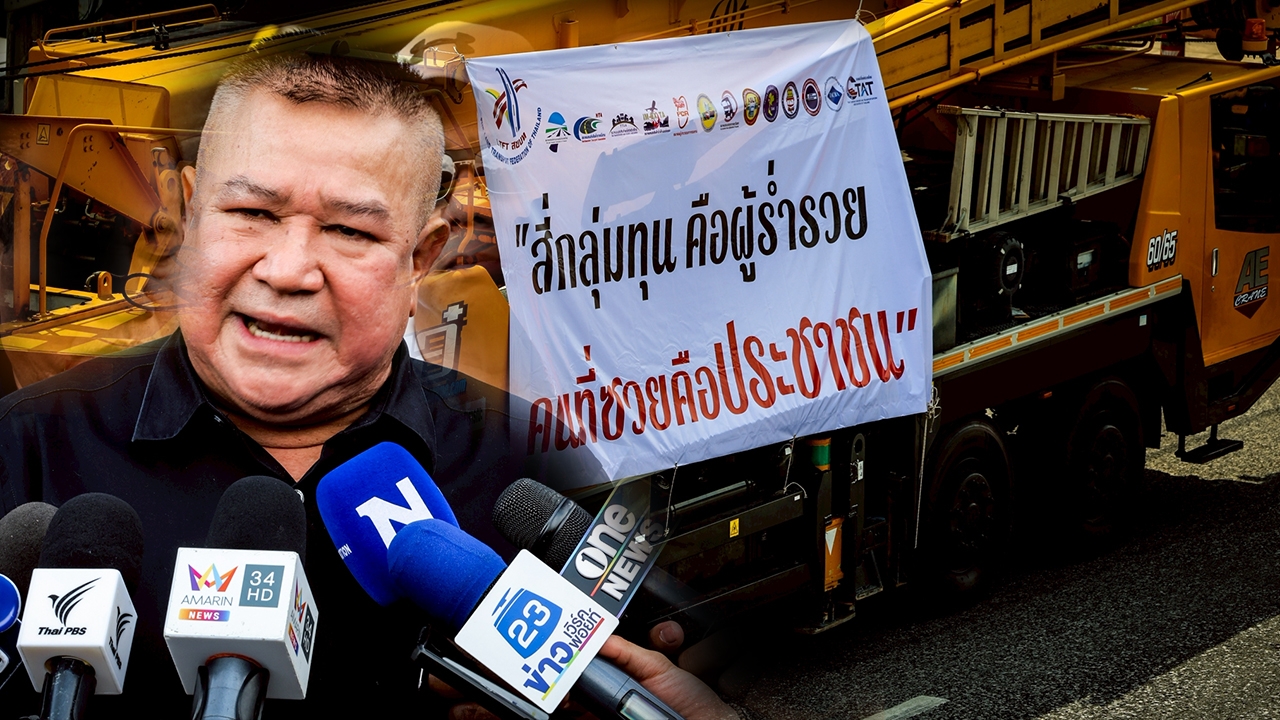
Truckers' protest exposes a masked group hoarding fuel, calling for a diesel price freeze at 30 baht per liter for 60 more days alongside price restructuring.
Today (18 Mar 2026) on Sukhumvit Road, Laem Chabang, Chonburi, the Land Transport Federation of Thailand held a nationwide truckers' gathering with over 300 trucks participating. Dr. Thongyu Kongkan, president of the federation, said a masked group is behind fuel price hoarding, impacting the public and operators. A members' meeting will be held this afternoon to pressure the government to address the issue directly.
The ongoing conflict among the United States, Israel, and Iran since 28 Feb 2026 has lasted over two weeks with no sign of imminent resolution as claimed or advertised by the parties involved. This has affected global energy prices, driving crude oil prices higher in all markets, causing shortages of crude oil and refined products in countries dependent on imported crude from around the world.

The operators therefore present the following proposals:
1. The government should fix the retail diesel price at 30 baht per liter for 60 days to allow the public and all fuel users time to adjust.
2. The government must resolve fuel shortages at all gas stations operated by fuel vendors, prohibiting shortages, station closures, quota allocations, or restrictions on fuel refills. These issues stem from failures in managing fuel delivery from depots to stations, which should utilize all available transport modes such as pipelines, rail, trucks, and ships to ensure no shortages.

3. The government must manage and stabilize diesel prices so that all types are priced closely or differ only within a set limit, enabling over 20,000 gas stations to sell fuel and remain operational.
4. The government and relevant agencies must address traffic congestion and parking issues, including container truck queues at Laem Chabang port.

5. The government should use the current energy crisis as an opportunity to restructure the entire energy system, including exploration and drilling concessions, refining, government-mandated oil reserves, fair pricing at refineries (without referencing Singapore prices), hypothetical pricing models, and the entire tax structure.
All existing laws, ministerial regulations, acts, and emergency decrees should be utilized as tools to reform and revolutionize the entire energy price structure to ensure fairness for consumers.