

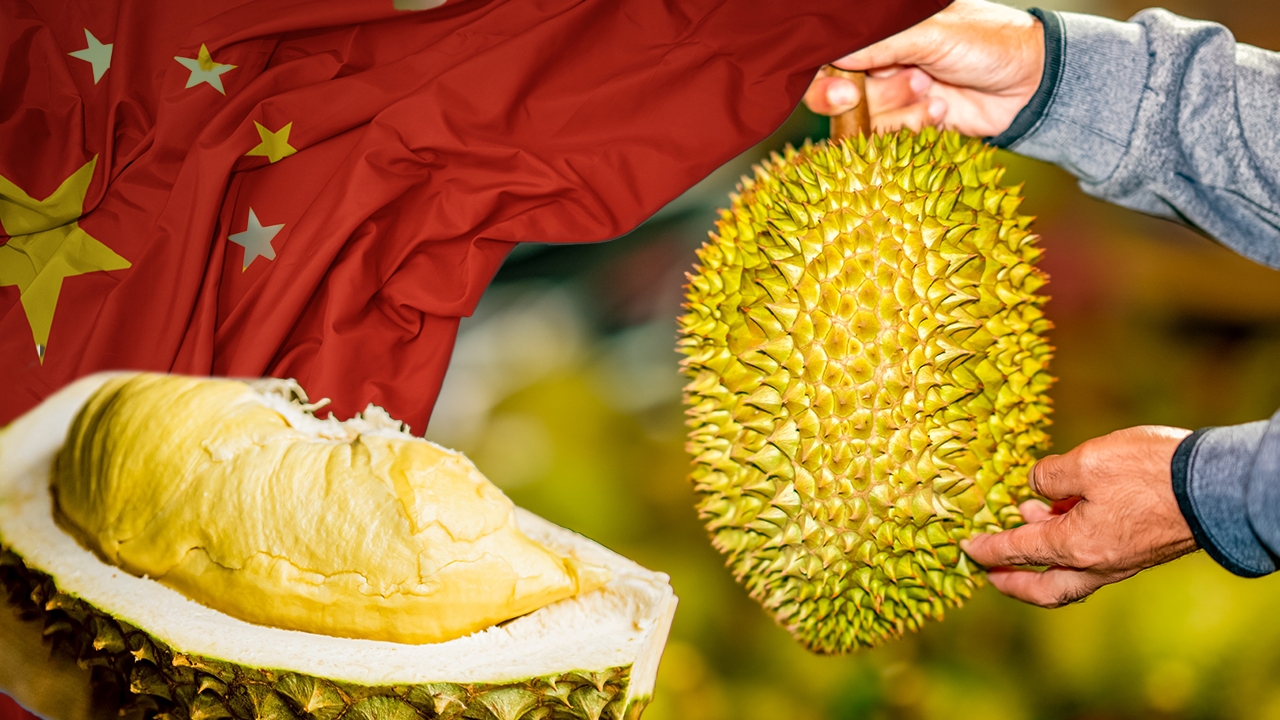
Thai durian faces export storms to China as Vietnamese rivals aggressively aim to dethrone the Monthong variety. Farmers have yet to be affected by high fuel costs and contamination issues. It is expected that consumers in Thailand will enjoy cheaper Monthong durians this year compared to last.
The Eastern durian season is approaching, especially for the Monthong variety, which is exported to China and has earned acceptance there by generating income for local farmers. However, with rising oil prices impacting exports and Vietnam, which shares a border with China, increasing its durian exports to that market, Thailand faces growing competition, though it still leads overall in export value.
The Thairath Online special news team contacted durian growers in the Eastern region, who reported that the Thai durian export season to China is nearing, with anticipated volumes at least equal to last year.
A key concern this year is contamination control. Last year, there was contamination with BY2-B residue, which Chinese authorities strictly inspected. Resolving that issue delayed transport and inspection processes and raised costs for Thai exporters, impacting their operating expenses.
This year, Chinese authorities have reported cadmium contamination found in durians from both Thailand and Vietnam exported to China, affecting both countries. If Thailand fails to manage this, it risks repeating last year's costly contamination problems while authorities investigated the causes.

Preliminary findings show cadmium contamination in about six to seven orchards, though contamination levels were not high. Exporters are investigating causes but have not confirmed the source. Chinese regulations set a minimum detectable cadmium level at 0.05 milligrams, while Thai durians tested showed levels around 0.07 milligrams.
Therefore, during the durian season, there may be container inspections causing disruptions to farmers. The Eastern durian season starts this month (March), with the Kradum variety already being shipped to China. The Monthong variety will begin exporting late March, increasing into April, with peak production in May.
Currently, the Monthong durian price is 200 baht per kilogram, while the Kradum variety is cheaper than last year due to competition with Vietnamese durians. Farmers are rushing harvests, leading to lower-quality fruit entering the Chinese market and causing price drops. Vietnam, which exports large quantities to China, is catching up to Thai exporters, benefiting from its shared border that allows higher export volumes.
Last year, China imported 49% of its durians from Thailand and 51% from Vietnam. However, Thailand still leads in export value because its durians are priced higher. Vietnam is expected to intensify its fruit market push, including durians, in China in 2026.
Vietnamese native durian varieties are exported to China in significant volumes. Meanwhile, Thailand's main variety, Monthong, is preparing for the export season. Vietnam also cultivates Monthong now, and it remains to be seen how Vietnamese and Thai Monthong durians will compete in the Chinese market.
Vietnam's biggest advantage in the Chinese durian import competition is its land border with China, making transport more convenient than Thailand's. Thai durian shipments must pass through Vietnam, where last year Thai durian trucks were sometimes blocked, leading to fewer Thai durians reaching China compared to Vietnamese ones.
Malaysia's Musang King durian variety is also noteworthy as it targets the premium market with advertising claims of superior taste compared to Thai Monthong. It sells well in high-end markets but has limited export volume to China.

Off-size durians this year are a concern because each shipment includes some undersized fruit, which is usually sold in nearby countries. Currently, Cambodia is not accepting Thai durians due to border closures, reducing outlets for off-size fruit and making disposal more difficult.
Typically, 70% of Thai durians are exported to China, 20% consumed domestically, and 10% processed. Domestic consumption this year is uncertain due to economic downturns possibly reducing durian demand.
Production this year is increasing, especially off-size fruit, due to unstable weather causing poor fruit quality and more undersized durians.
For domestic consumption, durian prices are expected to drop because of the increased volume of off-size fruit, which must be discounted to be processed and sold.
Fruit packing houses in the Eastern region are a concern this year, with many empty facilities as investors hesitate amid contamination issues and rising fuel costs. New investors are being encouraged to enter to expand exports to China rather than leaving the market dominated by existing Chinese investors.
Durian farmers want the government to negotiate with Chinese authorities to allow inspections at Thai orchards and seal containers at the source, eliminating the need for reopening containers at Chinese borders. This would reduce risks of unsafe products being found at the border and prevent transport delays for other shipments.
If the Thai government can negotiate this, it could attract more Chinese investors and reduce risks to shipments amid rising energy costs.
Exporting durians requires continuous refrigeration. Long delays at checkpoints waste fuel used to keep durians chilled. If, like last year, a thousand trucks are stuck in line, transport slows, durians spoil upon arrival, and prices fall.
