

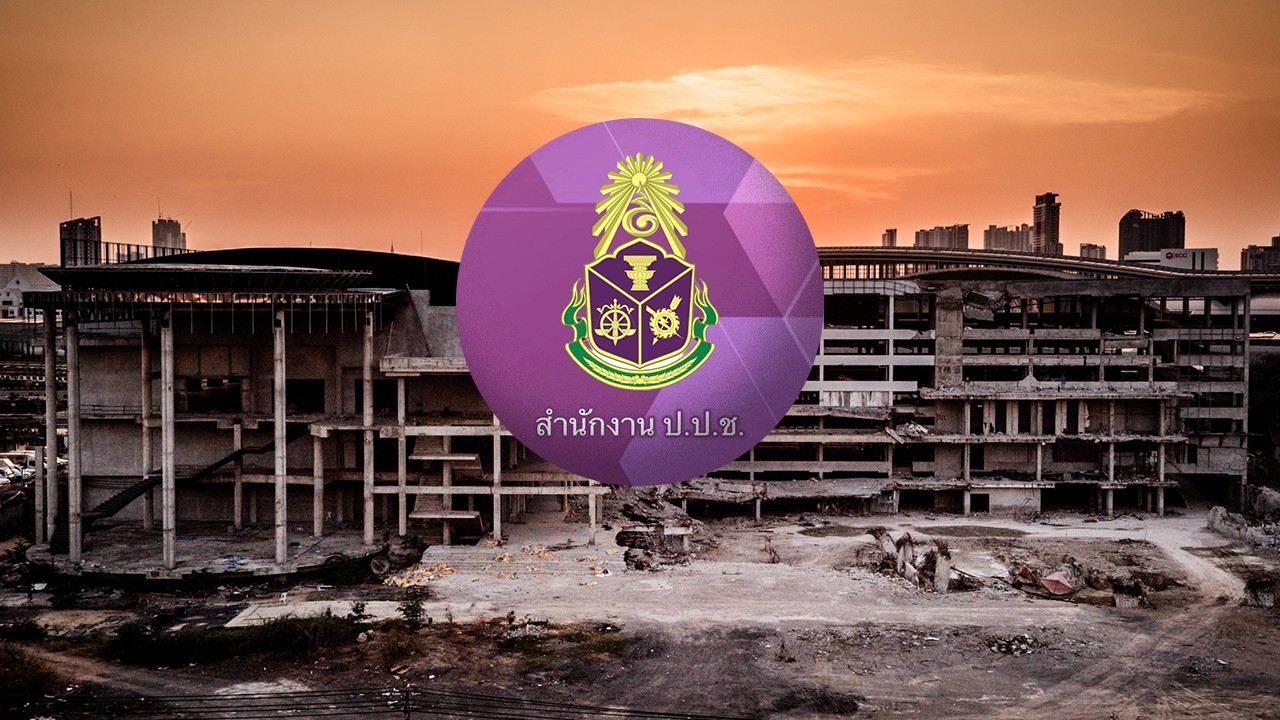
The National Anti-Corruption Commission (NACC) is preparing to deploy a new transparency assessment tool following the collapse of the Audit Office building, aiming to enhance comprehensive scrutiny and identify the true holders of authority responsible.
Today (23 Mar) at the NACC office, a press conference was held on advancing the development of ITA and PIT assessment tools to enhance transparency in the public sector and allow public participation in evaluations. Professor Vicha Mahakun, Chair of the Integrity and Transparency Assessment (ITA) Committee of the NACC, reported progress on the ITA tool’s review and testing. This is being conducted jointly with Dr. Wasan Patarathikom, Assistant Director of the National Science and Technology Development Agency (NSTDA), to upgrade the evaluation system for greater effectiveness and alignment with digital-era public administration contexts.
The tool will be used to audit government agencies for integrity to reduce corruption within the state sector. The initial trial will cover 20 agencies, including the Audit Office, known as the Office of the Auditor General (OAG).

When asked whether the new tool would retrospectively investigate the Audit Office building collapse caused by the earthquake on 28 Mar 2025 CE, which will mark its first anniversary this week, Professor Vicha Mahakun said that despite being a past incident, inquiries must be made with the Audit Office. Although investigations have identified some wrongdoers, it must be determined if those held accountable align with the actual principles. This also serves to compensate for lost integrity points. For example, if no one was caught despite public suspicion, a clearer investigation is necessary. There may need to be specific questions about whether the agency itself contributed to public doubts, especially since it previously scored excellently in ethics, yet the building collapsed.
Previously, assessments mainly focused on administrative matters and did not examine those in authority who issued operational directives. The new tool will include evaluation of executives’ use of power.
A representative from the NACC stated that the new tool’s testing will start with 20 public organizations. This round of audits will include additional questions for the Audit Office, asking employees whether corruption exists within their organization.

The tool will also gather input from people who interact with the agency, including the public and contractors involved in constructing the building. Moreover, previous document audits may have overlooked procurement issues; these will now be included. The assessment will examine processes from initial planning to contract signing and terms of reference preparation. It will also incorporate public complaints, which provide clues through images and other details that can be used to further investigations.

This upgrade of the ITA assessment integrates digital technology and the Traffy Fondue application to support evaluations across ITA dimensions: 1) Internal Integrity and Transparency Assessment (IIT) by agency staff; 2) External Integrity and Transparency Assessment (EIT) by service users; and 3) Open Data Integrity and Transparency Assessment (OIT), which involves disclosure of operational and procurement processes and performance results to promote efficiency, transparency, and credibility.
Additionally, a new evaluation concept called Public Integrity Transparency Assessment (PIT) has been developed. PIT assesses an agency’s public image by allowing citizens to evaluate their satisfaction and expectations of key national agencies. ITA and PIT assessments are vital mechanisms that promote good governance standards in government agencies, enhancing transparency, enabling oversight, reducing corruption risks, and building public trust in government administration.
The NACC has appointed a committee chaired by Professor Vicha Mahakun to oversee ITA assessment results, tasked with reviewing, improving, and developing the evaluation system and tools to be accurate, transparent, and internationally standardized. Subcommittees totaling six have also been established to examine various aspects including audits of government agencies, independent organizations, local administrative bodies, and development of evaluation processes, technological tools, and communication to raise awareness across sectors. These committees study knowledge, research, and best practices domestically and internationally and gather stakeholder and public feedback to analyze and modernize the evaluation system effectively.
Testing of the assessment tools in this phase is expected to complete by April 2026 CE, after which results will be submitted to the NACC for consideration and future action planning. This development marks a significant step forward in enhancing transparency in Thailand’s public sector, fostering a culture of integrity, and supporting the country’s anti-corruption efforts in a concrete way.