

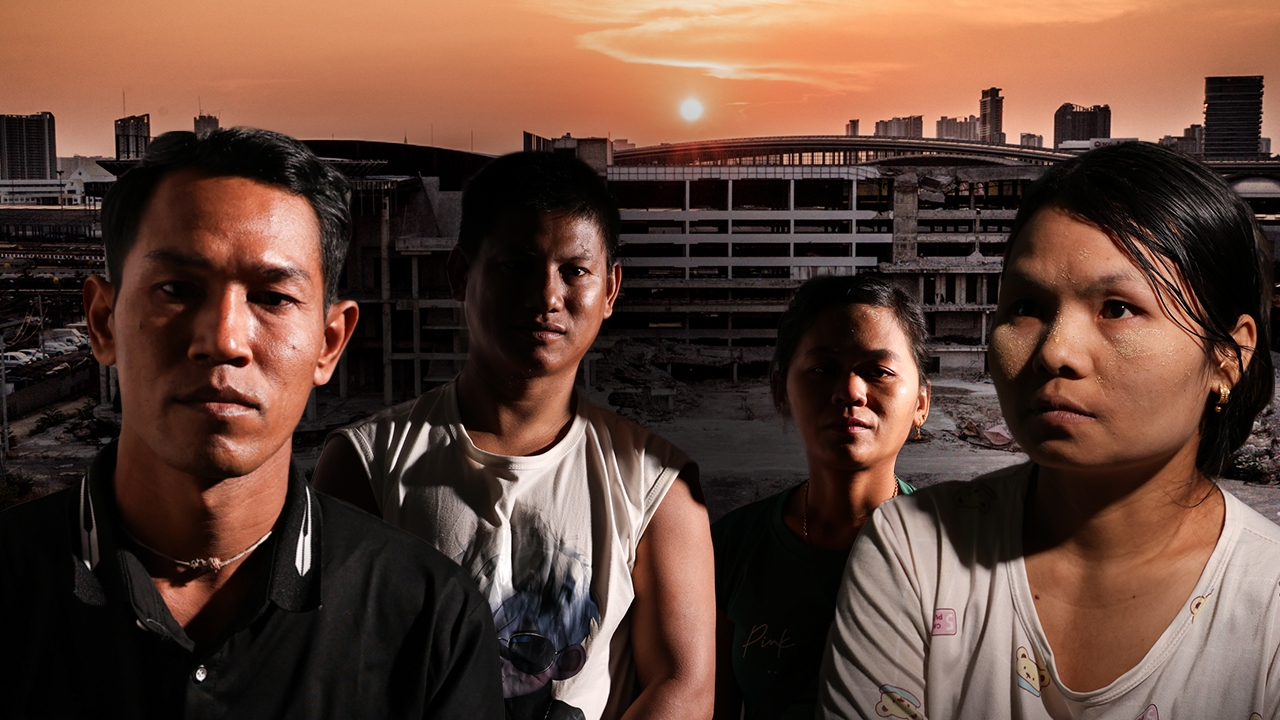
Silent deaths, irreparable losses mark the 1-year anniversary of the Comptroller General's Department building collapse. After surviving the nightmare, many migrant workers remain scared when hearing loud noises. The building that once soared into the sky has become a painful image that pierces their lives, making it difficult to move on.
On 28 Mar 2026 GMT+7, the first anniversary of the collapse of the Comptroller General's Department (CGD) building in the heart of the capital was observed. The disaster claimed many lives, leaving only ruins and unanswered questions for many.
For the survivors, what fell that day was not just the building’s structure but their lives forever changed. Their stories are not just records of tragedy but voices of those who must continue living, despite parts of their lives having collapsed along with the building.
The over 30-story building on more than 11 rai in the Chatuchak area of Bangkok, with its structure nearly complete, suddenly collapsed in an instant from seismic tremors. Behind it lay massive sums of money—design fees, construction costs, and supervision expenses. Yet what was lost was not just the budget but countless lives beyond measure.
Most workers at this construction site were foreign laborers, primarily from Myanmar, with some from Cambodia. They left their homelands with hope but faced losses no one was prepared to endure.
Here are the voices of the surviving workers—those who escaped the rubble but whose lives remain trapped in that day.

La Win Nai, a man from Yangon, Myanmar, came to Thailand several years ago for the simple reason that the economy back home could no longer sustain his life. He started working as a construction worker and was among those who physically helped build the CGD building as its structure took shape.
He was not alone. His wife, with whom he had shared over 15 years, followed him later. Previously, she worked in gardening back home, where income and weather were uncertain. Crossing the border represented new hope for both, aiming to build a stable life and send money back to support their 14-year-old son.
One afternoon that seemed like any other, he was working on the 6th floor while his wife was on the 4th and 5th floors. Suddenly, the ground began to shake; the sound of breaking glass and falling concrete echoed throughout the building. In the split second everything collapsed, he ran without thinking. “My mind was blank then,” he recounted. As he ran down the stairs, he searched the faces of people rushing past, hoping to see his wife but found none.

At the second floor, he remembered there was a quicker exit route and decided to change course. That split-second decision saved his life, while his wife could not escape.
After the chaos settled, he ran around the wreckage searching for his beloved, hoping she might be hiding somewhere. The following time was filled with waiting and fading hope. He couldn’t eat or sleep and prayed she was still alive. Eventually, he called his son to share a harsh truth even he struggled to accept: “We still haven’t found your mother’s body,” he told his son.
One month later, he found her again—but only as a lifeless body. He never saw her face, only the confirmation through DNA testing and the sacred thread she wore around her neck, like his. The funeral was simple, and the family from Myanmar could not arrive in time to attend.
“I don’t want money. I want my wife’s life back.”

Although he received about 1.5 million baht in compensation, money could never replace what was lost. To obtain it, he had to endure complex paperwork, language barriers, and significant expenses, including interpreter fees, document translation, and travel costs totaling tens of thousands of baht to receive what is called "compensation."
At first, he blamed himself. “I didn’t want it to be her.” “I wish I could turn back time.” “I wished she survived instead of me.” He spent months in grief and guilt before slowly trying to let go. He once thought about suing but gave up due to the difficult process and unbearable costs.
Today, his only wish is to finish the paperwork and return to live with his son back home. “Life is uncertain. You may be here today and gone tomorrow,” he said, admitting that even slight loud noises or tremors still frighten him and bring back memories of that day.
For Ton Ton Win and Ton Ton Win, a Myanmar couple, survival did not mean life would return to normal. They came from Irrawaddy to work in Thailand because there was no job at home. The husband worked at this building from the start of construction, while his wife had worked there for only three years.
On the day of the incident, they were in different parts of the building before running out and reuniting amid chaos. “Happy to still see each other,” he said, but that joy mixed with sadness as over 10 coworkers did not emerge from the building.

Just days after the event, they had to return—not to build but to clear steel debris and face the continuous sight of bodies wrapped in white cloth being carried out. “I didn’t want to go…but I had to,” he said briefly, explaining that without work there would be no income, and without income they could not survive.
One year later, the fear remains. Even small loud noises startle them; slight tremors make them want to run. “It’s like there’s a wound inside,” she said, laughing through tears. They continue to work, live, and try to move forward, but life is no longer the same.

They did not receive compensation as “survivors”—only survival kits, small financial aid, and words of comfort. Though feeling the injustice, they chose not to demand more. “Those who died haven’t even fully received justice yet. We probably have no hope,” he said, admitting he wants to return to Myanmar and quit construction work but doesn’t know how to start over due to lack of information and opportunities.
Mi Ma U, another female worker, said that although she survived, her body and feelings never left that day. She and her husband moved to work in Rayong, but memories of that day still follow her everywhere.
The sounds of falling objects, clashing metal, or even slight tremors have become involuntary triggers in her body. She remains fearful of loud noises and shaking. The event left no visible scars but deep mental wounds. “Hearing any noise makes me scared; I want to run away all the time,” she said.

Without financial compensation or long-term support, because these pains are invisible, psychological wounds are not counted as “loss.” All that remains are words of comfort and the phrase she repeats to herself: “It’s good to have survived.” Yet memories of that day return unbidden and never fade. “Talking about it still hurts,” she whispered.
She admitted she wants to go home, back to a familiar place, but life in Myanmar remains too difficult to choose. So her life must continue where she is, amid the same fears that never disappear.

One year after the incident, survivors continue living, working, and trying to hold their lives together. But one thing that has never returned is a feeling of safety. Some lost loved ones; others lost coworkers, stability, and parts of themselves forever.
That tragedy did not end with the demolition of the building ruins but lives on in survivors’ memories. Death may have come silently in an instant, but the losses still echo quietly, without true healing.
Story by: Pitchaya Nawayo
Photos: Suphaporn Thamprakon