

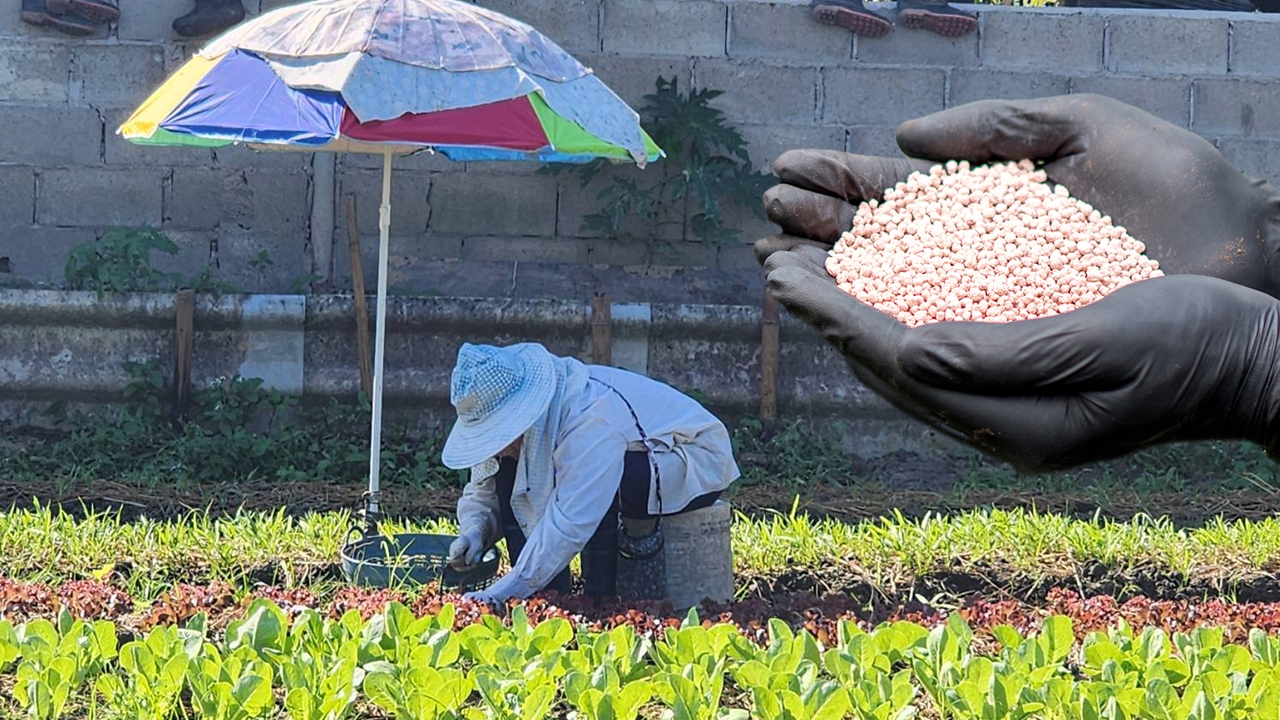
The energy war shakes "agricultural costs," causing food prices to soar. Thailand imports 99% of its fertilizers. The way forward is to reduce reliance on external fertilizers and lower agricultural costs.
The panel discussion "FOOD WAR: Energy War and Food Security" at SAMA GARDEN, BITEC, on 15 Mar 2026, highlighted how the energy price crisis is spreading through Thailand's food system in a chain reaction—affecting production costs, transportation, and market prices amid fuel stations limiting refills to 500–1,000 baht per transaction.

Mr. Withoon Lianjamroon, Secretary-General of the BioThai Foundation, explained that Thailand's current agricultural system heavily depends on fossil fuels—not only in transportation but throughout the entire food production chain, from upstream to downstream.
In production, modern agriculture relies on chemical fertilizers made from natural gas, diesel-powered machinery, and water pumping systems for irrigation. Post-harvest, energy is also needed for processing, cold storage, and logistics distribution to markets and retail outlets. Fertilizers themselves, a major cost, also require diesel in their production.
Data from the BioThai network indicates that about 35% of food and agricultural production costs relate to petroleum products, with chemical fertilizers accounting for approximately 29% and fuel 12.9%, showing a high energy linkage across the food system.
"Fuel is like the starting point for everything, from planting, harvesting, transporting, to food on store shelves. When energy prices rise, the entire cost structure immediately follows," he said.
Around 35% of food and agricultural production costs relate to petroleum products, covering chemical fertilizers, pesticides, agricultural machinery, water pumping systems, transportation, and cold chain logistics.
BioThai's data also shows fertilizer costs make up about 29% and fuel 12.9%, reflecting that Thai agriculture is nearly half dependent on energy. "Fuel is not just about transportation; it is the heart of the entire food system."

Thailand imports nearly 99% of all chemical fertilizers, with 30–35% coming from the Middle East and the rest from Ukraine and Belarus. When war breaks out, fertilizer and energy prices rise immediately, forcing many farmers to face 50–80% higher costs or inability to access fertilizers.
Ms. Kanokporn Ditkrajan, Chairperson of the Organic Agriculture Promotion Enterprise Group in U Thong District, Suphan Buri Province, reflected that although her group practices 100% organic farming without chemical fertilizers, they still face impacts from rising energy prices, especially costs for water pumping and transportation.
"We don't use chemicals but still need fuel to pump water and transport vegetables. Costs go up the same," Ms. Kanokporn said, emphasizing that this issue affects not only chemical farming but the entire system.
"Our group has adapted by reducing transportation rounds from multiple times per week to once weekly with pre-orders to cut fuel costs and help maintain prices so consumers are not overly impacted, a practical community-level coping method," she said.

Both Mr. Withoon and Ms. Kanokporn agree that the long-term solution for Thailand's food system is reducing dependence on external inputs, especially energy and chemical fertilizers.
Ms. Kanokporn proposed local practices such as making compost from animal manure and water hyacinth, using herbs to control pests, and planting diverse crops to create balance within agricultural plots.
Mr. Withoon added that research shows Thailand can reduce fertilizer use by up to 35% without impacting yields, and properly utilizing domestic resources could significantly cut imports.
"We can transform the country without relying on oil,
if we understand the agricultural ecosystem," said Mr. Withoon.
Energy crisis to food security requires systemic change.
This panel reflected that the energy crisis is not only an economic problem but is becoming a food security crisis affecting farmers and consumers widely. Solutions must address production, consumption, and government policies simultaneously to build a sustainable food system long-term.
"Everything exists within communities already, but we have been overly dependent on external sources," the discussion concluded.
