

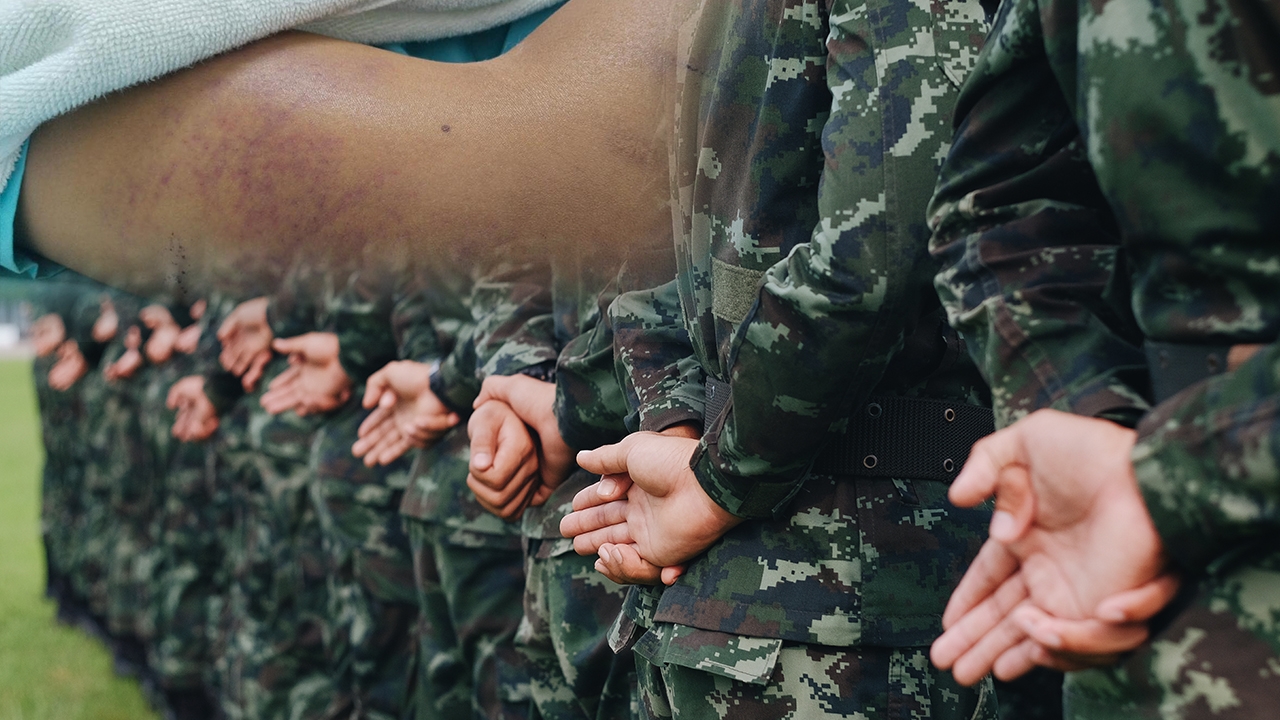
Three conscripted soldiers beaten until dawn have each received 500,000 baht compensation from the Ministry of Justice. The case progress is under close watch, with hopes for an established, systematic central complaint system.
The Facebook page Nam-Nitchanan Wangkahat-Nitchanan Wangkahat posted yesterday, 31 Mar 2026, saying, “Update:The Tiger Cave case at Surat Thani Pitak Camp.Thanks to the subcommittee's approval, the case falls under the Anti-Torture Act. The conscripts will receive 500,000 baht each in compensation. Two were injured, and one died. The payments come from the Department of Rights and Liberties Protection, Ministry of Justice.

Previously, the Thairath Online special team reported on the matter.“Conscripted soldiers”were beaten until dawn, seriously injured, and their families sought compensation before discharge. In this case, two conscripts were injured and one died in the Tiger Cave case at Surat Thani Pitak Camp, 2nd Development Division, Nakhon Ratchasima Province. The case raised questions about internal unit management and compensation procedures after the injured suffered acute kidney failure and mental confusion following the assault.
Today, 1 Apr 2026, we asked Nitchanan Wangkahat, a former Chonburi MP candidate for the People’s Party, who said these three cases clearly fall under the enforced disappearance law. They were taken to be beaten until dawn. Historically, commanders or subordinates had almost no right to speak out, reflecting a longstanding culture that is difficult to change. This has led to lower ranks being subjected to violence and afraid to file complaints.
Each conscript receives 500,000 baht in compensation. The injured conscripts receive the money directly since they are still alive after all documentation was approved; it is their right. For the conscript who died, the compensation is split equally between the parents—250,000 baht each, paid in the mother’s and father’s names respectively.

Regarding the cases of all three conscripts, there has not yet been serious discussion with the police because the focus has been on compensation from the Ministry of Justice. However, coordination with lawyers from the Culture Integration Foundation is ongoing.
What we hope to see change in the army is that this case is not about conscripts fighting each other; it involved training instructors punishing them. Some commanders who cooperate openly have been very helpful. However, units unwilling to provide information or cooperate sufficiently pose significant obstacles to police investigations. Victims are often poor civilians with little education—who else will help them?
Therefore, the Royal Thai Army should establish a centralized channel for personnel or their relatives to file complaints about abuse, with transparency. These problems have not been properly resolved, or have been addressed inadequately. Still, we thank the army for some improvements.
“Truthfully, we give credit where due, and I believe the army is trying to improve and develop better systems. However, there remains a cultural belief among some soldiersthatviolence and punishment are closely intertwined.”
