

Thairath Online
Thairath Online

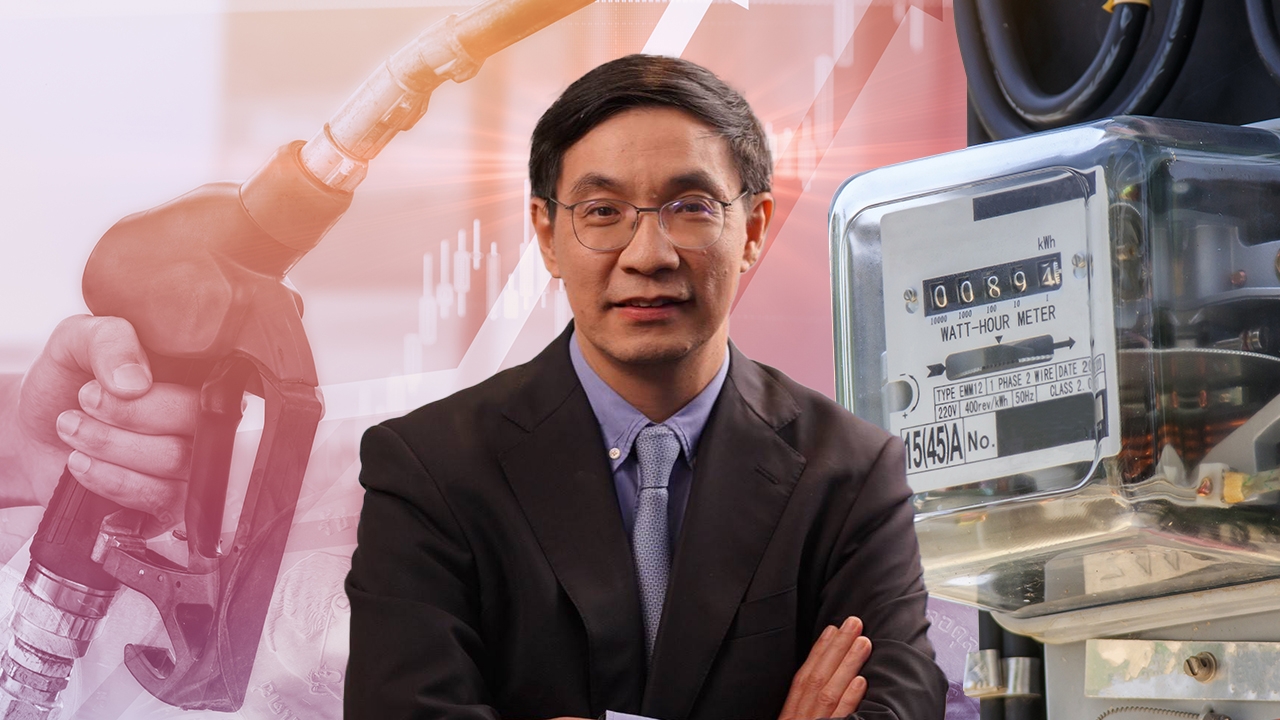
TDRI Unveils Energy Crisis Plan: Capping Refining Margins, Reforming Refinery Structure, Reducing Monopoly, Supporting Low-Income Electricity Users for First 200 Units

Theissue06 Apr 2026 11:19 GMT+7

Share

TDRI Unveils Energy Crisis Plan: Capping Refining Margins, Reforming Refinery Structure, Reducing Monopoly, Supporting Low-Income Electricity Users for First 200 Units

TDRI reveals an energy crisis plan to cap refining margins, reform refinery structures, reduce monopolies, and assist low-income households with subsidies for the first 200 electricity units.

The escalating Middle East conflict has exposed the vulnerability of Thailand’s energy and transport sectors, which heavily rely on imported fossil fuels. Global energy price volatility not only pressures citizens' living costs but also causes a chain reaction increasing production expenses, undermining the country's competitiveness, and creating a heavy fiscal burden. Thailand must therefore reform policies in both energy and transport sectors, shifting from short-term, reactive price subsidies to structural reforms that build energy stability resilient to external shocks over the medium and long term.


This article is by Dr. Areeporn Asawinpongpan, energy policy researcher; Dr. Sumet Ongkittikul, director of transport and logistics policy research; and Dr. Somkiat Tangkitvanich, president of the Thailand Development Research Institute (TDRI), who propose urgent short-term strategies alongside medium- and long-term policies for reforming energy and transport sectors.

1. Urgent and short-term strategy (1 year): Mitigate impact on people and proactively improve efficiency.

The primary goal in the urgent and short-term phase is to reduce impacts on citizens by shifting from "blanket price subsidies," which impose massive fiscal burdens and discourage energy saving, toward "targeted assistance" and "proactive energy efficiency measures."

Energy and electricity sector measures.

  • Reduce oil fund usage and move toward targeted support: Cut price subsidies through the oil fund, which had a deficit exceeding 42 billion baht by the end of March 2026 due to high diesel subsidies. Prices should be adjusted using a "stepwise" market mechanism to give citizens time to adapt, alongside targeted support focusing on vulnerable groups severely affected, such as low-income households, public transport, farmers, and small-scale fishers.
  • Control refining margins at appropriate levels and increase transparency: Set a Refining Margin Cap to capture excess profits beyond appropriate levels from refineries to strengthen the oil fund's finances. Establish a public dashboard disclosing oil costs and reserve volumes to build public confidence. The government should also expedite investigations and punish hoarders during price control periods to ensure fairness in the energy market.
  • Develop a transparent oil data system: Accelerate the development of a comprehensive oil supply chain data system, including reserve volumes and distribution, to enhance government oversight of operators.
  • Subsidize electricity for low-income households: Provide subsidies for the first 200 electricity units exclusively to low-income families, such as State Welfare Card holders, replacing blanket electricity subsidies previously used as an election campaign promise by the ruling coalition party.
  • Demand-Side Management of electricity: Reduce peak electricity consumption (peak shaving) by shifting heavy appliance use to off-peak hours through time-of-use tariffs. This reduces expensive fuel use during peak times and encourages energy savings using energy conservation fund incentives targeting businesses, especially industry, to lower electricity consumption per production unit.
  • Prepare for worst-case scenarios: Prioritize target groups based on energy needs in worst-case events like fuel shortages in transport or widespread electricity shortages. Prepare databases to identify targets and set assistance mechanisms in advance.

ดร.สมเกียรติ ตั้งกิจวานิชย์ ประธานสถาบันวิจัยเพื่อการพัฒนาประเทศไทย (ทีดีอาร์ไอ)


Transport and logistics sector measures.

  • Support truck fleet management: Promote information technology use to reduce empty backhauls, thereby cutting fuel consumption and transport costs.
  • Address rail system bottlenecks: Increase rail freight capacity to meet demand by urgently acquiring 113 new locomotives and 946 freight cars to replace units over 30 years old. Remove restrictions allowing retired train drivers under age 65 to return temporarily to ease labor shortages. Promote enforcement of the Rail Transport Act to allow capable private sector participation, since rail freight is energy-efficient and reduces shippers’ costs.
  • Subsidize fuel for trucks: Provide appropriate fuel subsidies, e.g., 6 baht per liter, for non-regular trucks equipped with GPS. This reduces burdens by about 5,000 baht per truck monthly and incentivizes over 400,000 unregistered trucks to enter the system.
  • Implement "Half-Half" public transport subsidies: Apply the "Half-Half" scheme to bus fares to ease living costs, with graduated subsidies to operators based on diesel prices—for example, subsidizing 8.84 baht per kilometer if diesel exceeds 55–60 baht per liter.
  • Promote working from home (WFH): Encourage public agencies and businesses to increase WFH days to reduce travel time and costs. IEA studies show that increasing WFH by one day weekly cuts national energy use by 1%, while three days can reduce it by 3–6%.


2. Medium- and long-term strategy (1–5 years): Structural reform for security and sustainability.

Over the medium and long term, the government should turn this energy "crisis" into an "opportunity" to reduce energy import dependence, reform the energy market for genuine competition, and cut national energy use and greenhouse gas emissions, thereby enhancing the country's competitiveness.

Energy market reform and electricity efficiency.

  • Adopt the policy “Efficiency as First Fuel”: Promote energy savings via measures such as mandating Green Building standards as minimum requirements for new buildings and subsidizing retrofits of existing buildings to improve air conditioning, lighting, and smart control systems. This reduces the country’s energy intensity rather than increasing energy supply.
  • Integrate energy plans: Truly link the Energy Efficiency Plan (EEP), Power Development Plan (PDP), Oil Plan, and Gas Plan to reduce policy conflicts, such as fossil fuel power plant investments inconsistent with efficiency and national Net Zero targets.
  • Promote distributed energy systems: Support local energy use by encouraging household and business solar rooftops, behind-the-meter battery systems, and microgrids in key areas. This reduces reliance on centralized power, imported LNG, peak electricity demand, and enhances grid resilience.
  • Open and reform the electricity market: Allow private producers to sell electricity directly via third-party access to transmission systems, reducing overall system costs alongside developing the transmission grid toward a smart grid.
  • Reform refinery structure: Encourage competition in refining to reduce monopoly power, enabling prices to reflect actual costs and eliminating dependence on the Singapore market reference price in the future.
  • Create strategic petroleum reserves (SPR): Establish or increase strategic oil reserves per legal requirements for oil traders, recognizing this as a necessary cost for energy security amid geopolitical vulnerabilities.
  • Seek benefits from joint oil and natural gas sources with neighboring countries: Negotiate with neighbors to jointly benefit from oil and gas resources, starting by reducing conflicts fueled by nationalism.

ดร.อารีพร อัศวินพงศ์พันธ์ นักวิชาการนโยบายพลังงาน


Transport sector reform and vehicle standards.

  • Upgrade trucks to Euro 5–6 standards: Cut import tax on complete trucks to 24% and parts to 20% to incentivize replacing nearly 500,000 trucks older than 20 years with newer, more energy-efficient models, potentially saving 6,363 liters or about 200,000 baht per truck annually.
  • Subsidize bus fleet upgrades: Offer low-interest loans at 2% per year (down from 5%), with up to 20 million baht per operator with at least two years’ experience, enabling replacement of 5,473 buses expiring by 2029 with more efficient vehicles. The Small and Medium Enterprise Credit Guarantee Corporation (SME Credit Guarantee Corp) will fully guarantee loan amounts replacing collateral.
  • Reduce import tax on electric buses: Lower import duties on buses with over 10 seats and exempt import tax on battery parts for domestically produced electric buses to encourage the shift to electric public transport.
  • Support intermodal transport: Structure rail and coastal shipping as main long-distance transport modes, using electric trucks for first- and last-mile connections.
  • Subsidize electricity for public transport: Establish lower electricity rates for electric buses and trucks to support environmentally friendly public transport services that reduce pollution and logistics costs.

ดร.สุเมธ องกิตติกุล ผู้อำนวยการวิจัยด้านนโยบายการขนส่งและโลจิสติกส์


Conclusion.

Thailand’s success in facing this energy crisis should not be measured by how long the government can "freeze prices" but by its ability to "turn crisis into opportunity" by reforming energy and transport systems for greater security, efficiency, and sustainability, using these reforms as a foundation to create well-paying jobs for many citizens.

This success requires the government to have visionary policy-setting beyond immediate fixes and the courage to implement reforms beneficial to the public, even if they conflict with certain vested interests.