

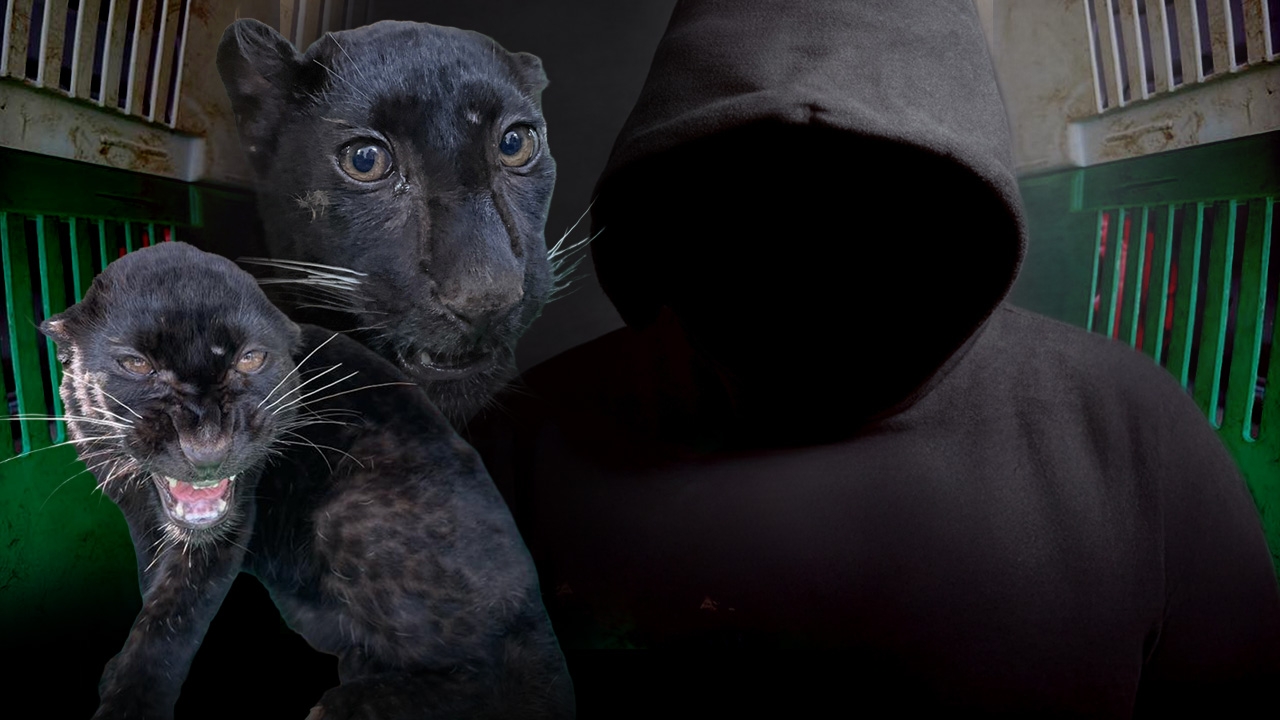
Behind the smuggling of “black leopard cubs” to Shwe Kokko, Myanmar, fulfilling the beliefs of Chinese 'bosses' to enhance power and gambling luck. Reports reveal that black leopard prices have surged in the black market, with Thailand serving as a transit hub for transportation.
On 9 Apr 2026 GMT+7, the Department of Natural Resources and Environment Protection, together with the National Parks authorities, raided and arrested a major transnational wildlife trafficking ring in Mae Sot District, Tak Province. The operation began on 5 Apr 2026 GMT+7 after intelligence from informants indicated a contract to transport a “black cat” to Myanmar. However, it was later found that the animal was not an ordinary cat but believed to be a protected wild animal.

On 6 Apr 2026 GMT+7, officials identified the animal as a female black leopard cub, approximately 7 months old, species Panthera pardus, a protected wild animal under the Wildlife Preservation and Protection Act of 2019 and listed on Appendix I of the CITES convention prohibiting international trade. Investigations involving multiple agencies uncovered links to foreign nationals of various nationalities—including Chinese Vietnamese, Vietnamese, Cambodian, and Myanmar citizens—who arranged to receive the black leopard cub from the Thai side to smuggle it across the border to Shwe Kokko, Myanmar.
On 8 Apr 2026 GMT+7, a joint task force set up surveillance at a department store parking lot in Mae Sot District, Tak Province. A man and a woman arrived at the meeting point, inspected the animal, and the man lifted the plastic cage containing the black leopard cub into a vehicle. Authorities then revealed themselves and arrested two suspects—a 35-year-old man and a 23-year-old woman, both Myanmar nationals. Seized items included one black leopard cub, one vehicle, two mobile phones, and the plastic cage. The suspects stated they crossed the border to collect the animal on orders from a woman named “Mayu” on the Myanmar side, intending to deliver it onward for payment.

Regarding the suspicious nature of the black leopard smuggling involving hired Thai individuals to secretly transport the animal to Shwe Kokko, Myanmar, Thairath Online’s special task team interviewed Pol. Col. Anek Taosupap, Commander of the Department of Natural Resources and Environment Protection. He explained that this operation involves buyers in Myanmar and sellers in Cambodia or Vietnam, with a Vietnamese intermediary coordinating the transactions.
The transportation route involved moving black leopard cubs from Sa Kaeo Province, using a ruse to mislead authorities by claiming the shipment involved domestic cats.
During transport, the carrier became suspicious upon noticing the animal in the cage was aggressive and not a cat as claimed, prompting them to alert authorities for inspection.
The Department of Natural Resources and Environment Protection coordinated a planned arrest with local teams in Mae Sot District, Tak Province, as buyers sent representatives to receive the animal for transfer to Myawaddy District, Myanmar.

When asked about the motives, the commander noted alignment with beliefs held by some groups of Chinese investors or 'bosses,' namely:
A symbol of power: Keeping a black leopard is seen as enhancing prestige and authority.
Belief in luck: A specific group believes that raising a black leopard can help them "never lose in gambling," which is the main factor driving demand in the black market.

The seized black leopard cub, about 7 months old, appeared tame and familiar with humans, suggesting it was raised by people from a young age.
Next steps: The evidence will be handed over to the Department of National Parks, Wildlife and Plant Conservation for care at the Khao Son Wildlife Breeding Station in Ratchaburi Province.
Rehabilitation: Officials will train the cub in hunting and survival skills. If it cannot be reintroduced into the wild, it will be cared for at the breeding station for life.
Currently, there is coordination with international agencies such as the US Fish and Wildlife Service and the World Justice Commission to block transnational wildlife trafficking across Thailand, Laos, Cambodia, Taiwan, and India.
The focus is no longer just on arresting the carriers but also on tracking financial flows and money laundering to identify and dismantle major perpetrators and disrupt the entire trafficking network.