

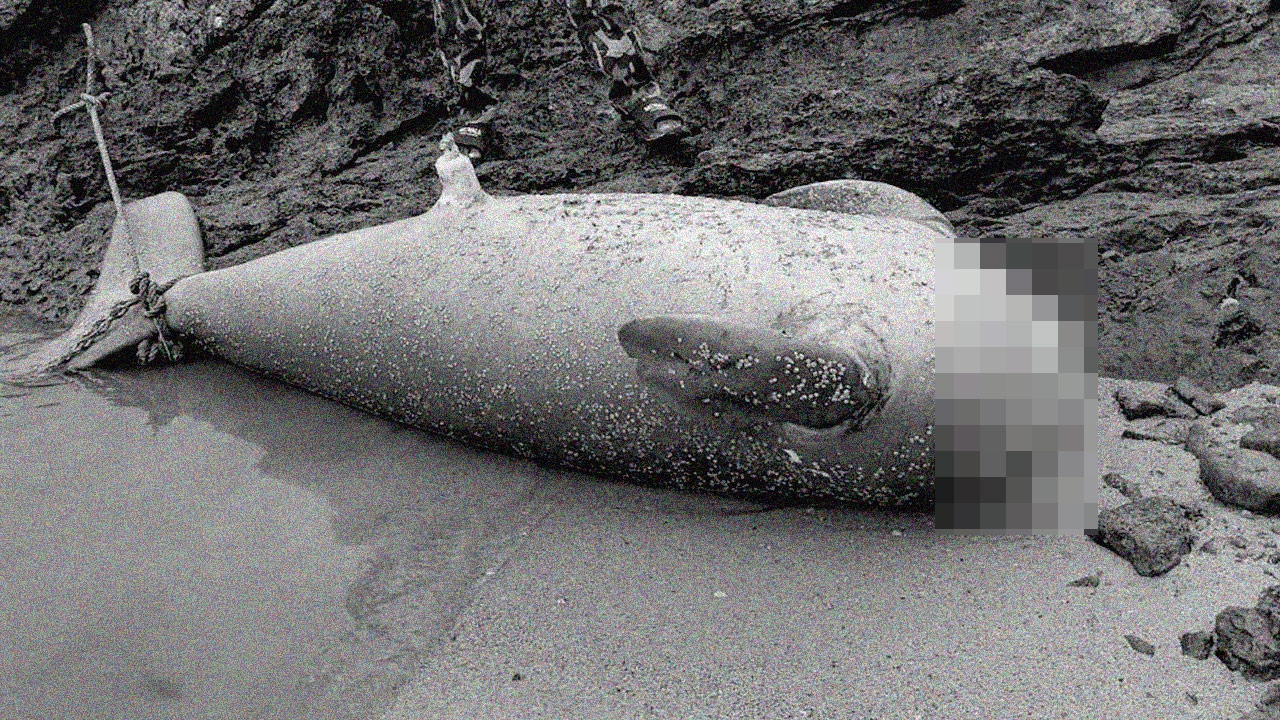
The autopsy of a headless dugong carcass stranded near Ko Yao Noi in Phang Nga Province suggests it likely drifted from Krabi and is presumed to have died from severe intestinal inflammation, unable to eat for more than one week.
On 10 Apr 2026 GMT+7, the Upper Andaman Marine and Coastal Resources Research Center reported the autopsy results of a dugong carcass stranded in Phang Nga. The report detailed that the carcass was found near Ko Yao Noi Island, in Tha Khao Bay, Ko Yao Noi Subdistrict, Ko Yao District, Phang Nga Province. Calculations of tidal currents by the Marine National Resources Protection Command Center (MNPC) indicated currents flowing northwest. Considering wind direction, it is believed the dugong carcass may have drifted from the Krabi side.

Subsequently, the Upper Andaman Marine and Coastal Resources Research Center transported the carcass for autopsy to determine the cause of death. The examination confirmed the species as a dugong (Dugong dugon). The carcass was heavily decomposed, measuring 233 cm in length (excluding the head) and weighing about 120 kg. It was a fully grown male.
The body condition was normal (BCS 3/5). Externally, no wounds or constriction marks were found on the body. Small barnacles were attached all over. The skull's head was severed with sharp-edged wounds consistent with a cut from a blade. No bruising or bleeding was observed, indicating this likely occurred post-mortem.

No external wounds or tail constriction marks were found, so these were not causes of death. Muscle condition appeared normal.

Inside the stomach, only a small amount of partially digested grass mixed with water was found. It is believed the animal was ill and had not eaten for more than one week. Severe chronic intestinal inflammation was observed, with adhesions between the small and large intestines affecting feeding and digestion, leading to weakness. The respiratory tract showed no fluid or air bubbles from the bronchi to the lungs, indicating the dugong did not die from aspiration or drowning. Other internal organs were too decomposed to determine additional causes of death.

Therefore, the preliminary cause of death is presumed to be chronic intestinal inflammation, causing weakness and resulting in stranding and death. Officials from the Upper Andaman Marine and Coastal Resources Research Center collected samples for further scientific testing and genetic studies.