

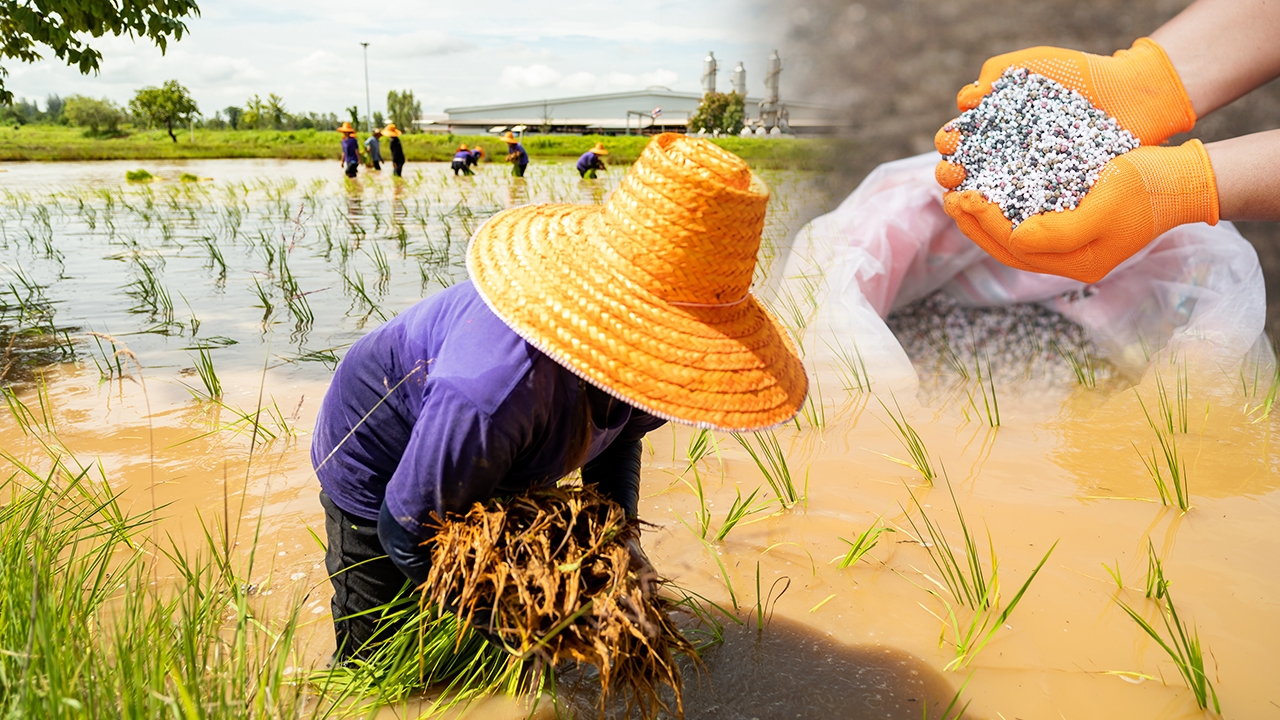
A deal with Russia to buy one million tons of urea fertilizer aims to reduce shortages, but farmers complain of being exploited and bearing the high costs of importing substitute fertilizers during the main crop season. Fertilizer shops reportedly use tactics to have farmers sign for expensive quotas. Prices have risen from 800 baht per sack to between 1,200 and 1,400 baht per sack. Experts suggest long-term solutions involve using slow-release fertilizers instead.
On 15 Apr 2026 GMT+7, it was reported that Mr. Suriya Jungrungreangkit, Minister of Agriculture and Cooperatives, met with the Deputy Prime Minister and Deputy Minister of Agriculture of the Russian Federation in Russia. They discussed Thailand’s interest in importing urea fertilizer from Russia and requested Russia to consider allocating a quota to Thailand at a friendly price of 1 to 2 million tons per year.

The desired fertilizer type is granular, sized 2.5 to 5 millimeters. If Russia agrees, the Permanent Secretary of the Ministry of Agriculture and Cooperatives will coordinate with the Russian Ambassador to Thailand to facilitate business discussions between the private sectors of both countries, aiming to start fertilizer exports from Russia by May 2026 GMT+7.
Regarding the price and specific qualities of the fertilizer to be imported, the private sectors of both countries are to discuss details and agree. The Russian Ambassador to Thailand will continue to coordinate on Russia’s behalf.
Conversely, many farmers question whether importing urea fertilizer from Russia will truly resolve price issues, as current fertilizer prices have soared multiple times. Farmers are preparing for the main crop season from May to October but must bear these increased fertilizer costs.

At the end of April each year, farmers preparing for the main crop season face difficulties due to soaring urea fertilizer prices. Some fertilizer shops cleverly offer farmers the chance to reserve urea fertilizer quotas at high prices, claiming this guarantees supply for the farmers.
The Thairath Online special news team consulted Pramot Charoensilp, President of the Thai Farmers and Agriculturalists Association, who said it is still uncertain whether talks with Russia will result in actual urea fertilizer imports. However, if 1 to 2 million tons are imported from Russia, it would help meet demand, as imports from other sources currently remain limited.
Urea fertilizer prices now range from 1,200 to 1,400 baht per sack, up from the previous 800 baht per sack. Efforts to discuss assistance with related government agencies have been made, but sellers claim high costs. Some suggest switching to biofertilizers, but farmers report yields remain unsatisfactory with such alternatives.
“Urea fertilizer is essential for both main and off-season rice farming, used to nourish rice fields after sowing or transplanting seedlings. Rice sells at 5,500 to 6,000 baht per ton. If fertilizer and fuel prices rise this much, we propose increasing rice prices to 8,000 to 9,000 baht per ton to sustain farmers,” he said.
Previously, the Ministry of Commerce ran the “Green Flag Fertilizer” program, offering a 300 baht discount per sack with a quota of five sacks per family. In reality, this is insufficient, as farmers typically use over one sack per rai. The government quota is considered too small and only a preliminary fix.
Currently, some fertilizer dealers require farmers to sign up in advance for the amount of urea fertilizer needed, setting high prices. They claim that without signing, supply cannot be guaranteed. This practice appears to circumvent oversight while ensuring sellers can charge high prices.

From a policy perspective, urea fertilizer shortages affect the structure of Thai farming. The Thairath Online team spoke with Dr. Decharat Sukkamnerd, Director of the Think Forward Center at the People’s Party Policy Institute and an expert on agricultural and rural sustainable development policies. He said seeking new sources for urea imports is positive, but the extent to which prices will drop depends on transparency about whether imports are state- or privately led, which remains unclear.
Previously, 30% of urea fertilizer imports passed through the Strait of Hormuz. Currently, five ships remain stranded there. Imports also come from Malaysia and Brunei. Importing urea from Russia could substitute these sources.
Long-term solutions to high imported fertilizer prices should include increasing fertilizer efficiency by using slow-release fertilizers targeted to specific crops, based on soil data from farmers. Additionally, organic fertilizers should supplement urea use. The government has mentioned these plans, but implementation remains insufficient.