

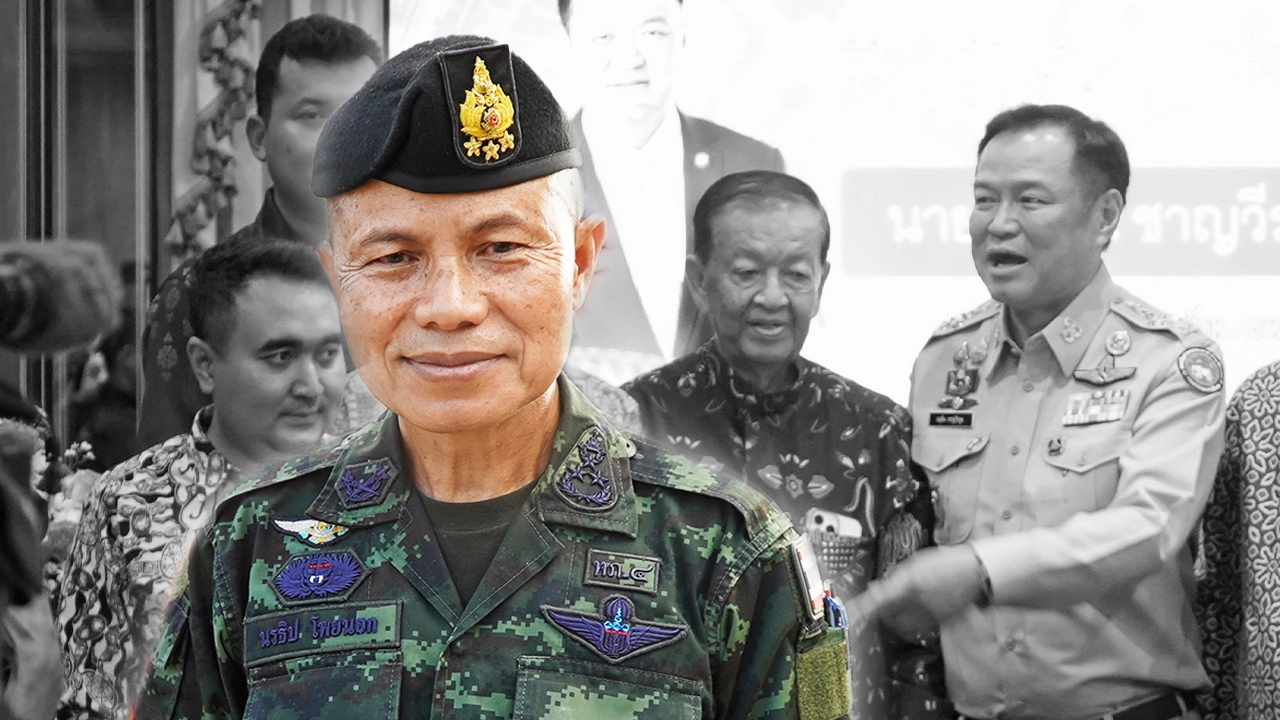
The Fourth Army Commander faces a test to extinguish conflict in the three southern border provinces. He apologized to the public over the muted microphone incident. Experts observe that locals are worried about the justice process and emphasize that patriotism should not be mixed with the act of shooting an MP.
The three southern border provinces have returned to the spotlight following the assassination attempt on Mr. Kamonsak Leewamo, MP for Narathiwat's 5th district, on 20 Mar 2016, which left two seriously injured. Amid doubts, the investigation uncovered that the pickup truck used by the assassins was a government vehicle. Subsequently, the Fourth Army Commander, Lt. Gen. Narathip Phoyonok, and the Director of the Internal Security Operations Command, Region 4 Front, held a press conference that sparked controversy, prompting some locals to call for the commander’s removal from the area.

Today (17 Apr 2016), Prime Minister and Minister of Interior Anutin Charnvirakul visited the southern border provinces for an official inspection to understand the issues, where he was welcomed by the Fourth Army Commander.
During Prime Minister Anutin Charnvirakul’s visit to the southern border area, Lt. Gen. Narathip Phoyonok, Fourth Army Commander, held a press conference addressing the muted microphone incident. He apologized to the public, acknowledging that his communication may have caused discomfort, especially regarding the pondok (Islamic boarding) schools. He reaffirmed his commitment, as Director of the Internal Security Operations Command, Region 4 Front, to resolving problems and achieving peace in the three southern border provinces.

Historically, the three southern border provinces have seen unrest caused by insurgent groups, prompting state agencies to continually address the issues. However, the current controversy reflects underlying tensions and overlapping problems in the area. Thairath Online’s special task force consulted Associate Professor Akarin Tuansiri of the Political Science Faculty at Prince of Songkla University, Pattani Campus, an expert on southern border issues. He analyzed the situation, noting that local sentiment currently centers on two points: 1. The MP shooting incident happened over a month ago, and the controversy over the muted microphone during the Fourth Army Commander’s interview has eroded public trust. The official statements conflict with what senior state officials should uphold.
2. Residents expect high-ranking commanders to assure them that such incidents will not recur. Instead, events unfolded differently, causing locals to lose confidence in the justice system.

“Normal law enforcement dictates that incidents should be investigated routinely. Yet, delays and the framing of these matters as purely security issues have prevailed. Meanwhile, locals feel that blatant attacks should not happen, but when they do, the justice system appears unreliable to them.”
Another major issue is the atmosphere surrounding statements by the commander about pondok and tadika (Islamic religious schools) being breeding grounds for violence. Such accusations are severe and sparked strong opposition against the commander, an uncommon occurrence.
As a government official operating in the three southern border provinces, the commander has more information than the public or outsiders. Therefore, senior officials should not inflame tensions based on emotions; instead, they must remain firm and speak based on solid data.

Short-term solutions require restoring confidence that investigations are clear and that any involvement of state officials will be addressed with penalties. Such acts are criminal and should not be conflated with patriotic beliefs.
For long-term solutions, the cabinet has announced policies focused on access, understanding, and development. Prime Minister Anutin’s government must appoint clear leadership for these efforts. Success would benefit the Bhumjaithai Party, but if the military manages the situation alone, the government will face even greater challenges.