

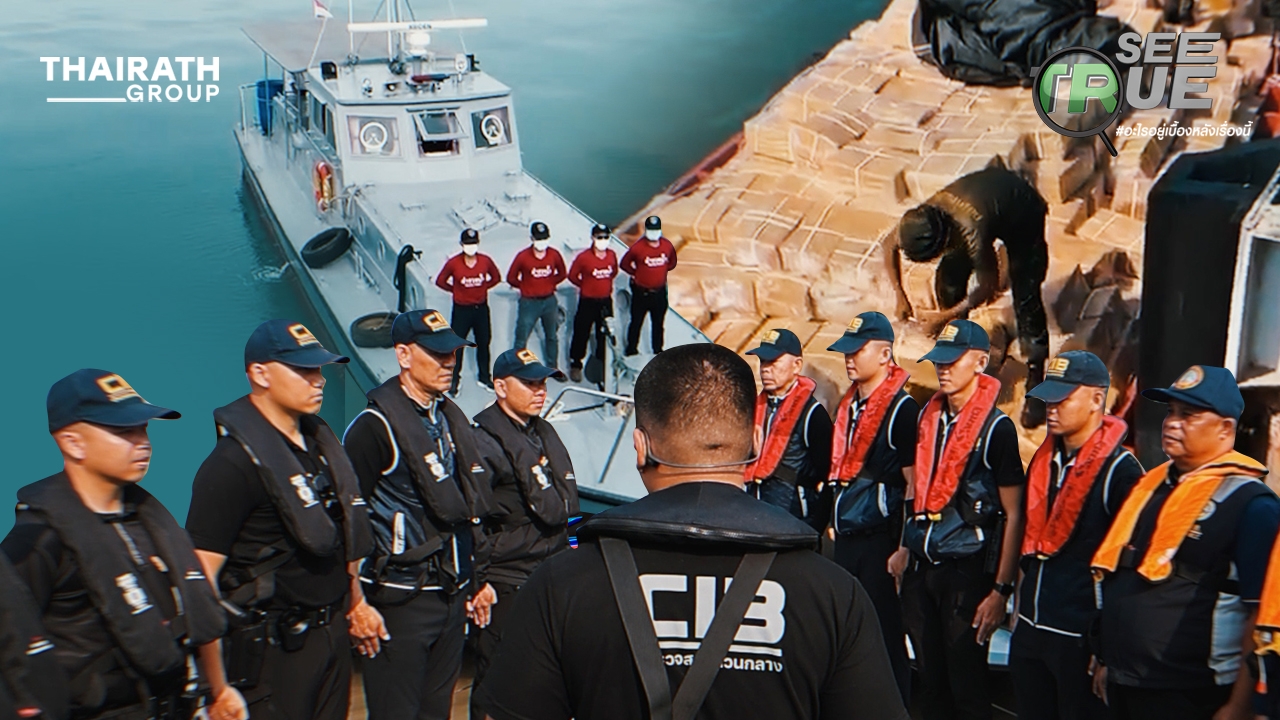
From the Chao Phraya River to the Gulf of Thailand, the process used by 'drug cartels' to conceal trafficking via waterways is revealed. They exploit loopholes allowing large shipments and are hard to detect. Although authorities work intensively, they still face budget and other constraints.
. "Waterways" originally meant for trade, are now being used as routes for drug trafficking. The SEE TRUE news team went to the area to investigate. "Drug cartels" transport from rivers to the sea, using Thailand as a transit point. What lies behind this issue?
"Drugs" remain a persistent problem in Thai society, destroying users' lives, affecting families, and threatening communities. Despite continuous crackdowns, traffickers keep changing methods, hiding and disguising shipments to avoid detection.

One example is the "waterway" from the Chao Phraya River to the Gulf of Thailand. This waterway is not only for trade but is being used as a transit route by drug trafficking networks moving from inland areas toward destinations difficult to monitor. The SEE TRUE news team joined Samut Prakan marine police to verify this issue.
"Patrol boat 626" set out to patrol the Chao Phraya River route to the Gulf of Thailand, inspecting inbound cargo vessels. Shortly after departure, officers spotted a suspicious cargo ship, and the boat commander signaled to request inspection.
Officers first signal to request a search, then bring the boat alongside. Officers then spread out to conduct a thorough search of the vessel.

The vessel inspected by the SEE TRUE team and officers was an oil transport ship returning from the Koh Si Chang cargo terminal, a key maritime freight hub in the Gulf of Thailand. Officials checked the ship's documents and oil tanks.
Officials explained that when inspecting a vessel, they look for irregularities. For oil tankers, they check if oil was exported and returned—if so, it indicates hoarding. Currently, marine police operate strictly with boats 626 and 707, plus smaller boats that can deploy within 5 minutes.
After patrolling inbound vessels, officers shifted to inspecting outbound vessels headed toward the Gulf of Thailand.

When asked why traffickers choose waterways over other routes, the answer was that waterways allow larger loads, inspections are less frequent and random, and at night vessels are harder to spot, reducing the chance of arrest. Each patrol is costly but frequent, following a regular schedule.
Maritime patrols are fewer than land inspections, providing traffickers an opportunity. However, if authorities receive intelligence, traffickers cannot evade detection. When asked if drug sources were investigated, officials said Thailand is an export point via the Gulf of Thailand. The latest case involved 2 tons of methamphetamine leaving a port for overseas shipment. Thailand is only a transit point.
Nonetheless, current inspections can only intercept some shipments. In reality, drug cartels continue using waterways because chances of capture are low, shipments are large, and the vast number of vessels makes comprehensive checks difficult.

Meanwhile, the drug networks’ vast financial power allows them to adapt methods and expand networks continuously. Officials work diligently within existing budgets and limitations. Thus, the Chao Phraya River to Gulf of Thailand route may remain a drug trafficking corridor. The question is how many shipments are still escaping unnoticed.
Follow #SpecialSharpNews, a hard-hitting news variety show that investigates and reports from every area, uncovering all truths every Saturday at 6 pm on Thairath TV Channel 32.